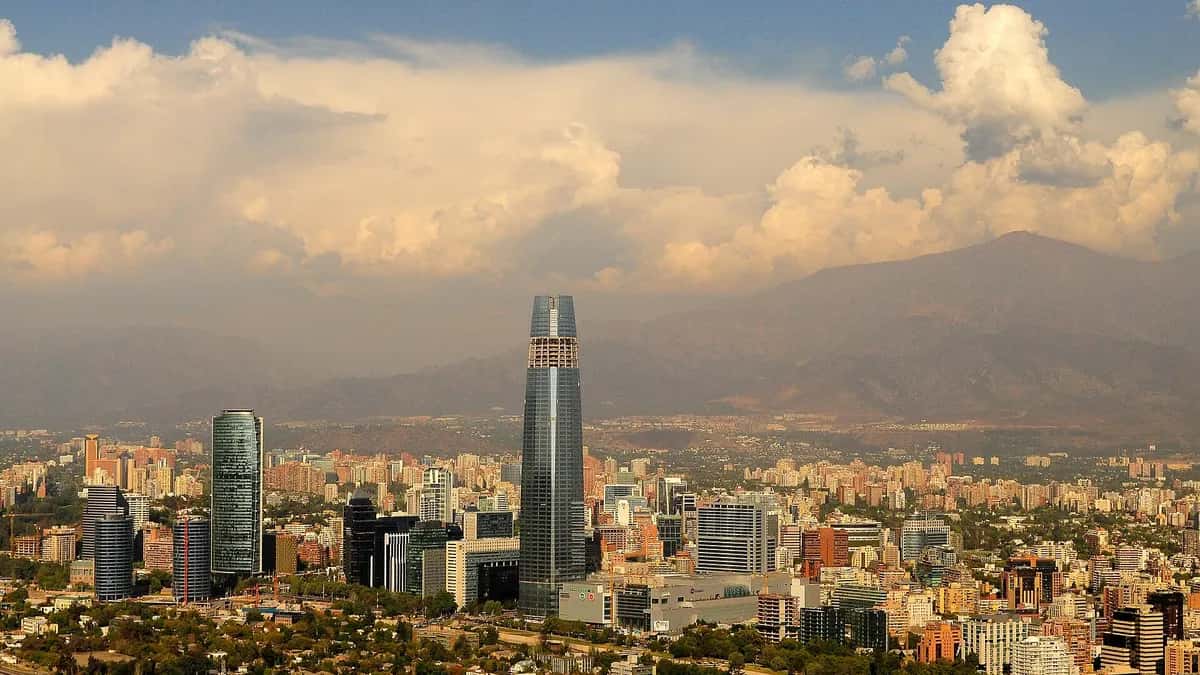
Moody's Ratings affirmed Chile's long-term sovereign rating at A2 with a stable outlook, in local and foreign currency. The decision was announced on October 23, 2026, and completes the annual review by the three big agencies: in September, S&P Global Ratings had affirmed Chile at A and Fitch Ratings at A-, both also with a stable outlook, according to the text released by the government and published by G5noticias and Diario Concepción.
In practice, Chile stays on the same rung: no upgrade, no downgrade. What is new is the reasoning. Moody's said "the government's first measures provide credible evidence of its commitment to fiscal consolidation" and that, "after several years of missed fiscal targets", they "are helping to restore the credibility of fiscal policy". Here are each agency's rating, what weighed on the decision and what it means for people.
Chile's rating at Moody's, S&P and Fitch
| Agency | Chile's rating | Outlook | Latest affirmation | Notches below the top rating |
|---|---|---|---|---|
| Moody's Ratings | A2 | Stable | October 2026 | 5 (top is Aaa) |
| S&P Global Ratings | A | Stable | September 2026 | 5 (top is AAA) |
| Fitch Ratings | A- | Stable | September 2026 | 6 (top is AAA) |
Source: G5noticias and Diario Concepción, which reproduce the October 23 statement. The notch count is our own, based on each agency's public scale (Aaa, Aa1, Aa2, Aa3, A1, A2 at Moody's; AAA, AA+, AA, AA-, A+, A, A- at S&P and Fitch). Moody's A2 is equivalent to S&P's A; Fitch's A- is one notch lower.
Why Moody's kept Chile at A2
The agency focused on public finances. According to the text released on October 23, it highlighted these facts:
| Factor highlighted by Moody's | Data |
|---|---|
| Ministry spending cut | 3% adjustment applied in March 2026 |
| Collection of CAE student loans from higher-income defaulters | US$200 million expected this year and up to US$300 million in 2027 |
| 2027 budget | Public spending up only 1.5% in real terms |
| January-August 2026 execution | Spending +1% real, revenue +7.7%; cumulative deficit of 0.7% of GDP, versus 1.6% a year earlier |
| Projected public debt | Would stabilize around 43% of GDP, below the 45% prudential limit |
Source: Diario Concepción. Moody's also welcomed the National Reconstruction and Economic and Social Development Law, which gradually cuts the corporate tax from 27% to 23% by 2029, and measures for capital markets and mortgage credit. Spending details are in our story on Chile's 2027 budget.

What could change the rating
Moody's made clear the adjustment "must be demonstrated over time". According to Investing.com's report on the decision, the agency expects growth to bottom out at 0.5% in 2026 and rise to 2.7% in 2027 and 3.3% in 2028, and it described the triggers for a change:
| Scenario | What would trigger it, according to Moody's |
|---|---|
| Upgrade | Sustained fiscal consolidation that puts debt on a downward path |
| Downgrade | An erosion of fiscal policy credibility or unexpected fiscal slippage |
| Unchanged (base case) | Gradual adjustment, debt stable near 43% of GDP and a growth recovery from 2027 |
Source: Investing.com. The 0.5% projection for 2026 is slightly below the IMF's October estimate of 0.6% (see the IMF cut). S&P projects the general government deficit to fall from 2.6% of GDP in 2025 to 1.4% in 2029, and Fitch compares Chile's debt with the 59% of GDP average for A-rated countries, according to G5noticias.
What Chile's rating means for your wallet
A credit rating is an opinion on a country's ability to repay its debt. It is not a grade for the economy or the government, but it has concrete effects:
- Cost of financing: with a stable rating, the Treasury and Chilean companies borrow abroad at lower rates than with a falling rating.
- Household credit: banks fund part of their lending abroad; a stable rating helps keep mortgage rates from rising through that channel.
- Investors: many funds can only buy investment-grade bonds (BBB- or higher). Chile sits several notches above that floor.
- Exchange rate: the news alone barely moves the peso, which this week depends more on the central bank's rate decision and the global backdrop. See what the TPM is.
How it compares with other countries in the region
Within Latin America, Chile keeps one of the highest ratings, comparable only to those of Uruguay, Peru and Mexico, which are also investment grade. Chile's public debt, near 43% of GDP according to the agencies, is low for the region: the full comparison is in our ranking of public debt in Latin America. What worried the agencies was not the level but how fast it rose between 2019 and 2025 and the years of missed deficit targets.
Frequently asked questions
What rating did Moody's give Chile in 2026?
A2 with a stable outlook, in local and foreign currency. It was affirmed on October 23, 2026.
What is Chile's rating at S&P and Fitch?
S&P keeps it at A and Fitch at A-, both with a stable outlook, after the September 2026 affirmations.
Was Chile upgraded or downgraded?
Neither: all three agencies affirmed the existing rating. What changed is the tone, more favorable to the fiscal adjustment.
What does A2 mean?
It is the sixth rung on Moody's scale, five below the top (Aaa), reflecting strong repayment capacity and low credit risk.
When will Chile's rating be reviewed again?
Agencies review countries at least once a year and can act earlier if something relevant happens, such as fiscal slippage.