The International Monetary Fund (IMF) expects Chile's economy to grow just 0.6% in 2026, according to its October World Economic Outlook, published on October 13. That is 1.2 points less than the 1.8% it forecast in July and 1.8 points less than the 2.4% of April, according to the summary by CNN Chile. If it materializes, it would be Chile's weakest growth since the 6.1% contraction of 2020.
The report came two weeks after the Imacec activity index for August fell 1.0% due to a collapse in mining. Here are the IMF figures for Chile, how they compare with the rest of South America and with the government and Central Bank, and what explains the cut.
Chile's growth in 2026 according to the IMF
The IMF publishes its full projections on the World Economic Outlook site. For Chile, these are the main figures reported by CNN Chile and Pauta:
| Indicator | 2025 | 2026 | 2027 | 2028 |
|---|---|---|---|---|
| GDP growth | 2.5% | 0.6% | 2.6% | 2.4% |
| Unemployment (annual average) | 8.5% | 9.5% | 9.6% | 9.1% |
| Inflation (annual average) | 4.2% | 3.7% | 3.5% | Not published |
Beyond 2028, the IMF expects Chile to grow around 2.3% a year between 2029 and 2031. On jobs, the 9.6% unemployment rate of 2027 would be the highest since 2020 (10.8%) and places Chile 11th among 106 economies with the highest projected unemployment for 2026, according to CNN Chile. The long-run series is in our ranking of unemployment in Chile over the last 50 years.
How the forecast for Chile's growth changed
| IMF report | Forecast for Chile's growth in 2026 | Change |
|---|---|---|
| April 2026 | 2.4% | — |
| July 2026 | 1.8% | -0.6 points |
| October 2026 | 0.6% | -1.2 points |
In six months, the IMF removed three quarters of its forecast for Chile. The 2027 projection stayed at 2.6%, which suggests the Fund sees the 2026 slowdown as largely temporary.
Why the IMF cut its forecast
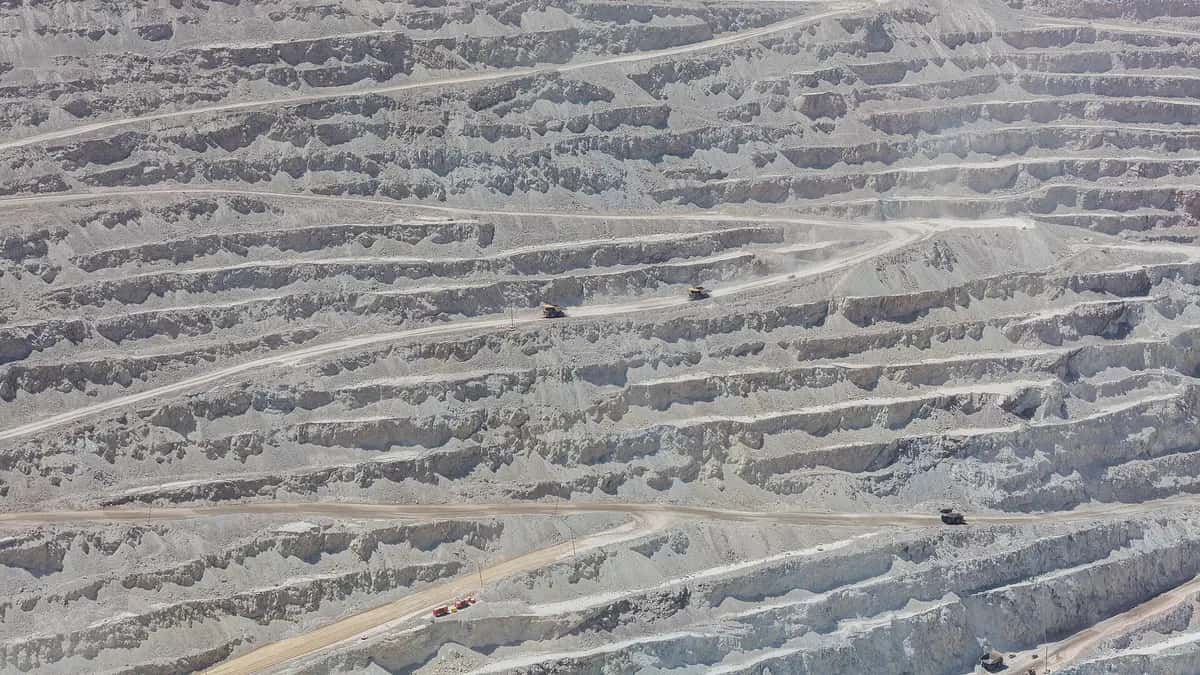
The summaries consulted do not include a country-by-country explanation from the IMF, but recent activity data point clearly to mining. The Central Bank reported that the August Imacec fell 1.0% year on year. Mining plunged 17.4% and subtracted 2.3 points from the result, while non-mining activity grew 1.4%, according to Radio Universidad de Chile and La Tercera. So far this year the economy has contracted 0.5%.
- Less copper: August output was 369,500 tonnes, the lowest monthly figure since February 2011, due to lower ore grades, maintenance and bad weather. Details in copper near its record, but Chile is producing less.
- The price paradox: copper is close to its all-time high, but a high price does not offset lower export volumes.
- Weak jobs market: unemployment measured by the INE reached 9.6% in June-August, and the IMF does not see a meaningful decline before 2028.
- Global risks: the IMF summary says that "risks are tilted to the downside" and that in Latin America there is "little offset from the tech upswing in most countries".
Chile's growth compared with South America
For Latin America and the Caribbean, the IMF projects growth of 2.3% in 2026 and 2.5% in 2027. Chile is 1.7 points below the regional average. In South America, only Bolivia would grow less, according to the breakdown by T13:
| Rank | Country | Projected growth in 2026 |
|---|---|---|
| 1 | Venezuela | 5.0% |
| 2 | Paraguay | 4.5% |
| 3 | Peru | 3.0% |
| 4 | Ecuador | 2.7% |
| 5 | Brazil | 2.2% |
| 5 | Colombia | 2.2% |
| 7 | Argentina | 2.1% |
| 8 | Uruguay | 1.3% |
| 9 | Chile | 0.6% |
| 10 | Bolivia | -3.0% |
The South American average would be 2.1% in 2026, down from 2.9% in 2025. Outside South America, the IMF raised its forecast for Mexico in 2026 to 1.5% and lowered 2027 to 1.8%, according to N+ and Bloomberg Línea. For the world economy, it kept 3.1% for 2026 and expects 3.4% in 2027. Price trends by country are in our ranking of inflation in Latin America.
IMF, Finance Ministry and Central Bank: three similar forecasts
The IMF figure is not far from local projections. Three different institutions agreeing on such a low range reinforces the idea that 2026 will be a year of near-zero growth:
| Institution | Forecast for 2026 | Date | Source |
|---|---|---|---|
| Central Bank (Monetary Policy Report) | Between 0.25% and 0.75% | September 2026 | Central Bank, via T13 |
| Finance Ministry | 0.7% | September-October 2026 | Chile País Minero |
| IMF (World Economic Outlook) | 0.6% | October 13, 2026 | IMF, via CNN Chile and T13 |
The Central Bank range is in its Monetary Policy Report; the next one comes out in December. The Finance Ministry figure was reported by Chile País Minero. Chile's growth series since 1976 is in our ranking of Chile's GDP growth.
What 0.6% growth means
With a population that is still growing, GDP growth of 0.6% means output per person barely rises in 2026. In practice, that translates into less hiring, pressure on tax revenue and less room in the 2027 budget, which Congress is debating these weeks. The good news, according to the IMF, is that inflation would keep falling towards 3.5% in 2027, giving the Central Bank room not to raise rates.
These figures should be read with caution: they are projections, not data, and the IMF revises them every three months. The next hard data point will be the September Imacec, which the Central Bank publishes in early November.
Frequently asked questions
How much will Chile grow in 2026 according to the IMF?
The IMF projects growth of 0.6% for Chile in 2026, in its October report. In July it expected 1.8% and in April, 2.4%.
How much will Chile grow in 2027?
The IMF keeps a forecast of 2.6% for 2027 and 2.4% for 2028.
What unemployment rate does the IMF expect for Chile?
An average of 9.5% in 2026 and 9.6% in 2027, the highest since 2020. It would fall to 9.1% in 2028.
Which South American country will grow less than Chile?
Only Bolivia, with a projected 3% contraction. Uruguay would grow 1.3% and Argentina 2.1%.
Why was the forecast cut?
Mainly because of the fall in mining: the August Imacec fell 1.0%, with mining down 17.4%, and copper output hit its lowest monthly level since 2011.