20% of Chilean consumers fell victim to a scam while shopping online during the holiday season, and 92% of them lost money, with an average loss of CLP 186,814, according to Norton's 2026 holiday report. The study, an online survey by Dynata of 1,000 adults in Chile conducted between September 15 and 24, 2026, became public on Thursday, November 5, through Radio Agricultura and Tecnautas, three weeks before Black Friday.
The survey shows that online shopping scams are more common in Chile than in the United States, where the same poll found 16% of victims, and that almost half of the scams arrive through social media. It also measures something new: 49% of those who used artificial intelligence assistants to shop say one of them recommended or completed a purchase from a store they did not know. This article brings together the figures, compares Chile with the United States and reviews what Chilean law says about remote purchases.
Online shopping scams in Chile, in figures
View the data as a table
| Fell victim to a scam while shopping online over the holidays | 20% |
| Average loss of victims | CLP 186,814 |
| Were targeted by a scam attempt | 39% |
| Are more worried than last year | 62% |
The report distinguishes between those who were targeted (39%) and those who actually fell for it (53% of that group, or 20% of the total). In addition, 30% admit they take more risks shopping online during the holidays than the rest of the year, and 41% bought from a site or seller they suspected because the deal was too good to pass up.
| Indicator (Chile, 2026) | Result |
|---|---|
| More worried about scams than last year | 62% |
| Were targeted by a scam while shopping online over the holidays | 39% |
| Of those, fell for the scam | 53% |
| Scam victims (share of total) | 20% |
| Victims who lost money | 92% |
| Average loss | CLP 186,814 |
| Bought from a suspicious seller because of a good deal | 41% |
| Would risk money with a seller they think is a scammer | 46% (up to CLP 57,418 on average) |
Source: Norton, Holiday Scams 2026 report, Chile results published by Tecnautas. The sample was weighted by age, gender and region to be nationally representative.
Where the scams come from: social media and fake ads
Social media is the main entry point. 47% of Chilean victims say the scam happened on a social platform and 37% link it to a fraudulent ad. Third-party websites, text messages, phone calls and email follow:
By type, the most common is the online shopping scam (34% of victims), that is, paying for a product that never arrives or is not what was offered. Next come scams on second-hand or resale marketplaces (20%), phishing to steal data (19%) and fake package delivery notices (18%).
| Type of scam | % of victims in Chile |
|---|---|
| Online shopping (fake stores or products) | 34% |
| Second-hand or resale marketplaces | 20% |
| Phishing (impersonation to steal data) | 19% |
| Fake package delivery notices | 18% |
Source: Norton, Holiday Scams 2026, via Tecnautas. 63% of Chileans admit taking at least one risky step to get a high-demand gift: buying from a stranger on social media (25%), paying well above market value (22%), buying from an unknown website (18%) or clicking on an ad on social media or in an email (17%). 47% landed on a suspicious site or seller while looking for trendy items such as Labubu, Jellycat or Stanley tumblers.

Chile versus the United States: more online scam victims
Norton ran the same survey in the United States, with 1,000 adults between September 10 and 21, and published the results on November 5 in its newsroom. The comparison shows that Chilean consumers feel more exposed, use artificial intelligence more to shop and fall for scams more often:
| More worried than last year | 62% | 48% |
| Targeted by a holiday shopping scam | 39% | 30% |
| Scam victims (share of total) | 20% | 16% |
| Victims who lost money | 92% | 88% |
| Scammed on a social platform | 47% | 47% |
| Bought from a suspicious seller because of a good deal | 41% | 35% |
| Would buy from an unknown website if the price is right | 72% | 65% |
| See more scam ads on social media than last year | 45% | 40% |
| Have used an AI shopping assistant or agent | 77% | 63% |
| Will use a tool like ChatGPT for holiday shopping | 50% | 42% |
In the United States, victims lost US$394 on average. The peso and dollar figures cannot be compared directly because the report does not convert them to a single currency or adjust for purchasing power. The pattern is the same in both countries: deals weigh more than distrust. In Chile, 83% say deals influence their holiday shopping decisions, although 34% suspect they could be scams.
Artificial intelligence in shopping and scams
The report devotes a chapter to AI shopping assistants such as ChatGPT. In Chile, 91% say they would use one to shop, but only 38% of them trust the tool to recognize and avoid a fraudulent site. 77% have already used an AI shopping assistant or agent and 50% plan to use a tool like ChatGPT this holiday season.
"A professional-looking site is no longer proof of a legitimate business," warned Iskander Sanchez-Rola, Norton's senior director of AI and Innovation, according to Tecnautas. Data from Gen Threat Labs, the company's research unit, show its products blocked nearly 14,000 fake store domains in Chile in 2025, 109% more than in 2024, and protected more than 44,000 Chilean users. Worldwide, between October and December 2025 they blocked more than 46.7 million attempts to visit fake stores, about six per second.

How to avoid online shopping scams before Black Friday
The Santiago Chamber of Commerce set Black Friday 2026 from Friday, November 27, to Monday, November 30, with more than 400 companies. It is one of the busiest online shopping dates of the year and, for the same reason, one with the most scam attempts. These are the dates ahead:
- Sep 15-24, 2026Norton survey in Chile1,000 adults, conducted by Dynata.
- Nov 5, 2026Report published20% victims and CLP 186,814 average loss in Chile.
- Nov 27-30, 2026Black FridayOrganized by the CCS, online and in physical stores.
- Dec 25, 2026ChristmasPeak of gift shopping and fake delivery notices.
Norton recommends six steps, which match those consumer authorities usually repeat:
- Check the site before paying: look for typos in the web address and search the store name together with "scam" or "reviews".
- Skip the ad: go straight to the store by typing its address or through its official app, instead of clicking on social media ads.
- Verify what AI recommends: check any merchant suggested by an AI assistant before confirming the purchase.
- Pay with protection: use a credit card or a buyer-protected payment method and be wary of anyone asking for bank transfers, gift cards or cryptocurrency.
- Track deliveries through official channels: the store's or carrier's app, not links arriving by text or email.
- Use tools that block malicious sites on your computer and phone.
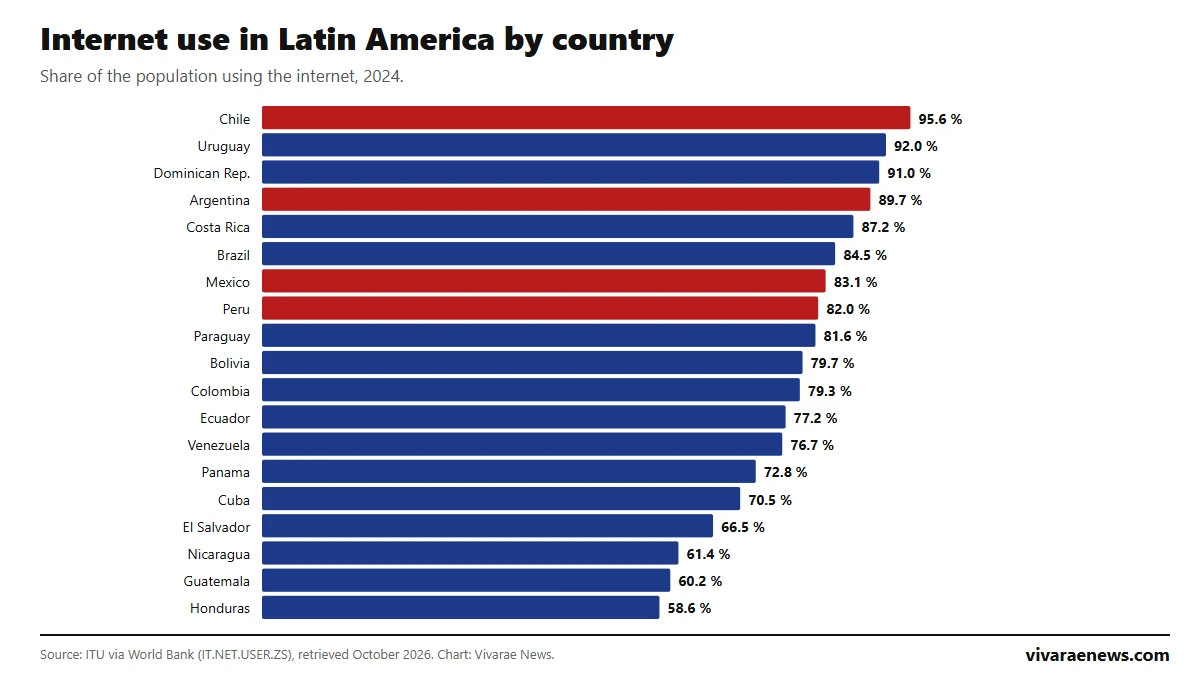
In Chile, Consumer Protection Law 19,496 grants a right of withdrawal for remote purchases: consumers can cancel within 10 days of receiving the product or contracting the service, unless the seller has expressly excluded it. That right works with formal businesses, but not with a fake store that disappears with the money. If you fall for a scam, notify your bank immediately to block the card and file a report with the PDI investigative police, Carabineros or the Prosecutor's Office. To make the most of real deals, read our guide to Black Friday 2026 in Chile and how to spot a real deal, and the ranking of internet use in Latin America.
Frequently asked questions
How many Chileans have fallen victim to online shopping scams?
According to Norton's 2026 holiday report, 20% of adults surveyed in Chile fell victim to a scam while shopping online during the holiday season, and 92% of them lost money.
How much money do victims in Chile lose on average?
CLP 186,814 on average, according to the same Dynata survey for Norton of 1,000 adults conducted between September 15 and 24, 2026.
Where do online shopping scams come from?
47% of Chilean victims were scammed on a social platform and 37% through a fraudulent ad, followed by third-party sites (27%), text messages (23%), phone calls (23%) and email (21%).
When is Black Friday 2026 in Chile?
From Friday, November 27, to Monday, November 30, 2026, according to the Santiago Chamber of Commerce, with more than 400 participating companies.
Can I return an online purchase in Chile?
Law 19,496 grants a 10-day right of withdrawal for remote purchases, unless the seller expressly excludes it. It does not protect against fake stores: in that case, notify your bank and file a report.