Chile's National Economic Prosecutor's Office (FNE) filed a complaint on November 26, 2026 with the Competition Tribunal (TDLC) against Apple Inc. for abusing its dominant position in iOS, and sought a fine of 92,378 annual tax units (UTA), equivalent to more than US$ 80 million. That is 30% of the App Store's sales in Chile linked to the infringement during the period investigated, which the FNE dates back to at least 2019.
The prosecutor challenges three practices: preventing iPhones from downloading apps or alternative stores from the web, forcing the use of Apple's payment system with 15% to 30% commissions, and banning apps from telling users that lower prices exist outside them. It also asks the tribunal to order an end to those restrictions. Apple has yet to answer the complaint before the TDLC.
View the data as a table
| Fine sought | 92,378 UTA |
| Of the related sales | 30% |
| Apple's share | 100% |
| App Store commission | 30% |
What the FNE alleges against Apple in the App Store
According to the complaint, Apple holds 100% of two markets in Chile: app distribution on iOS and the sale of digital goods inside apps, such as streaming subscriptions, e-books and video game items. The FNE argues this position is reinforced because fewer than 10% of users switch operating systems when they replace their phone. These are the three practices it challenges:
| Practice | What Apple does, according to the FNE | What the FNE asks |
|---|---|---|
| Sideloading ban | Prevents downloading apps and alternative stores from the iPhone browser | Allow third-party apps and stores without deterrent messages |
| Mandatory IAP | Forces digital goods to be sold through its In-App Purchase system, with 15% to 30% fees | Allow alternative payment systems inside apps |
| Anti-steering rule | Bans telling users about lower prices outside the app or linking to them | Remove it and allow buttons and links to external payments |
The complaint gives two examples of what users do not see: an individual YouTube Premium subscription is 23.6% cheaper on the website than in the app, and Roblox's website gives 25% more Robux for the same price. Video games accounted for 42% of App Store revenue between 2019 and 2024, according to the FNE.
How the US$ 80 million fine on Apple is calculated
Chile's competition law (DL 211) allows fines of up to 30% of sales of the product line linked to the infringement for as long as it lasted. The FNE sought that maximum. It started from a base amount of 61,585 UTA, 20% of App Store sales in Chile from iPhone transactions according to data provided by Apple itself, and raised it by 30,793 UTA, another 10%, because of Apple's monopoly position, evidence that it knew the conduct was unlawful and the harm to innovation:
| Item | UTA | In pesos (Nov. 2026 UTA) |
|---|---|---|
| Base amount (20% of sales) | 61,585 | 53.5 billion pesos |
| Increase for aggravating factors (10%) | 30,793 | 26.8 billion pesos |
| Fine sought (30%) | 92,378 | 80.3 billion pesos |
The peso conversion is a Vivarae News calculation using the November 2026 UTA (869,280 pesos, twelve times the 72,440-peso UTM published by the SII); the fine is paid in UTA at the value in force when it is paid. To understand those units, see what the UTM is and how much it is worth in 2026. For a sense of the company's size, Apple reported global revenue of US$ 416.161 billion in 2025, of which US$ 209.586 billion came from the iPhone and US$ 109.158 billion from services such as the App Store, according to its annual report cited by the FNE.
How many people use iPhones in Chile and the region
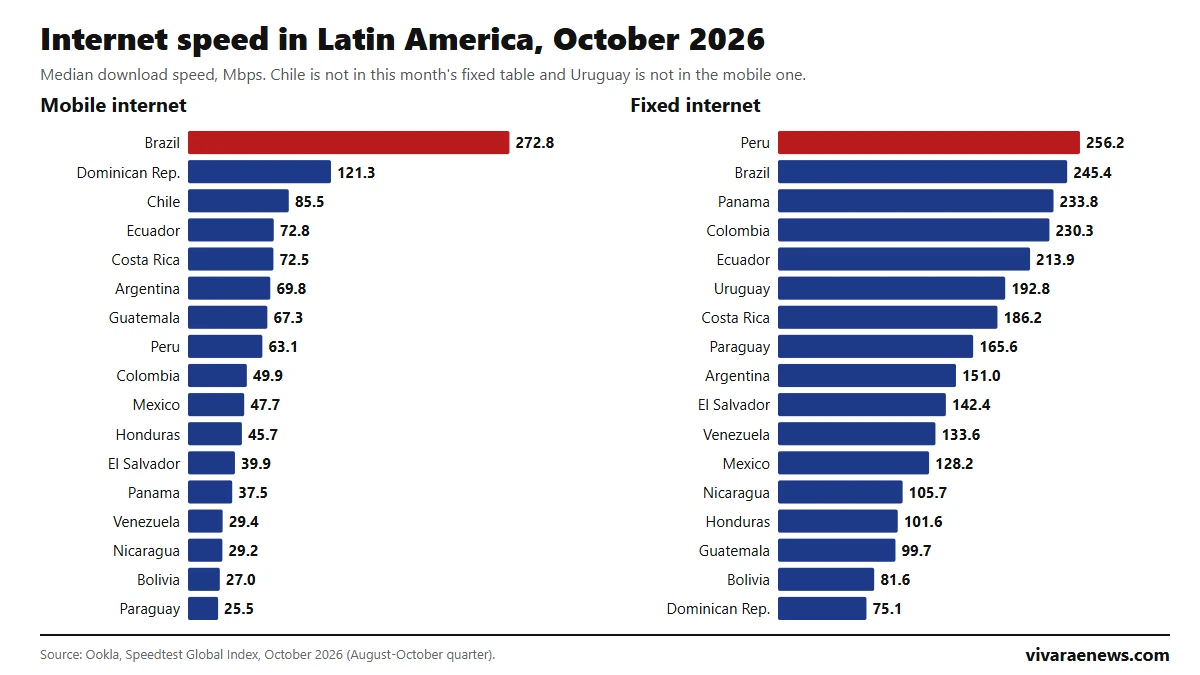
Although Apple dominates app distribution within iOS, the iPhone is a minority in Chile: in October 2026, 20.81% of mobile web visits were made with iOS and 79.19% with Android, according to StatCounter. In the United States and Japan, by contrast, iOS exceeds 50%. Prices for each model are in our story on iPhone prices in Chile:
Apple versus regulators worldwide: similar cases
Chile is not the first country to challenge these rules. The complaint itself cites the European Union, Japan and Brazil as places where downloading apps outside the App Store is already allowed, and rulings against Apple in the United Kingdom and Australia in 2025:
| Jurisdiction | Date | What happened |
|---|---|---|
| European Union | March 4, 2024 | The European Commission fined Apple over 1.8 billion euros for anti-steering rules in music apps (case AT.40437) |
| European Union | April 23, 2025 | 500 million euro fine under the Digital Markets Act for App Store anti-steering (European Commission) |
| Brazil | 2025 | Settlement with CADE allowing third-party stores and alternative payments on iOS |
| Australia | August 12, 2025 | Federal Court ruling in Epic Games v Apple |
| United Kingdom | October 23, 2025 | Competition Appeal Tribunal ruling in the Kent v Apple class action |
| Chile | November 26, 2026 | FNE complaint before the TDLC, seeking a 92,378 UTA fine |

What comes next in the FNE's case against Apple
The complaint opens a trial before the TDLC: Apple must be notified and respond, then there is an evidence period and finally a ruling, which can be appealed to the Supreme Court. These proceedings often take years. The case adds to a line of FNE actions in digital markets, which National Economic Prosecutor Jorge Grunberg called an "institutional priority". This is the timeline:
- October 2022The FNE opens an investigationAfter a complaint over the fees and payment rules of Apple's and Google's stores.
- May 2025Complaint against GoogleThe FNE asks the TDLC for a 101,482 UTA fine over conduct on Android.
- May 2025Acción Consumidores lawsuitA consumer group sues Apple before the TDLC.
- Nov 26, 2026Complaint against AppleFine of 92,378 UTA sought and an end to the sideloading ban, mandatory payment and anti-steering.
If the tribunal grants the measures, Chilean iPhone users could install alternative stores and pay for subscriptions outside the App Store, as already happens in the European Union. For more news on tech companies, see also the Microsoft 365 outage.
Frequently asked questions
What does the FNE accuse Apple of?
Abuse of dominant position on iOS: blocking app downloads outside the App Store, forcing use of its payment system and banning apps from telling users about lower prices elsewhere.
How large is the fine the FNE seeks?
92,378 UTA, more than US$ 80 million according to the FNE, about 80.3 billion pesos at the November 2026 UTA.
Has Apple already been sanctioned?
No. It is an accusation; the TDLC decides after a trial, and its ruling can be reviewed by the Supreme Court.
What would change for iPhone users in Chile?
They could install third-party app stores and see or use cheaper payment options outside the App Store.