Mexico attracted US$43.09 billion in foreign direct investment (FDI) between January and September 2026, the largest amount for that period on record, according to the Ministry of Economy in a statement released on Tuesday, November 24. The figure is 5.3% higher than the US$40.906 billion originally published for the same months of 2025. But the record comes with fine print: 81.2% is reinvested earnings from companies already operating in the country, and new investment fell 42.1%.
These are the figures for foreign direct investment in Mexico by type, country of origin, state and sector, and how they compare with previous years. For regional context, see the ranking of foreign direct investment in Latin America.
View the data as a table
| Total FDI | US$ 43,090 M |
| Increase vs. 2025 | 5.3% |
| Reinvested earnings | 81.2% |
| New investment | -42.1% |
Why foreign direct investment in Mexico hit a record
FDI is recorded in three components. Reinvested earnings (profits that subsidiaries of foreign companies keep in Mexico instead of sending them to the parent company) reached US$34.975 billion, 26% more than a year earlier and the highest amount on record. Intercompany accounts (loans between the subsidiary and its parent) fell 34.6% to US$4.315 billion, and new investment (companies arriving or fresh capital to open or expand operations) totaled US$3.8 billion, according to the Ministry of Economy.
| Type of investment | January-September 2026 (US$ million) | Share | Year-on-year change |
|---|---|---|---|
| Reinvested earnings | 34,975 | 81.2% | +26.0% |
| Intercompany accounts | 4,315 | 10.0% | -34.6% |
| New investment | 3,800 | 8.8% | -42.1% |
| Total | 43,090 | 100% | +5.3% |
Source: Ministry of Economy. The drop in new investment (from US$6.563 billion in 2025, according to Expansión) was the figure the business press highlighted most. In manufacturing, by contrast, new investment rose 58.8%, from US$708 million to US$1.124 billion, driven by transport equipment and computer and electronic components.
View the data as a table
| FDI January-September | |
|---|---|
| 2023 | 32,926 |
| 2024 | 35,737 |
| 2025 | 40,906 |
| 2026 | 43,090 |
The series shows a steady rise over the past four years: from US$32.926 billion in the first nine months of 2023 to US$43.09 billion in 2026, an increase of 30.9% in three years. It should be read carefully, because each year is compared with the previous year's preliminary figure, and that figure later rises with revisions. The Chamber of Deputies' Center for Public Finance Studies, for example, published US$32.926 billion for January-September 2023, and that same period was later revised upward in subsequent reports.
| Period | Preliminary FDI (US$ million) | Change from previous year |
|---|---|---|
| January-September 2023 | 32,926 | - |
| January-September 2024 | 35,737 | +8.5% |
| January-September 2025 | 40,906 | +14.5% |
| January-September 2026 | 43,090 | +5.3% |
Source: CEFP for 2023 and 2024, and the Ministry of Economy for 2025 and 2026. Percentage changes are calculated between preliminary figures; the 2024 change is the one reported by the CEFP.
Where foreign direct investment in Mexico comes from
The United States remains the largest investor in Mexico, with US$19.334 billion (44.9% of the total), followed by Spain, Germany, the United Kingdom and Canada. The five account for 77.7% of FDI in the period, and the two USMCA partners, the United States and Canada, concentrate 50.5%. The Ministry of Economy did not break down the remaining countries.
View the data as a table
| United States | US$ 19,334 |
| Spain | US$ 6,208 |
| Germany | US$ 2,895 |
| United Kingdom | US$ 2,586 |
| Canada | US$ 2,447 |
| Country | US$ million | Share |
|---|---|---|
| United States | 19,334 | 44.9% |
| Spain | 6,208 | 14.4% |
| Germany | 2,895 | 6.7% |
| United Kingdom | 2,586 | 6.0% |
| Canada | 2,447 | 5.7% |
| All other countries | 9,620 | 22.3% |
Source: Ministry of Economy. "All other countries" is calculated as the difference between the total and the five published countries.
The states and sectors that receive the most foreign investment in Mexico
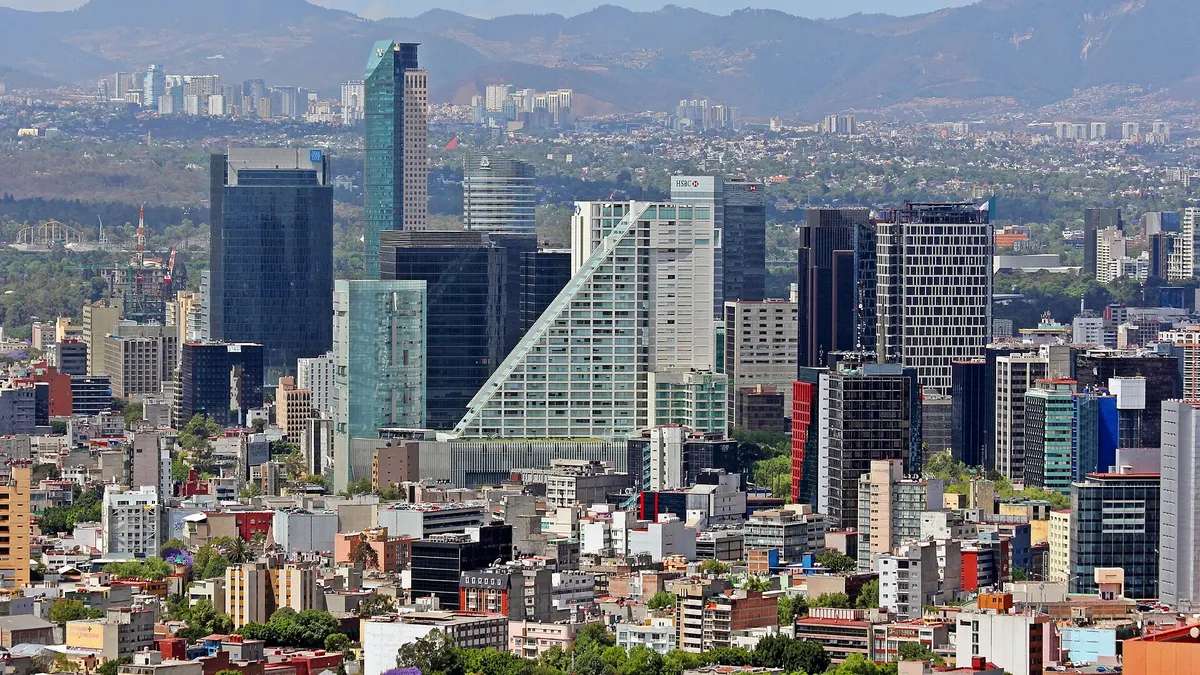
Mexico City attracted US$19.602 billion, 45.5% of the total, partly because many of the companies that report the investment have their tax domicile there. It is followed by Nuevo León, Jalisco, Baja California and Puebla; the five states concentrate 71.6% of FDI. By sector, manufacturing received US$19.231 billion (44.6% of the total, +26.6%), followed by financial and insurance services (US$10.635 billion, +3.7%) and transportation, postal services and warehousing (US$3.099 billion, +59.3%).
| Sector | US$ million | Share | Year-on-year change |
|---|---|---|---|
| Manufacturing | 19,231 | 44.6% | +26.6% |
| Financial and insurance services | 10,635 | 24.7% | +3.7% |
| Transportation, postal services and warehousing | 3,099 | 7.2% | +59.3% |
| All other sectors | 10,125 | 23.5% | Not detailed |
Source: Ministry of Economy. Within manufacturing, the largest increases were in computer, communications equipment and electronic components (+US$1.814 billion), beverages and tobacco (+1.804 billion), food (+1.309 billion) and chemicals (+1.271 billion).
What the foreign investment record means for Mexico
The Ministry of Economy attributed the result to "the strength of the country's macroeconomic and institutional fundamentals" and to the Plan México, and cited the OECD, according to which Mexico was the world's sixth-largest FDI recipient in the first half of 2026, behind the United States, China, the Netherlands, Brazil and Czechia. The critical reading focuses on composition: with new investment at its lowest level in years, growth depends on companies already in the country continuing to reinvest. Three facts to read the record:
- The third quarter (July to September) added US$8.122 billion, 22.3% more than the US$6.641 billion in the same quarter of 2025, according to Expansión.
- The figures are preliminary: the Ministry of Economy revises them as companies report their investments, and the official comparison is made against the figure originally published a year earlier.
- The figure comes in a year of USMCA review and trade tension with the United States (see the tariffs Mexico pays).
For companies and state governments, the distinction between the three components matters. Reinvested earnings show that foreign subsidiaries make money in Mexico and prefer to keep it there, but they do not necessarily add new plants or jobs. New investment is what reflects the arrival of projects, such as those expected from the relocation of supply chains from Asia (nearshoring). That is why the manufacturing figure, with new investment up in transport equipment (+999.3%) and in computers and electronic components (+605.2%), is the one the Ministry of Economy put front and center.
Other recent figures on the Mexican economy: GDP grew 3.2% in the third quarter and remittances total US$47.164 billion in 2026.
Frequently asked questions
How much foreign investment did Mexico receive in 2026?
US$43.09 billion between January and September, a record for that period according to the Ministry of Economy. The full-year figure will be known in February 2027.
Which country invests the most in Mexico?
The United States, with US$19.334 billion (44.9%), followed by Spain (6.208 billion) and Germany (2.895 billion).
Why did new investment fall?
The Ministry of Economy did not explain the 42.1% drop; instead, it highlighted the rise in new investment in manufacturing (+58.8%).
Which state receives the most foreign investment?
Mexico City, with US$19.602 billion (45.5%), followed by Nuevo León (4.431 billion) and Jalisco (2.707 billion).