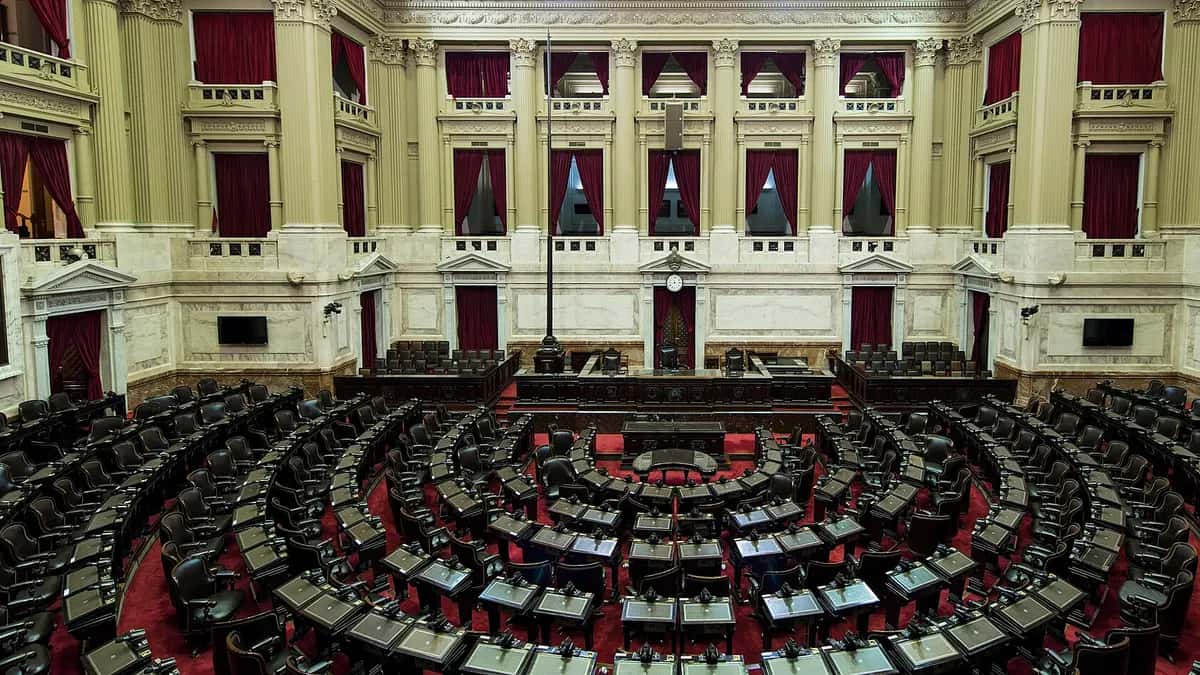
Javier Milei's ruling party failed to sign the committee report on the 2027 budget in the Chamber of Deputies on Wednesday, October 28, as planned, because Mauricio Macri's PRO party made its support conditional on funds for the City of Buenos Aires, a cut in VAT on eggs and lower fuel taxes, according to [El Cronista](https://www.cronista.com/economia-politica/presupuesto-2027-el-pro-demora-el-dictamen-y-presiona-por-fondos-para-caba-e-impuesto-a-los-combustibles/). The government wanted to bring the bill to the floor on November 18; PRO left the door open to November 25.
The bill, presented in September, projects 4% growth, 18% inflation and a fourth straight year of financial surplus for 2027. These are the figures of the 2027 budget, the allies' demands and what is still needed for it to become law.
What the 2027 budget projects
| Variable | Projection for 2027 | Comparison |
|---|---|---|
| GDP growth | 4% | 3% estimated for 2026; the central bank's REM survey expects 2.9% for 2027 |
| Inflation (December to December) | 18% | 29% estimated for December 2026; the REM expects 20.5% |
| Average inflation for the year | 21.1% | — |
| Wholesale dollar in December | 1,847.60 pesos | 1,600 pesos expected for end-2026; the REM expects 2,015.70 |
| Average dollar for the year | 1,728 pesos | — |
| Primary surplus | 1.3% of GDP | — |
| Financial surplus | About 0.2% of GDP | Would be the fourth year in a row |
| Investment | +9.2% | After an estimated fall in 2026 |
| Private consumption | +3.4% | — |
| Exports of goods and services | US$133.984 billion | Imports: US$118.424 billion |
| Wages (average improvement) | 25.4% | — |
| National tax burden | 21.70% of GDP | 21.06% in 2026 |
Sources: Economy Ministry bill summarized by Infobae, Elonce and El Cronista; the REM is the central bank's Market Expectations Survey. The government clarified that the 1,847.60-peso dollar is an assumption for calculating the accounts, not a forecast. Official documents are on the budget site of the Treasury Secretariat.
How far off the 2026 budget was
| 2026 variable | What the 2026 budget assumed | What the government now estimates |
|---|---|---|
| Inflation (December to December) | 10.1% | 29% |
| GDP growth | 5% | 3% |
| Wholesale dollar in December | — | 1,600 pesos |
Sources: Elonce and Infobae. Inflation in 2026 would end almost three times above the budgeted figure, which partly explains the opposition's distrust of the new projections. The historical series is in Argentina's inflation year by year.
Why the 2027 budget is stalled in the lower house
| Actor | What it wants |
|---|---|
| PRO (Macri and Frigerio) | Revenue sharing and the national government's debt to the City of Buenos Aires, removing VAT on eggs and lowering the fuel tax |
| Governors and dialogue-minded blocs | Public works, roads, funds for the provinces and provincial pension funds |
| Blocs demanding sector changes | University funding and the disability chapter, which has already been modified |
Source: El Cronista. "There is no budget report, there are requests the executive did not answer," a PRO source told the paper. The negotiation is intertwined with political reform and the elimination of the PASO primaries, which the government wants to pass in parallel in the Senate.
The 2027 budget timetable
| Date | Milestone |
|---|---|
| September 15 | The government presents the bill |
| October 28 | Planned date for the committee report in the lower house; it was not signed |
| November 8 to 11 | Pope Leo XIV's visit to Argentina: reduces the possible session days |
| November 17 | PRO's deadline to include its requests |
| November 18 or 25 | Floor session in the Chamber of Deputies, depending on the deal |
| November 30 | End of the regular session period |
Source: El Cronista. If it is not approved before the end of the year, the government can operate with an extended budget, as has happened in other years, but it loses the ability to set new guidelines and organize spending with a law passed by Congress.
What is at stake
For the government, the 2027 budget is the card to show investors and the IMF that the fiscal surplus holds in an election year: Argentina elects a president in 2027 (see the 2027 presidential election). Economy Minister Luis Caputo said it would be "the first time in our history that, while not in default, a government in Argentina achieves four consecutive years of financial surplus". For the allies, it is the moment to secure funds. Private analysts are more pessimistic than the government on growth, inflation and the dollar, according to the REM. Country risk and the exchange rate react to these negotiations (see what country risk is and the dollar today).
The labor market also weighs on the debate: formal private employment has been falling for more than a year (see 134,500 fewer jobs in a year), while the bill assumes an average wage improvement of 25.4%, above projected inflation.
Frequently asked questions
What inflation does the 2027 budget project?
18% between December 2026 and December 2027, and 21.1% average annual inflation.
How much would Argentina's economy grow in 2027 according to the government?
4%, above the 2.9% expected by analysts in the central bank's REM survey.
What dollar does the 2027 budget assume?
A wholesale dollar of 1,847.60 pesos in December 2027 and an average of 1,728 pesos for the year, as a calculation assumption.
Why was there no committee report on October 28?
Because PRO made its support conditional on funds for the City of Buenos Aires and tax cuts, and the executive had not responded.
When will the lower house vote on the 2027 budget?
The ruling party was aiming for November 18; according to PRO, it could slip to November 25.