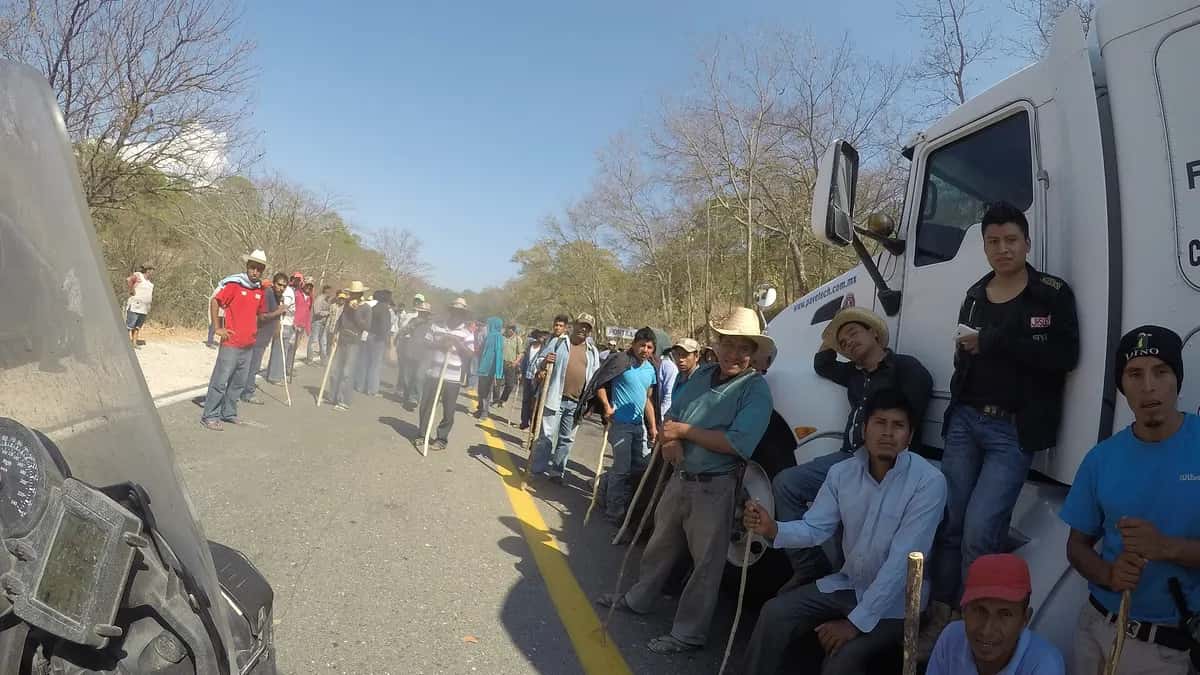
Mexico's national freight truckers' strike on Monday, October 26, 2026, mobilized 858 people and 691 vehicles at 38 sites in 19 states, according to the Interior Ministry (Segob) report at 9:30 a.m., cited by [El Informador](https://www.informador.mx/mexico/paro-nacional-de-transportistas-segob-reporta-movilizaciones-en-19-estados-y-38-puntos-de-protesta-20261026-0069.html). Most blockades were lifted on Monday night, but some lasted into the early hours and others were announced for Tuesday the 27th, when the industry begins talks with the Finance Ministry, according to El Financiero.
The protest, called by the National Chamber of Freight Transport (Canacar) and other groups, demands highway security, an end to extortion and no cut to the tax incentive for toll-road use included in the 2027 economic package. These are the key facts.
The truckers' strike in figures
| Indicator | Data | Source |
|---|---|---|
| States with protests | 19 | Segob, October 26, 9:30 a.m. |
| Protest sites | 38 | Segob |
| Vehicles and people | 691 vehicles and 858 people | Segob |
| States with most sites | Veracruz (8), State of Mexico (6), Nuevo León and Tlaxcala (3 each) | Segob |
| Largest turnout | Guanajuato, Veracruz and Tabasco | Segob |
| Loss estimated by the industry | Up to 21.5 billion pesos a day | Hamotac |
| Units called out | Around one million, according to organizers | Canacar and Hamotac |
Sources: El Informador and La Razón. Loss and unit figures are organizers' estimates, not official data. Segob reported a full blockade in Tlaxco (Tlaxcala) and partial closures elsewhere in Tlaxcala and Veracruz.
What truckers want from the national strike
- Highway security: robberies, violence against drivers and extortion payments on the routes.
- Extortion: "We cannot normalize insecurity, extortion," they said at a press conference, according to N+.
- Toll-road incentive: they reject the 2027 economic package's adjustment to the benefit that lets companies credit up to 50% of toll-road spending.
- Infrastructure and regulation: poor roads and over-regulation, according to Canacar president Augusto Ramos Melo.
"Freight transport cannot keep being ignored while it faces insecurity, extortion, protection payments, poor roads, over-regulation and cuts to tax incentives," Ramos Melo said when announcing the strike, according to N+. Alongside Canacar, the call was made by the Mexican-American Federation of Transporters (Fematrac), Hamotac Nacional and the Organización Integradora de Derechos Convencionales.
The toll-road incentive in the 2027 Revenue Law
The fiscal point of the dispute is the revenue threshold to qualify for the toll-road incentive. According to El Financiero, the Revenue Law would lower the threshold from 300 to 250 million pesos, leaving the largest companies out. Canacar proposed two options, according to UnoTV:
| Canacar proposal | What it would mean |
|---|---|
| Keep the current 300 million peso threshold | Companies that receive the incentive today would keep it |
| Apply the benefit proportionally up to the 250 million cap approved by deputies | All companies would qualify, but only up to that amount |
Source: UnoTV. Ramos Melo warned that higher transport costs could feed through to prices. The fiscal package has passed the Chamber of Deputies and is before the Senate this week: details in our story on the 2027 Revenue Law in the Senate.
What happens with the blockades on Tuesday
| Site | Status reported on the morning of October 27 |
|---|---|
| Mexico-Toluca (Plazas Outlet Lerma and La Marquesa toll booth) | Closures maintained, according to the SICT in the State of Mexico |
| Mexico-Pachuca | Reopened after about 15 hours; threat of new closures |
| Tepotzotlán toll booth (Mexico-Querétaro), Mexico-Puebla and Chamapa-Lechería | Blockades threatened for Tuesday |
| Mendoza-Córdoba and Teapa-Cosoleacaque (Veracruz) and Puebla-Tlaxcala | Possible blockades |
Source: El Financiero. The situation changes by the hour: check National Guard and federal highway reports before traveling.
The government's response to the national truckers' strike
Segob, headed by Rosa Icela Rodríguez, called for "prioritizing dialogue" and said the government "keeps channels of dialogue open with transport organizations". According to El Financiero, talks with the Finance Ministry on the tax issue start this Tuesday, followed by security authorities on highway violence; the tables remain open to groups that blocked roads and have not joined. Mexican media also reported that other industry organizations rejected Canacar's strike at a meeting with Segob and Finance. No agreement had been announced at the time of writing.
The dispute adds to other fronts in Mexico, such as wage talks at the IMSS. More economic context in September unemployment according to INEGI.
Frequently asked questions
Why are truckers striking in Mexico?
Over highway insecurity and extortion, poor roads and the cut to the toll-road tax incentive in the 2027 economic package.
How many states did the October 26 strike reach?
19 states and 38 protest sites, according to Segob's 9:30 a.m. Monday report.
Who called the national strike?
Canacar, together with Fematrac, Hamotac Nacional and the Organización Integradora de Derechos Convencionales.
Is the strike continuing on Tuesday, October 27?
Most blockades were lifted Monday night, but some closures continued and new ones were threatened for Tuesday, as talks with Finance began.
How much does the strike cost?
Hamotac estimated losses of up to 21.5 billion pesos a day; it is an industry estimate, not official data.