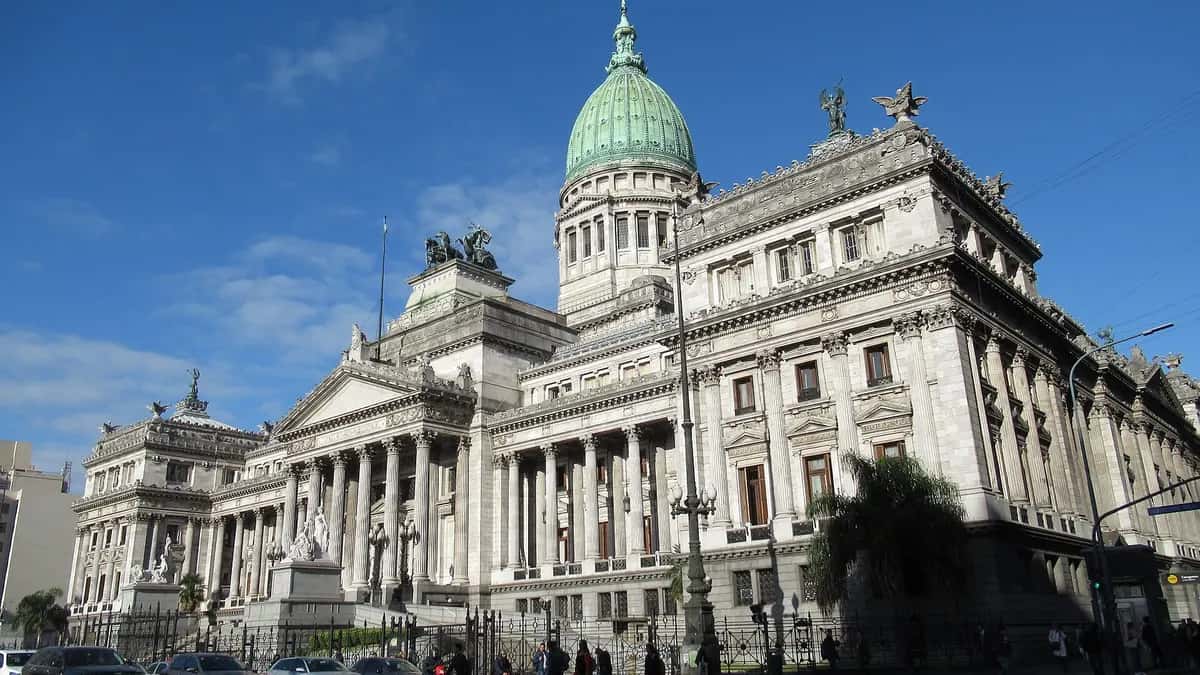
Javier Milei's government will try on Tuesday, November 17, to obtain a committee report in the Senate Constitutional Affairs Committee on the bill that suspends the Open, Simultaneous and Mandatory Primaries (PASO) for the 2027 presidential election, Infobae reported. The committee has 19 members and the report needs at least 10 signatures; La Libertad Avanza contributes 6, so it depends on allied senators who answer to provincial governors. The committee chair, Agustín Coto, called the meeting for 3:00 p.m. in the Arturo Illia Hall, according to Infobae.
Time is short: Congress's ordinary sessions end on November 30 and the presidential election is scheduled for October 24, 2027. This article explains what the bill to suspend the PASO includes, how the signatures break down, what the UCR, PRO and Peronists say, and how the 2027 electoral calendar is shaping up.
View the data as a table
| Signatures needed for the report | 10 |
| La Libertad Avanza's own signatures | 6 |
| Days until ordinary sessions end | 14 |
| Districts to be a national party | 10 |
What the bill to suspend the PASO proposes
The PASO have existed since Law 26,571 of 2009 and were first used in 2011: each party picks its candidates in a primary in which the whole electorate votes, and only lists that win more than 1.5% of the vote go on to the general election. In 2025 they were already suspended for the midterms. The bill now pushed by the Casa Rosada suspends them for the 2027 presidential election and includes other changes, according to Infobae and Infobae:
| Bill item | What changes |
|---|---|
| PASO | Primaries suspended for 2027 |
| Single ballot | Changes to the single paper ballot |
| Clean Record | Reinstates disqualification of convicted candidates |
| Funding | Opens campaigns to private funding |
| National parties | Raises from 5 to 10 the districts needed to be a national party |
| Presidential debates | Scraps presidential debates, according to Infobae |
| Tag-along lists | The government is weighing adding them at the last minute; no text known yet |
Sources: Infobae; Infobae; Infobae. Sources differ on when the bill was introduced: one article says April and the PRO bloc leader says May. Tag-along lists would let other parties attach their lists of deputies and senators to the presidential ballot.
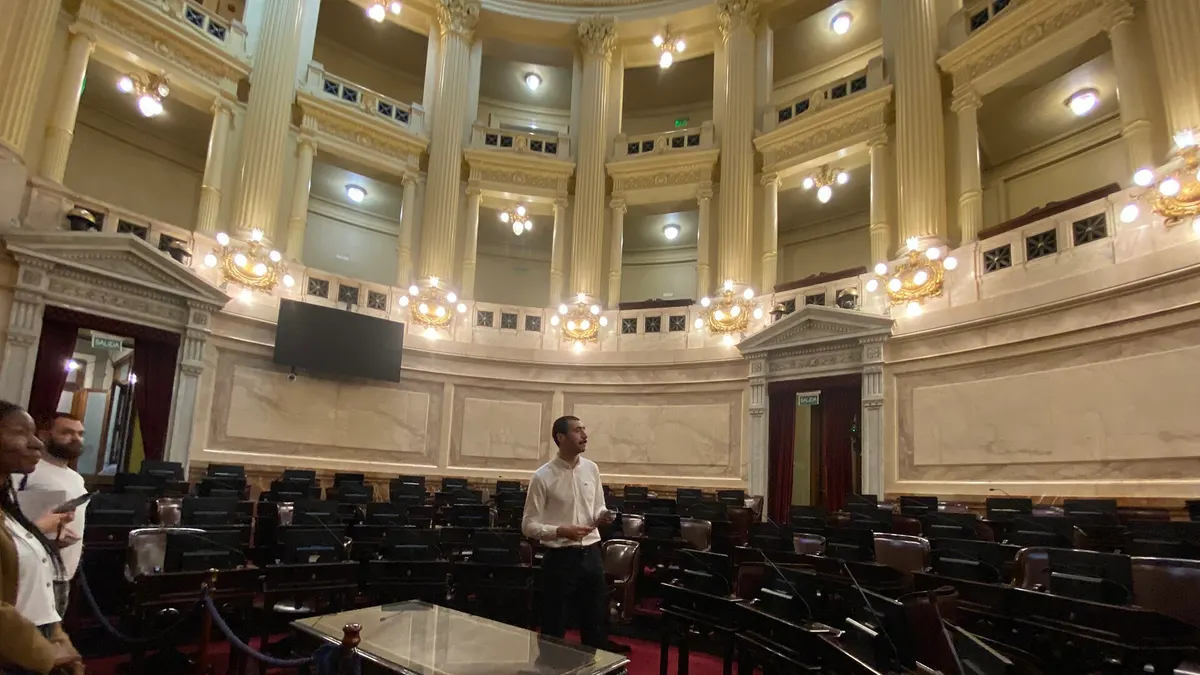
The Senate signatures to suspend the PASO
The committee's six libertarians are Agustín Coto, Belén Monte de Oca, Nadia Márquez, Patricia Bullrich, Luis Juez and Ivanna Arrascaeta. The remaining signatures must come from allies: radicals Rodolfo Suárez (Mendoza) and Eduardo Vischi (Corrientes), Peronist Alejandra Vigo (Córdoba), Beatriz Ávila (Tucumán), Carlos Espínola (Corrientes), Flavio Fama (UCR, Catamarca) and Carolina Moisés (Jujuy), Infobae details. The Casa Rosada considers deals with Suárez, Vischi and Vigo closed, which would leave it at 9; Ávila answers to Tucumán governor Osvaldo Jaldo, who defends the PASO.
View the data as a table
| seats | |
|---|---|
| La Libertad Avanza | 6 |
| Allies with a deal, per the government | 3 |
| Undecided allies | 4 |
| Rest of the committee | 6 |
| Total | 19 |
| Group | Senators on the committee | Reported stance |
|---|---|---|
| La Libertad Avanza | 6 | In favor (bill's sponsor) |
| Allies with a deal | 3 | Deal closed according to the Casa Rosada |
| Undecided allies | 4 | No confirmed stance |
| Rest | 6 | No detail in the source |
Source: Infobae. If there is no report on Tuesday, some lawmakers prefer to sign it before the end of the month so it can be passed in extraordinary sessions in December, if the executive calls them, and so the Chamber of Deputies can pass it before year-end. Chamber of Deputies speaker Martín Menem said he expects the Senate to approve it within about 15 days.
What the UCR, PRO and Peronists say about the PASO
In the Senate radical bloc, sources told Infobae that the deal between the Casa Rosada and the five UCR governors (Alfredo Cornejo, Maximiliano Pullaro, Juan Pablo Valdés, Carlos Sadir and Leandro Zdero) is "practically closed", with guarantees for their provincial elections and talks on legislative lists. PRO, however, has objections: its Senate bloc leader said "the PASO system should not be touched, much less so close to an election", recalled that the party's executive board, with Mauricio Macri, decided to keep them, and called tag-along lists "nonsense", according to Infobae.
From Peronism, the leader of the Unión por la Patria bloc in the Chamber of Deputies, Germán Martínez, defended the primaries as "something that works in favor of democratic life" and argued that the government wants to eliminate them "because it feels it can't win any runoff"; he said his coalition will have "a unified proposal" and will win "the first round", according to Infobae.
| Actor | Stance on suspending the PASO | Source |
|---|---|---|
| Government (La Libertad Avanza) | In favor; seeks report on November 17 | Infobae |
| UCR governors | Deal "practically closed" | Infobae |
| PRO | Against changing the PASO "so close" to the vote; rejects tag-along lists | Infobae |
| Unión por la Patria | Against; defends the primaries | Infobae |
| Tucumán governor (Osvaldo Jaldo) | Defends the PASO | Infobae |
How many people voted in the PASO since 2011
Turnout in the national PASO fell from 78.65% in 2011 to 70.43% in 2023, with a low of 67.78% in 2021, during the pandemic, according to each election's entry on Wikipedia. In the 2023 presidential primaries, Javier Milei was the most-voted candidate with 29.86% of votes cast, anticipating his runoff victory that year.
View the data as a table
| Turnout | |
|---|---|
| 2011 | 78.65% |
| 2013 | 76.83% |
| 2015 | 74.91% |
| 2017 | 74.97% |
| 2019 | 76.40% |
| 2021 | 67.78% |
| 2023 | 70.43% |
| Year | Type | Turnout | Most-voted in the presidential primary |
|---|---|---|---|
| 2011 | Presidential | 78.65% | Cristina Fernández de Kirchner, 47.98% |
| 2013 | Midterm | 76.83% | - |
| 2015 | Presidential | 74.91% | Daniel Scioli, 38.67% |
| 2017 | Midterm | 74.97% | - |
| 2019 | Presidential | 76.40% | Alberto Fernández, 47.34% |
| 2021 | Midterm | 67.78% | - |
| 2023 | Presidential | 70.43% | Javier Milei, 29.86% |
| 2025 | Midterm | Suspended | - |
Source: Wikipedia, entries for the 2011-2023 primary elections (percentages of votes cast, as published there; official National Electoral Directorate counts may differ due to rounding and calculation base).
Argentina's 2027 electoral calendar
While Congress debates the PASO, the provinces are starting to set their dates. Of the 22 districts that elect a new executive in 2027, only two have made it official by decree: Neuquén will vote on February 14 (decree 1860/2026, published November 9) and Tucumán on May 9, Infobae reported. For the candidates and polls, see the article on Argentina's 2027 presidential election and the profiles of Javier Milei, Axel Kicillof, Myriam Bregman and Juan Schiaretti.
- Nov 17, 2026Constitutional Affairs takes up the bill3:00 p.m., Arturo Illia Hall; 10 signatures needed.
- Nov 30, 2026Ordinary sessions end
- Dec 2026Possible extraordinary sessionsIf the executive calls them.
- Feb 14, 2027Neuquén elections
- May 9, 2027Tucumán elections
- Oct 24, 2027Presidential election
Frequently asked questions
Will there be PASO primaries in 2027?
For now the law keeps them. The government wants to suspend them, but the bill does not yet have a committee report; it must pass the Senate and the Chamber of Deputies.
When is the 2027 presidential election?
It is scheduled for October 24, 2027.
What are the PASO?
Open, Simultaneous and Mandatory Primaries, created by Law 26,571 of 2009: all parties pick candidates on the same day and the whole electorate votes.
Have they been suspended before?
Yes, for the 2025 midterm elections.