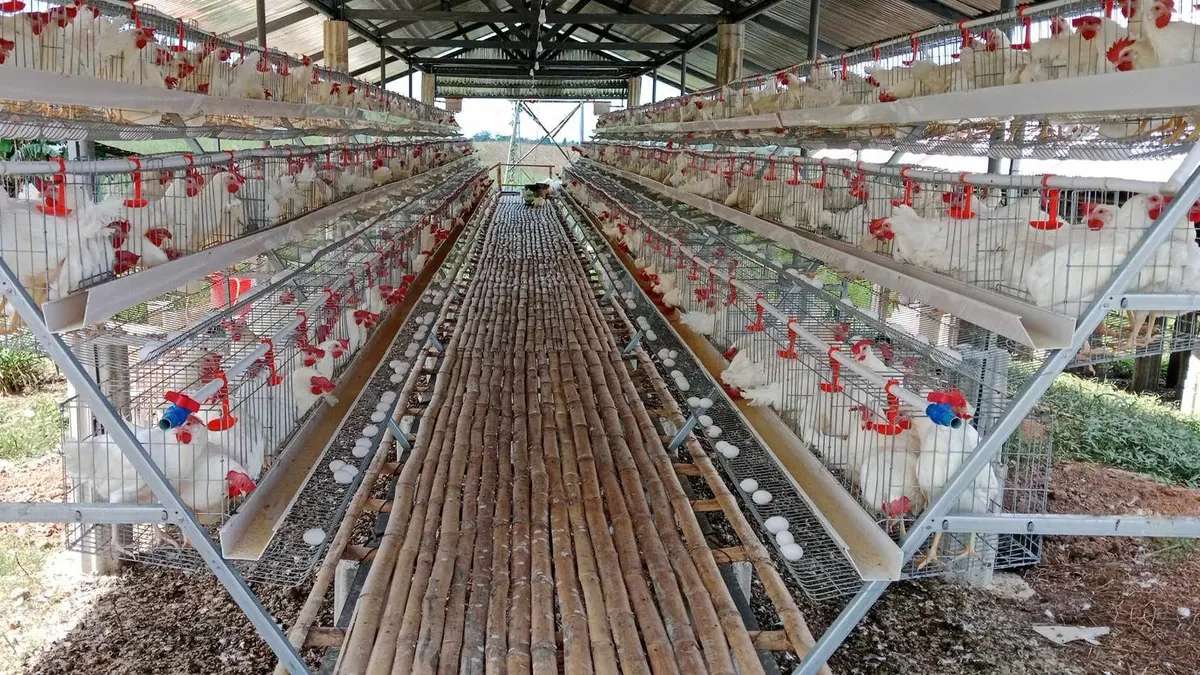
Mexico's National Service for Agri-Food Health, Safety and Quality (Senasica) confirmed an outbreak of highly pathogenic AH5N1 avian influenza at a commercial table-egg farm in Umán, Yucatán, with a population of 225,860 laying hens, according to its statement of November 5, 2026. The farm was placed under permanent quarantine and depopulated, and authorities drew a 10-kilometer risk area around it.
According to the Agriculture Ministry, the farm accounts for just 0.09% of the national poultry inventory, so the supply of eggs and chicken "is guaranteed" and eating them "is completely safe." The case stands out because, according to the report to the World Organisation for Animal Health (WOAH) cited by InfoAnimales, it is Mexico's first AH5N1 outbreak in poultry in more than two years, and because Yucatán already went through one of the country's largest outbreaks in 2022. This article brings together what is known, the history and what health agencies say about the risk to people.
The bird flu outbreak in Yucatán, in figures
View the data as a table
| Laying hens on the farm | 225,860 |
| Birds dead before the alert | 862 |
| Of the national poultry inventory | 0.09% |
| Radius of the risk area | 10 km |
| Item | Figure | Source |
|---|---|---|
| Location | Umán, Yucatán (commercial table-egg farm) | Senasica |
| Hens on the farm | 225,860 | Senasica |
| Unusual mortality reported | 862 birds | Senasica |
| Share of the national inventory | 0.09% | Senasica |
| Risk area | 10 km radius | Senasica |
| Virus | Highly pathogenic avian influenza AH5N1 | Senasica |
Source: Senasica statement of November 5, 2026. The statement does not say how many birds died from the virus and how many were culled; it says the farm was depopulated and the birds were "disposed of under sanitary rules."
How bird flu was detected at the Umán farm
The alert came from the farm itself: its responsible veterinarian reported unusual mortality of 862 birds. Technicians from the Mexico-United States Commission for the Prevention of Foot-and-Mouth Disease and Other Exotic Animal Diseases (CPA) took samples, which tested positive for highly pathogenic avian influenza subtype H5 at the Official Biosafety Level 2 Laboratory in Mérida. They were then sent to the CPA's biosafety level 3 laboratory in Palo Alto, Mexico City, to isolate and sequence the virus, according to Senasica.
What measures Senasica took
The measures follow the protocol for highly pathogenic avian influenza. According to the official statement, these actions were taken:
- Permanent quarantine and depopulation of the farm, with sanitary disposal of the birds and destruction of waste and contaminated materials.
- Cleaning and disinfection of the facilities. After a sanitary vacancy period, sentinel birds will be introduced to confirm the virus is gone before restocking.
- A 10-kilometer risk area, where broiler, commercial layer and breeder farms are being sampled.
- Surveillance of wild birds: nearby water bodies, where migratory birds arrive in winter, are being inspected, and an expert team will look for cases in free-living birds.
- Emergency vaccination under review: depending on the diagnostic results, the General Directorate of Animal Health will consider authorizing it on nearby farms. It had not been authorized as of this writing.
| Measure | Status as of November 7 |
|---|---|
| Quarantine and depopulation of the farm | Done |
| Sampling within a 10 km radius | Under way |
| Search in wild birds | Under way |
| Emergency vaccination on neighboring farms | Under review |
| Restocking | After the sanitary vacancy and sentinel birds |
Senasica asks people to report sick or dead birds at 800 751 2100 or via WhatsApp at 55 3996 4462.
History of AH5N1 bird flu in Mexico and in Yucatán
The AH5N1 virus was first confirmed in Mexico in October 2022, in a falconry bird in the State of Mexico, and within weeks it reached commercial farms. In November that year there was an outbreak at production units in Umán and Timucuy, Yucatán, that affected 312,756 birds, according to the Agriculture Ministry as cited by La Razón. By early December 2022 the virus was in 11 states and 3,933,499 birds had been culled, 0.19% of the inventory, Excélsior reported with Senasica data. Yucatán's last quarantine was lifted in March 2023, according to Senasica's AVISE bulletin.
- Oct. 2022Mexico's first AH5N1 caseSenasica confirms it in a falconry bird in the State of Mexico; it then reaches commercial farms.
- Nov. 2022Outbreak in Umán and Timucuy, Yucatán312,756 birds affected, according to the Agriculture Ministry.
- Dec. 202211 states with the virus3,933,499 birds culled, 0.19% of the inventory.
- Mar. 2023Yucatán's last quarantine is lifted
- Apr. 2025Mexico's first human H5N1 caseA girl in Durango, who died on April 8, according to WHO.
- Nov. 5, 2026Outbreak at a farm in Umán225,860 laying hens; quarantine and depopulation.
| Outbreak | Location | Birds | Source |
|---|---|---|---|
| November 2022 | Umán and Timucuy, Yucatán | 312,756 | La Razón (Agriculture Ministry) |
| October-December 2022 | 11 states | 3,933,499 culled | Excélsior (Senasica) |
| November 2026 | Umán, Yucatán | 225,860 | Senasica |

Is H5N1 bird flu a risk to people?
The World Health Organization (WHO) assesses the risk posed by A(H5N1) viruses to the general population as low, and as low to moderate for people exposed through their work, such as poultry workers and veterinarians, according to its report of April 17, 2025. That report was issued over Mexico's first confirmed human H5N1 case: a girl in Durango who died on April 8, 2025. Between 2003 and April 2025, WHO counted 972 human H5N1 cases in 24 countries, with 470 deaths.
| WHO data | Figure |
|---|---|
| Risk to the general population | Low |
| Risk to occupationally exposed people | Low to moderate |
| Human H5N1 cases worldwide (2003-April 2025) | 972 |
| Deaths | 470 |
| Mexico's first human H5N1 case | Durango, April 2025 |
Source: WHO. In October 2025 Mexico reported another human case, which PAHO later confirmed as H5N2, not H5N1. The known route of infection is direct contact with sick or dead birds or their secretions, which is why people are advised not to handle them. The Agriculture Ministry insists that eating eggs and chicken is safe. As of November 7 there were no official reports of changes in egg prices due to this outbreak. For price context in Mexico, see inflation in the first half of October.
Frequently asked questions
Where is the bird flu outbreak in Yucatán?
At a commercial table-egg farm in the municipality of Umán, Yucatán, with 225,860 laying hens, according to Senasica.
Is it safe to eat eggs and chicken?
Yes. The Agriculture Ministry says eating them is completely safe and supply is guaranteed, since the farm accounts for 0.09% of the national inventory.
When was the previous bird flu outbreak in Yucatán?
In November 2022, on farms in Umán and Timucuy, with 312,756 birds affected. The quarantine was lifted in March 2023.
Have there been human H5N1 cases in Mexico?
Yes, one: a girl in Durango who died in April 2025, according to WHO. The October 2025 case turned out to be H5N2.
What should I do if I find dead birds?
Do not touch them and notify Senasica at 800 751 2100 or via WhatsApp at 55 3996 4462.