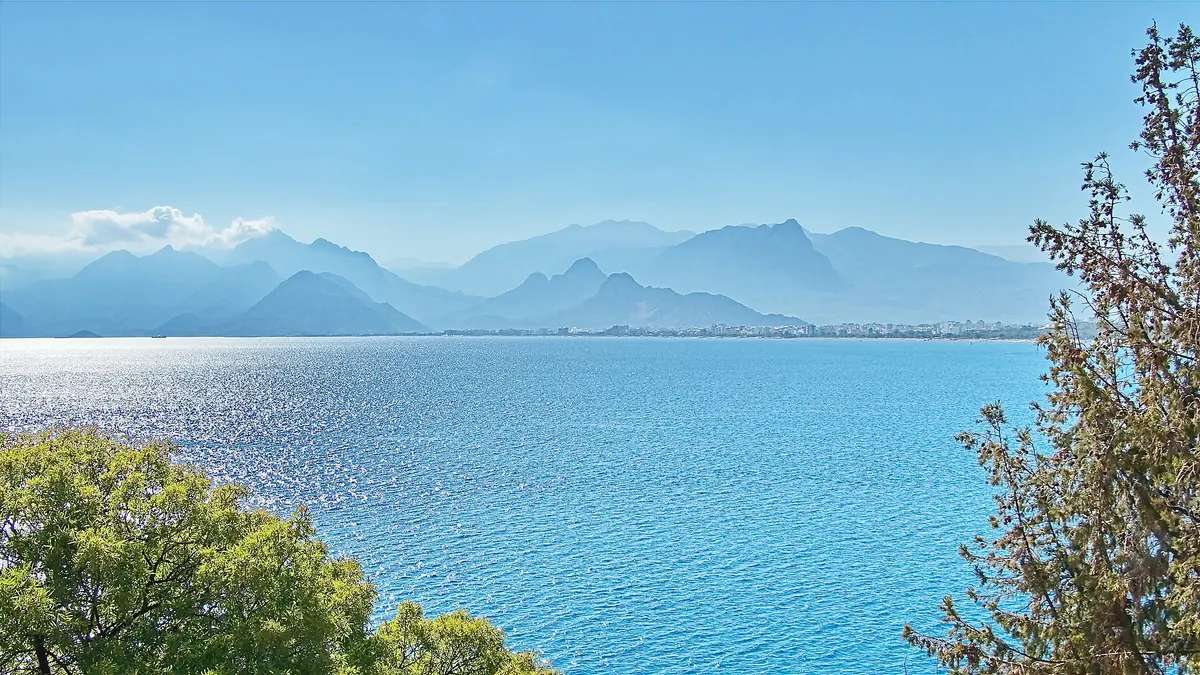
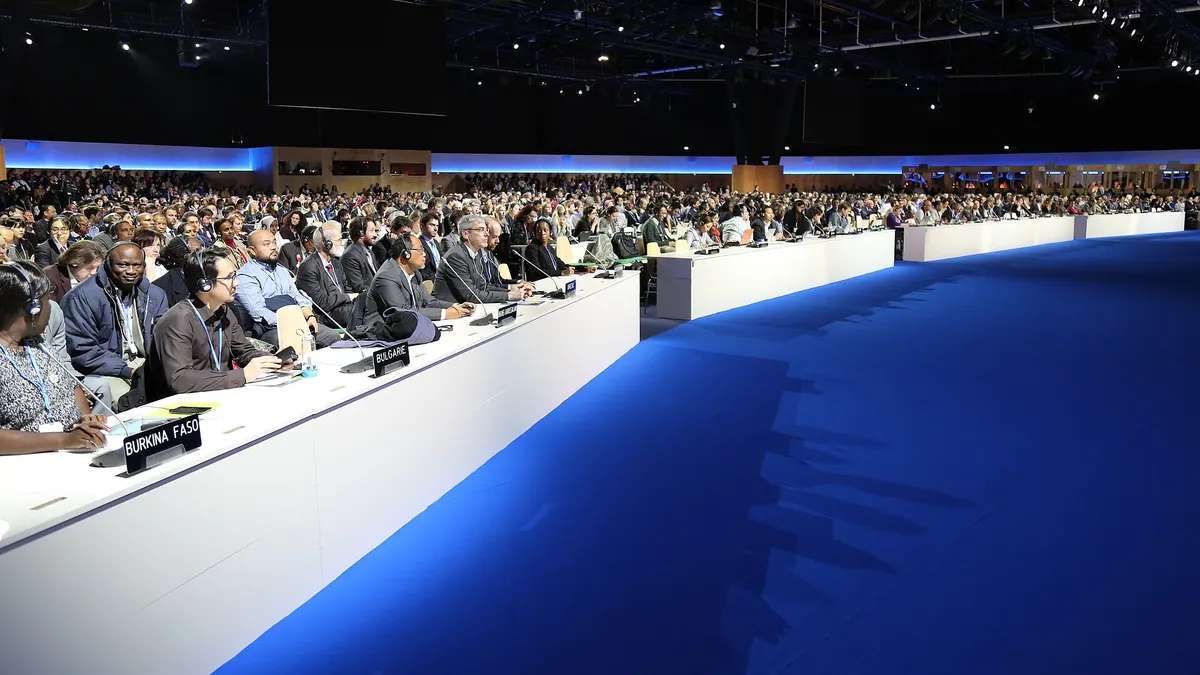
COP31, the UN climate change conference, opened on Monday, November 9 at the Antalya Expo center in Türkiye and will run until November 20, according to Daily Sabah. Türkiye presides over the summit through its environment minister, Murat Kurum, while Australia's climate and energy minister, Chris Bowen, leads the formal negotiations, under an agreement between the two countries announced by Australia's foreign minister.
Bowen said the conference has more than 160 agenda items and 60 negotiating mandates, and warned that the world is still on track to exceed the Paris Agreement's 1.5 °C threshold. For Latin America, which just handed over the COP30 presidency from Belém, the meeting comes with new 2035 targets and a region that emits 6.6% of the planet's greenhouse gases, according to the World Bank.
View the data as a table
| Days of talks | 12 |
| Agenda items | +160 |
| Expected attendees | 100,000 |
| Latin America's emissions | 6.6% of world |
What is being negotiated at COP31
French diplomat Paul Watkinson described it as "a classic intermediate COP", without a single big mandate, according to Climate Diplomacy Brief. Kurum asked for an "Implementation COP" and summed up the Turkish presidency's principles as "dialogue, consensus, action." Bowen proposed a presidency decision, agreed by countries, focused on implementing what has already been agreed rather than a lengthy political declaration, according to Daily Sabah. Both said they would start negotiating the main text from day one instead of waiting for the second week.
| Issue | What is at stake |
|---|---|
| Finance | The Baku goal (COP29): at least US$300 billion a year for developing countries by 2035 and scaling to US$1.3 trillion from all sources |
| Adaptation | Indicators for the Global Goal on Adaptation and the plan to triple adaptation finance agreed in 2025 |
| Just transition | The just transition mechanism and the mitigation work programme |
| Fossil fuels | National roadmaps to move away from fossil fuels: France, Germany and the Netherlands have submitted theirs, and Brazil its "global plan" |
| Electrification | "35 by 35" initiative: electricity reaching 35% of final energy consumption by 2035 |
| Global stocktake | How the second global stocktake (GST2) in 2028 will work |
Source: Daily Sabah and Climate Diplomacy Brief.
According to Climate Diplomacy Brief, at the start of the summit 38 countries had still not submitted their updated 2035 climate targets (nationally determined contributions, NDCs). The leaders' summit is scheduled for November 11 and 12, with Brazilian President Luiz Inácio Lula da Silva among those expected.
Latin America at COP31: how much the region emits
Latin America and the Caribbean emitted 3,511 million tonnes of CO2 equivalent in 2024, excluding land use, or 6.6% of the world total of 53,206 million, according to the World Bank. Brazil, with 1,299 million, accounts for more than a third of the region, followed by Mexico (687) and Argentina (374). Chile emitted 118 million and Peru 104.
View the data as a table
| Brazil | 1,299.2 |
| Mexico | 686.8 |
| Argentina | 374.3 |
| Colombia | 217.6 |
| Venezuela | 167.3 |
| Chile | 118.1 |
| Peru | 103.8 |
| Ecuador | 74.4 |
| Bolivia | 63.8 |
| Dominican Republic | 51.6 |
| Uruguay | 44.6 |
| Guatemala | 43.5 |
| Paraguay | 41.4 |
| Cuba | 36.0 |
| Honduras | 24.4 |
| Panama | 19.2 |
| Nicaragua | 19.2 |
| Costa Rica | 17.1 |
| El Salvador | 14.8 |
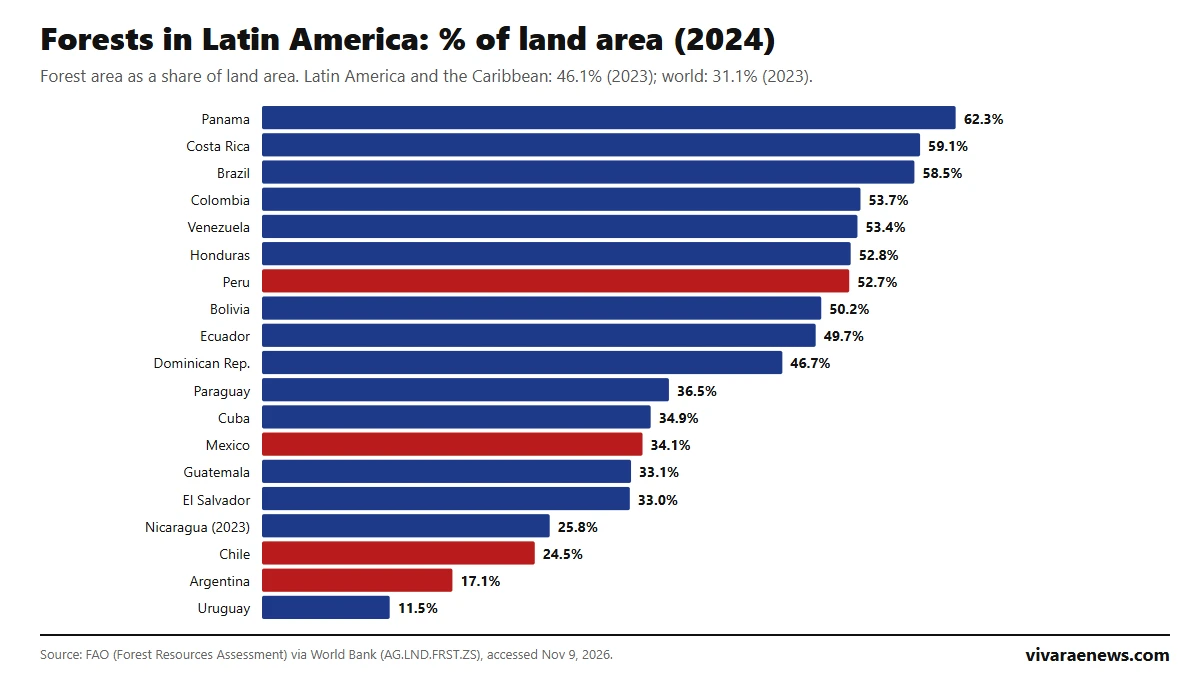
The figure does not include deforestation or other land-use changes, which weigh heavily on the real balance in countries such as Brazil or Paraguay. Since 1990, the region's emissions have risen 72%, more than the world average (65%). For emissions per person, see the ranking of CO2 per capita in Latin America, and for forest cover, the forest ranking by country.
View the data as a table
| Brazil | Mexico | Argentina | Colombia | Chile | Peru | |
|---|---|---|---|---|---|---|
| 1990 | 649 | 440 | 253 | 132 | 55 | 43 |
| 1995 | 790 | 482 | 269 | 150 | 67 | 51 |
| 2000 | 870 | 566 | 288 | 153 | 81 | 57 |
| 2005 | 1,001 | 625 | 329 | 158 | 88 | 60 |
| 2010 | 1,110 | 666 | 337 | 174 | 102 | 76 |
| 2015 | 1,233 | 682 | 366 | 187 | 117 | 87 |
| 2020 | 1,196 | 640 | 354 | 200 | 126 | 80 |
| 2024 | 1,299 | 687 | 374 | 218 | 118 | 104 |
| Country | 1990 | 2024 | Change |
|---|---|---|---|
| Brazil | 649 | 1,299 | +100% |
| Mexico | 440 | 687 | +56% |
| Argentina | 253 | 374 | +48% |
| Colombia | 132 | 218 | +65% |
| Chile | 55 | 118 | +116% |
| Peru | 43 | 104 | +139% |
| Latin America and the Caribbean | 2,044 | 3,511 | +72% |
Source: World Bank, total greenhouse gas emissions excluding land use (LULUCF), in Mt CO2 equivalent; accessed November 9, 2026. Million tonnes of CO2 equivalent.
The 2035 targets the region brings to COP31
NDCs are the plans each country submits to the UN. Brazil was among the first to present its 2035 target, at COP29: cutting net emissions by 59% to 67% from 2005 levels, a goal Climate Action Tracker does not consider 1.5 °C-aligned. Mexico presented its NDC 3.0 at COP30, with its first absolute target: 364 to 404 Mt CO2 equivalent in 2035 without international support, and 332 to 363 Mt with financing, according to Vanguardia. Argentina set a ceiling of 375 net Mt for both 2030 and 2035, according to Futuro Sustentable.
| Country | 2035 target | Type of target |
|---|---|---|
| Brazil | −59% to −67% net emissions vs. 2005 | Relative to a base year |
| Mexico | 364-404 Mt (unsupported) or 332-363 Mt (supported) | Absolute, for the first time |
| Argentina | Maximum of 375 net Mt | Absolute ceiling, same for 2030 and 2035 |
Sources: Climate Action Tracker, Vanguardia and Futuro Sustentable. Chile submitted its NDC 3.0 for 2025-2035, which includes an ocean component. Mexico's 2024 World Bank figure (687 Mt, excluding land use) is not directly comparable with its target, which uses the national inventory.
From Buenos Aires to Belém: Latin America's COPs
The region has hosted or presided over several of these summits. The most recent was COP30 in Belém, in the Brazilian Amazon, in November 2025; Chile presided over COP25 in 2019, which was moved to Madrid after the social unrest. For each country's electricity mix, see the renewable energy ranking for Latin America.
- 1998COP4, Buenos Aires
- 2004COP10, Buenos Aires
- 2010COP16, Cancún (Mexico)
- 2014COP20, Lima (Peru)
- 2019COP25, presided over by ChileHeld in Madrid.
- 2025COP30, Belém (Brazil)
- 2026COP31, Antalya (Türkiye)November 9 to 20.
Frequently asked questions
When and where is COP31?
November 9 to 20, 2026, in Antalya, Türkiye. The leaders' summit is on November 11 and 12.
Who presides over COP31?
Türkiye, through its environment minister, Murat Kurum. Australia, with minister Chris Bowen, leads the formal negotiations.
How much does Latin America emit?
3,511 million tonnes of CO2 equivalent in 2024, excluding land use, or 6.6% of the world total, according to the World Bank.
What is an NDC?
The nationally determined contribution: the plan through which each country commits to cutting emissions under the Paris Agreement. The current round sets 2035 targets.