Peru's 2027 budget amounts to S/266.506 billion, 3.5% more than the initial 2026 budget, and has entered the home stretch in Congress. On November 2, the Bicameral Budget Committee approved the 2027 Borrowing and Fiscal Balance bills but left the main law pending: of its 138 provisions, 133 have technical agreement with the Ministry of Economy and Finance (MEF) and 5 remain in dispute, according to La República and RPP.
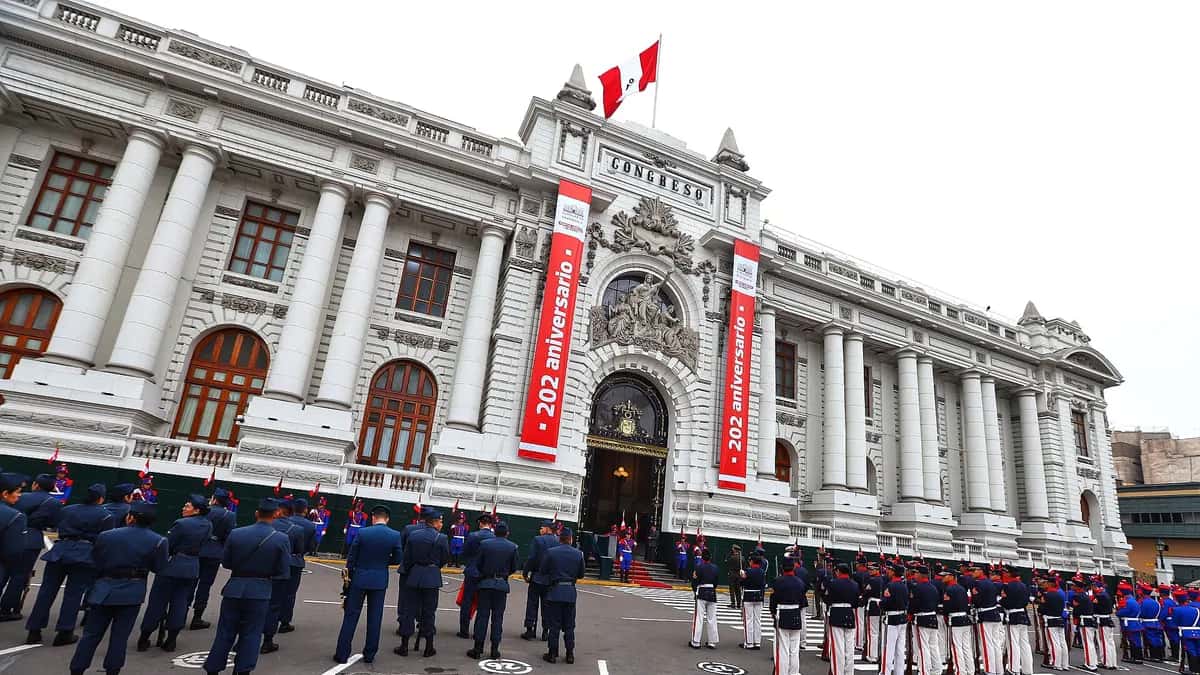
The debate continued on November 3 with Economy Minister Elmer Cuba, and the committee went into recess until Thursday, November 5 at 5:00 p.m., El Comercio reported. It is the first budget of Keiko Fujimori's government and the first handled by the new bicameral Congress.
How big is Peru's 2027 budget
The MEF's bill splits spending among the national government, regional governments and local governments. According to Gestión, the initial 2026 budget (PIA) was S/257,561.6 million, so the increase is S/8,944.7 million.
S/ 266,506
Total 2027 budget
3.5% more than the 2026 initial budget
S/ 166,613
National government
ministries and agencies
S/ 58,672
Regional governments
25 regions
S/ 41,222
Local governments
municipalities
Source: MEF, 2027 Budget bill; La República and Gestión.
View the data as a table
| Total 2027 budget | S/ 266,506 · 3.5% more than the 2026 initial budget |
| National government | S/ 166,613 · ministries and agencies |
| Regional governments | S/ 58,672 · 25 regions |
| Local governments | S/ 41,222 · municipalities |
| Level of government | 2027 budget (S/ million) | Share |
|---|---|---|
| National government | 166,613 | 62.5% |
| Regional governments | 58,672 | 22.0% |
| Local governments | 41,222 | 15.5% |
| Total | 266,506 | 100% |
Shares calculated by Vivarae News from MEF figures. El Comercio reported that regional and municipal resources rise 4.9% and reach 37.5% of the total (El Comercio).
Where the money goes: the functions with the largest budgets
| Function | 2026 PIA (S/ million) | 2027 bill (S/ million) | Change |
|---|---|---|---|
| Education | 48,708 | 49,068 | +0.7% |
| Planning, management and contingency reserve | 30,080 | 36,997 | +23.0% |
| Health | 32,888 | 32,208 | −2.1% |
| Public debt | 32,386 | 30,921 | −4.5% |
| Transport | 22,325 | 26,014 | +16.5% |
| Public order and security | 15,858 | 15,338 | −3.3% |
| Social protection | 10,689 | 12,493 | +16.9% |
Source: MEF, via Gestión; changes calculated by Vivarae News. Health and public order have smaller initial allocations than in 2026, although the government has said security is a priority; El Comercio highlights more than S/15 billion for National Police patrols and operations.
The five points of the 2027 budget dividing the MEF and Congress
According to RPP, the disagreements center on provisions that would expand current spending or commit funds in future years:
- Mining royalties for universities (article 82): Congress wants public universities to use mining canon, overcanon, royalties and other funds for operating costs such as maintenance, licenses or research. The MEF wants to keep them restricted to investment and notes that these funds cannot pay salaries.
- 26 new universities (article 87): it authorizes the MEF to fund the start-up of 26 public universities created by acts of Congress. The MEF fears permanent staffing and infrastructure commitments. The same article sets a 2027 moratorium on creating new universities, with exceptions.
- Transfers within the Lima city government: it allows municipal companies and agencies to transfer funds to the central city hall. The MEF wants safeguards so their services are not left underfunded.
- Limits on budget changes: two rules restrict moving investment funds to payroll or other current spending. Regional governments and other entities want more flexibility.
"My duty is to maintain fiscal balance," Cuba told the committee, adding that it is not possible to include every project lawmakers request because "resources are scarce," according to El Comercio.
What the mining canon is and why it matters in the 2027 budget
The mining canon is the share of income tax paid by mining companies that the law distributes among regional governments, municipalities and public universities in producing areas. By law, those funds must go to investment, not to current spending or wages. With high copper and gold prices, canon transfers grow, which is why regions and universities are pushing to use them more freely.
The MEF argues that opening the canon to operating costs creates commitments that cannot be sustained when metal prices fall, while lawmakers argue that universities have unused funds because they cannot spend them on what they need, according to RPP.
Borrowing and fiscal balance already approved in committee
| Law | Main content | Committee vote (November 2) |
|---|---|---|
| 2027 Borrowing | Up to US$2.8 billion and S/19.183 billion; sovereign bonds of up to S/17.221 billion; 67.2% in soles | 23 in favor, 0 against, 12 abstentions |
| 2027 Fiscal Balance | Revenue and spending of S/266.506 billion; 90.8% from fiscal revenue and 9.2% from borrowing | 25 in favor, 0 against, 10 abstentions |
Source: La República and El Peruano. El Comercio reported a different tally (23 in favor and 2 abstentions), so the exact vote counts differ between outlets. According to La República, planned borrowing falls 23.4% from 2026, and the Juntos por el Perú bloc abstained, citing a lack of information on tax exemptions worth more than S/24 billion.

What comes next: the November 30 deadline
After the committee, the budget goes to the floor. Article 80 of the Constitution states that if the approved bill is not sent to the executive by November 30, the executive's bill takes effect and is enacted by legislative decree. That is why Congress usually votes in the last week of November. This year, for the first time, the process goes through both the Chamber of Deputies and the Senate.
The budget arrives amid price pressure: Lima's inflation rose to 5.25% in October, and the government is also processing extra spending for this year, such as the supplementary credit of S/8.228 billion.
| Date | Stage of the 2027 budget |
|---|---|
| Late August 2026 | The executive submits the bill to Congress |
| November 2 | The Bicameral Committee approves the Borrowing and Fiscal Balance reports |
| November 3 | Debate with Minister Elmer Cuba; recess |
| November 5, 5:00 p.m. | The committee session resumes |
| November 30 | Constitutional deadline to send the approved bill to the executive |
Sources: Gestión, La República, El Comercio and the Constitution of Peru.
Frequently asked questions
How big is Peru's 2027 budget?
S/266.506 billion, 3.5% more than the initial 2026 budget, according to the MEF's bill.
Has the 2027 budget been approved?
No. As of November 4, the committee had approved the Borrowing and Fiscal Balance bills, but the budget law is still under debate; the session resumes on November 5.
What is the deadline to approve it?
November 30. If Congress does not send the law to the executive by then, the executive's bill takes effect by legislative decree, under article 80 of the Constitution.
Which sector gets the most money?
Education, with S/49.068 billion, followed by planning and contingency reserve, health and public debt.
Why are the MEF and Congress at odds?
Over five provisions: the use of the canon by universities, funding for 26 new universities, transfers within the Lima city government and two limits on moving investment funds to current spending.