New York's Fashion Act is a bill that would make large apparel, footwear and handbag brands answer for the environmental and social impact of their supply chains. It was first introduced in January 2022 and has been reintroduced in every legislative session since without being passed. This is what it proposes and why the industry is watching it closely.
What the New York Fashion Act is
Its full name is the Fashion Sustainability and Social Accountability Act. It was introduced by then state senator Alessandra Biaggi and Assemblymember Anna Kelles. The current Senate version is bill S4558A, and its Assembly companion is A4631.
The core idea is simple: if a brand wants to sell in New York, one of the world's most important fashion markets, it has to know where what it sells comes from and take responsibility for the harm it causes.
Which brands the fashion law would apply to
| Criterion | Detail |
|---|---|
| Sectors | Apparel, footwear and handbags |
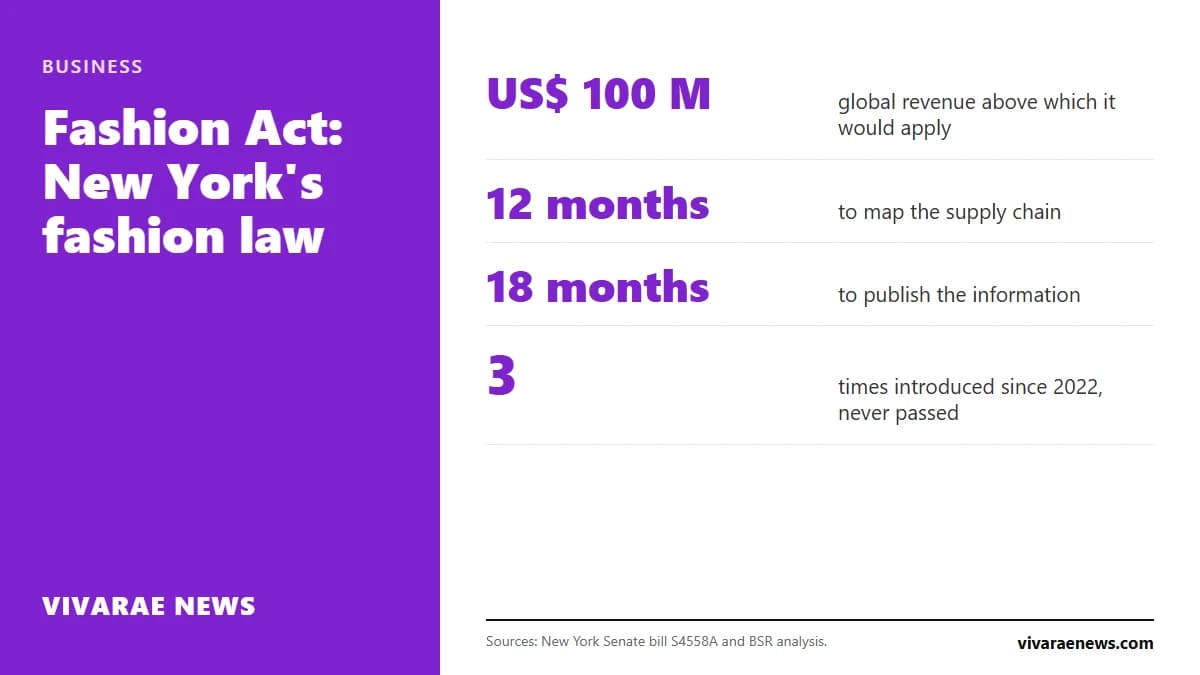
| Size | Companies with global revenue above 100 million dollars |
| Link to the state | Doing business in New York, whether or not they are based there |
| Who enforces it | The state Attorney General |
By design, the law would reach almost every large international brand, including fast fashion, even if they manufacture in Asia and are headquartered in Europe.
What the Fashion Act would require from brands
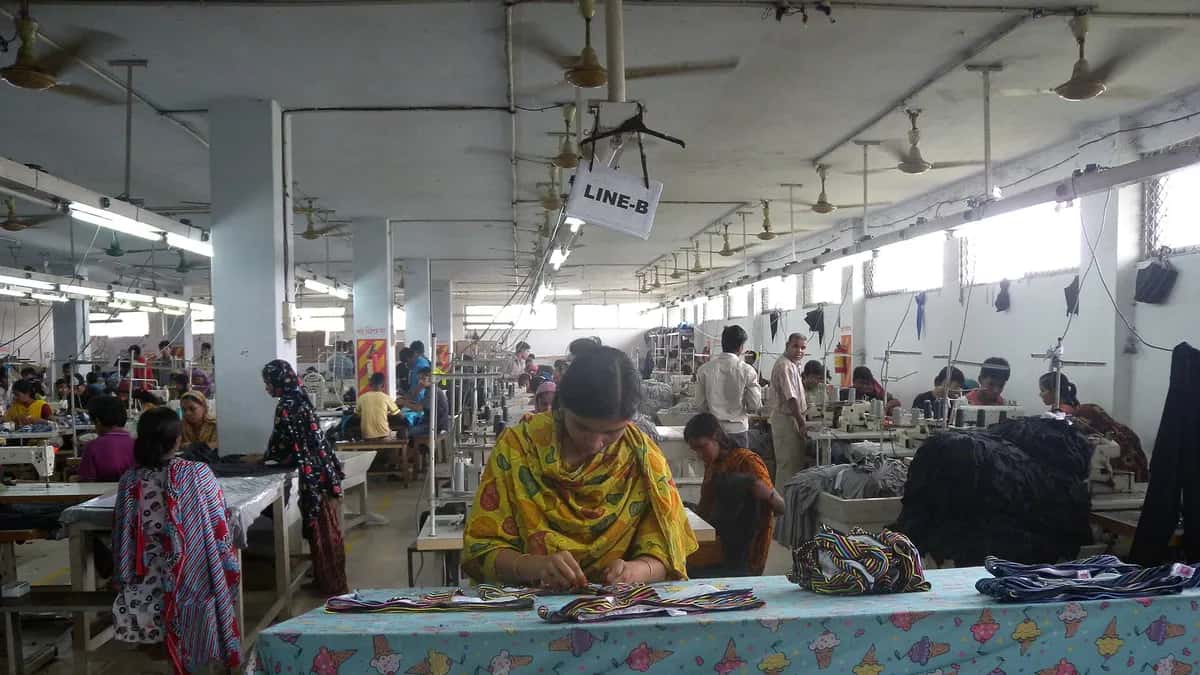
- Mapping the supply chain: identifying suppliers, from factories to raw material producers.
- Due diligence: identifying, preventing, mitigating and remedying adverse impacts on human rights and the environment.
- Climate targets: setting and meeting emission reductions in line with the Paris Agreement.
- Chemical management: working with suppliers to control the use of chemicals.
- Transparency: publishing that information online.
| Obligation | Deadline after it takes effect |
|---|---|
| Supply chain mapping | 12 months |
| Publishing the information | 18 months |
What fines New York's fashion law provides for
Here the sources disagree, because the text has changed between versions. The first ones spoke of fines of up to 2% of a company's annual revenue. Later analyses, such as that of the organization BSR, describe penalties of up to 15,000 dollars per day of non-compliance. The money collected would go to a fund to remedy environmental and labour harm.
Where the New York Fashion Act stands
| Session | What happened |
|---|---|
| 2022 | First introduced (bills S7428 and A8352) |
| 2023-2024 | Reintroduced (S4746 and A4333); the Assembly ends the session without voting on it |
| 2025-2026 | Reintroduced again (S4558 and A4631) |
At the time of writing we found no record of the bill being passed by either chamber. In New York, a bill that is not voted on before the end of the legislative session must be introduced again.
Why the fashion law matters outside New York
Because it would work as a de facto standard. A global brand does not build a different supply chain for each market: if it has to map suppliers and cut emissions to sell in New York, it will do so worldwide. That is why it is often compared with European due diligence rules.
For shoppers, the effect would be indirect: more public information on where and how what they wear is made. If consumer topics interest you, see our lifestyle section, and for more on companies, business.
Frequently asked questions
Is the New York Fashion Act already law?
No. It is a bill that has been introduced in three legislative sessions and has not been passed.
Which companies would it affect?
Apparel, footwear and handbag brands with global revenue above 100 million dollars that do business in New York.
What would brands have to do?
Map their supply chain, set emission reduction targets, control the use of chemicals and publish that information.
Who sponsored it?
It was introduced in 2022 by Senator Alessandra Biaggi and Assemblymember Anna Kelles.