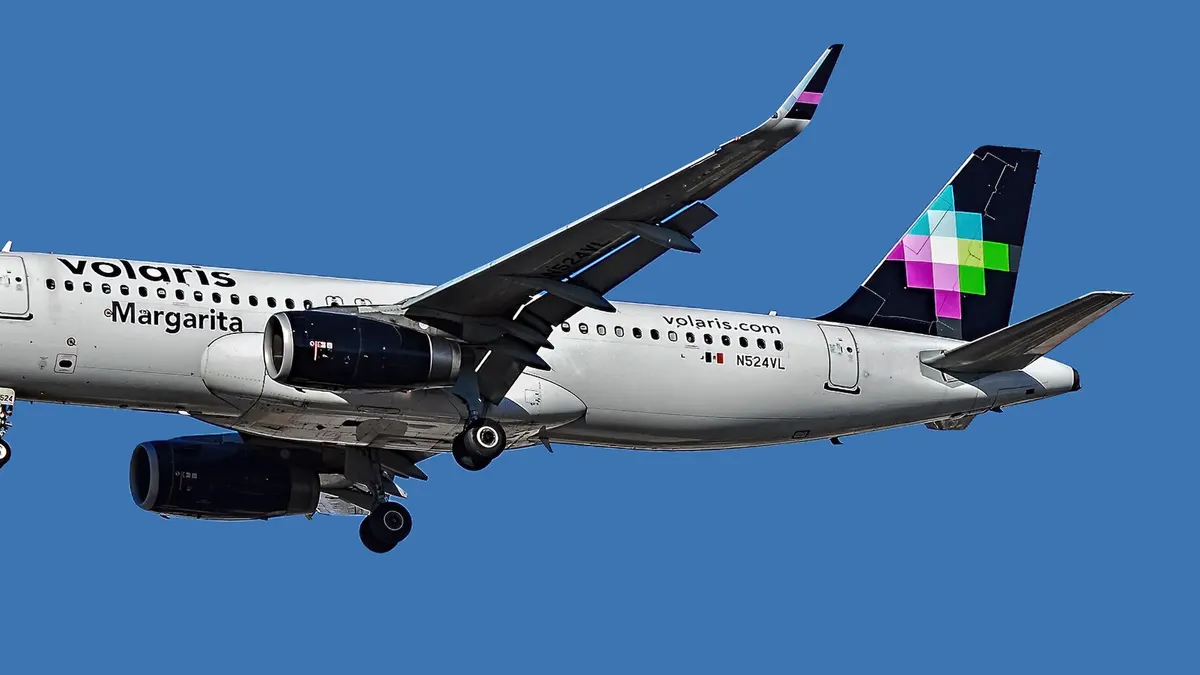
Mexican airlines have been laying off staff for two months. According to El Universal, which spoke with pilots and unions on November 20, 2026, the cuts stem from three overlapping causes: higher jet fuel prices, the mandatory inspection of Pratt & Whitney engines on Airbus A320neo jets, and the possible merger of Viva Aerobus and Volaris, which together carry about three of every four domestic passengers. The latest official data point the same way: employment in scheduled air transport fell 0.4% in July and 0.2% in August, according to INEGI's Monthly Services Survey.
It is the first wave of cuts since the pandemic: the previous one ran from April 2020 to May 2021. José Suárez, of the pilots' union ASPA, told the paper that "pilots are indeed losing their jobs" at Viva and Volaris, even though both said the merger would not mean laying off pilots. The companies have not published layoff figures; what their annual reports do show is each year's headcount.
View the data as a table
| Viva and Volaris share of domestic passengers | 73.6% |
| Routes where they compete today | 85 |
| Routes left with a single operator | 55 |
| Industry loss from jet fuel, Q2 2026 | $3,300 M |
How many employees Mexican airlines have
Mexico's three big airlines moved in different directions in 2025. Aeroméxico hired; Viva also grew; Volaris shrank its workforce for a second year. The figures are those each company reported at year-end, as compiled by El Universal.
| Airline | Employees 2023 | Employees 2024 | Employees 2025 | Change in 2025 |
|---|---|---|---|---|
| Aeroméxico | 16,219 | 16,876 | 17,364 | +488 |
| Volaris | 7,198 | n/a | 7,098 | -100 vs. 2023 |
| Viva Aerobus | n/a | 5,165 | 5,622 | +457 |
Source: El Universal, using each company's reports. Aeroméxico's 2023 and 2024 figures are derived from the differences the paper reports (488 more than in 2024 and 1,145 more than in 2023); n/a: no published figure. At Volaris, pilots fell from 1,427 in 2023 to 1,339 in 2024 and 1,255 in 2025, and flight attendants from 2,748 to 2,571 between 2023 and 2025, while maintenance, ground and dispatch staff grew.
View the data as a table
| Volaris pilots | |
|---|---|
| 2023 | 1,427 |
| 2024 | 1,339 |
| 2025 | 1,255 |
The underlying problem for pilots is the lack of jobs. Paul Castelazo, head of the Mexican College of Airline Pilots, said nearly 4,800 pilots graduated between 2020 and 2024 and only 800 found a position at an airline; ASPA estimates that one in every 4.7 graduates gets an airline job. Maintenance technicians with an FAA license, by contrast, often leave for the United States.
The Viva-Volaris merger: what is known
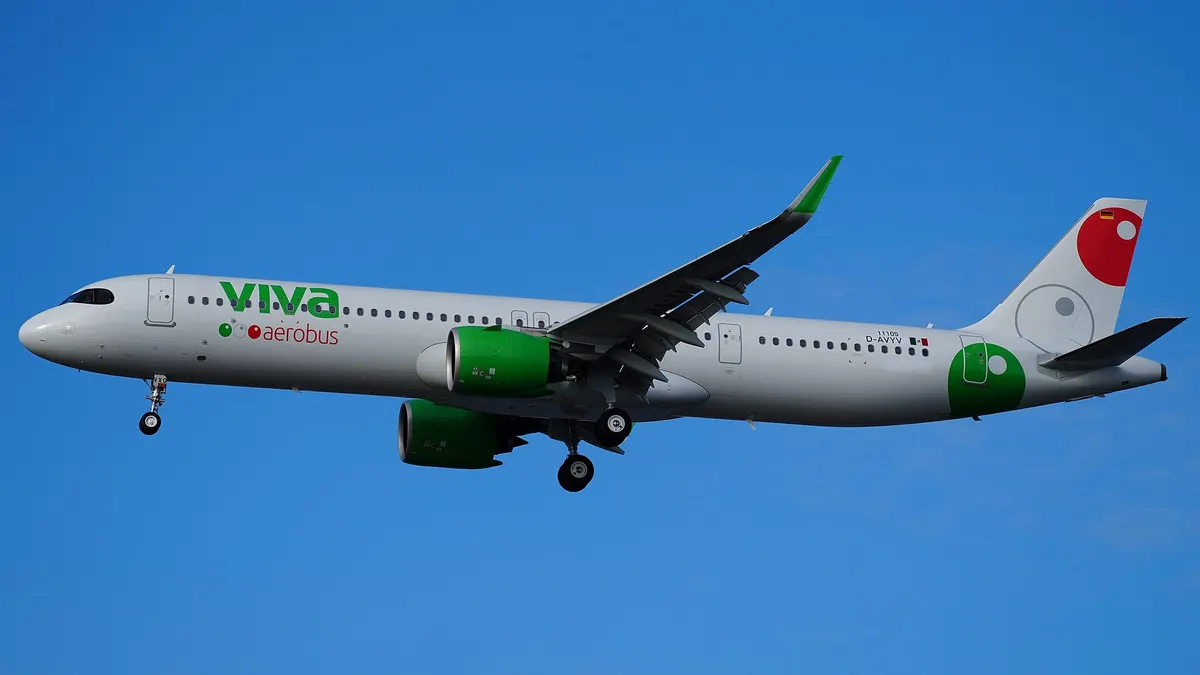
Volaris and Viva Aerobus announced on December 18, 2025 that they would form Grupo Más Vuelos, a "merger of equals" in which each company's shareholders would own 50% of the new holding company. The two brands, with their operating certificates, would remain separate, and the group would be listed on the Mexican Stock Exchange and in New York. Volaris shareholders approved it on March 25, 2026 with 91.8% of outstanding capital, according to Expansión; the board will be chaired by Roberto Alcántara, currently Viva's chairman, according to Infobae.
| Indicator | Volaris | Viva Aerobus | Combined |
|---|---|---|---|
| Total passengers 2025 | 30.4 million | 29.9 million | 60.4 million |
| Domestic passengers, early 2026 | 3,328,947 | 3,788,887 | 73.6% of the market |
| Aircraft (A320 family) | 152 | 99 | 251 |
| Domestic routes | 128 | 140 | 85 in common |
| Employees 2025 | 7,098 | 5,622 | 12,720 |
Sources: 2025 passengers from El CEO with company reports; domestic passengers, aircraft and routes from AFAC and shareholder presentations via Expansión; routes in common from Reuters via Uno TV; employees from El Universal. Grupo Aeroméxico carried 24.6 million passengers in 2025, 2.4 times fewer than Viva and Volaris combined.
What is still needed for the Viva-Volaris merger to be approved
The decision lies with the National Antitrust Commission (CNA), the body that replaced Cofece. In the United States, the FTC granted early termination of the Hart-Scott-Rodino waiting period on August 31, 2026, according to El Imparcial, which is not final approval. On October 13, Reuters reported, citing unnamed sources, that the CNA was on track to approve it before year-end, with conditions; no official ruling has been published.
- Dec 18, 2025Grupo Más Vuelos announcedMerger of equals, 50% for each side.
- Mar 25, 2026Shareholders approve91.8% of Volaris capital in favor.
- Jul 27, 2026Jet fuel blowAirlines lose 3.3 billion pesos in the second quarter.
- Aug 31, 2026Initial US clearanceThe FTC ends the waiting period early.
- Oct 13, 2026Reuters: CNA would approve with conditions
- Nov 20, 2026Pilots report layoffsThe CNA has yet to rule.
The CNA has three options: approve unconditionally, approve with commitments or reject the deal. The most cited precedent is the Aeroméxico-Delta alliance, which Cofece authorized only after the airlines gave up slots at Mexico City airport. An analysis by Antitrust Intelligence cited by Expansión warns that the group could drop unprofitable routes and gain more pricing power; Volaris has already raised fares about 25% year on year, mainly on cross-border flights.

Jet fuel and engines: why Mexican airlines are losing money
The three big carriers lost more than 3.3 billion pesos between April and June 2026 because of higher jet fuel prices, according to El Financiero. On top of that is the Pratt & Whitney engine inspection, which according to El Universal grounds about 21 Volaris A320s and is expected to end in 2027.
| Airline | Result | Cash | Source |
|---|---|---|---|
| Volaris | Loss of US$103.8 million in 2025 and US$127 million in Q2 2026 | US$754 million at end-2025 | Expansión |
| Viva Aerobus | Loss of US$133 million in H1 2026 | US$754 million at June 2026 | Expansión |
| Industry (big three) | Loss of over 3.3 billion pesos in Q2 2026 | — | El Financiero |
Source: Expansión with quarterly reports; El Financiero. That Volaris and Viva had the same cash balance (US$754 million) is a coincidence of different dates, as reported by Expansión. For Mexico's price context, see October inflation and the peso's slide, which makes fuel and aircraft leases paid in dollars more expensive.
What it means for passengers
- The brands stay: Viva and Volaris will sell tickets separately even if the merger is approved, according to their stock exchange filings.
- Routes at risk: the 55 routes where the group would be alone, mainly from Guadalajara and Monterrey, are the ones the CNA will scrutinize most.
- Fewer international flights: Mexican airlines are still hit by Washington's cancellation of 13 routes to the United States, nine of them Viva's.
For context on flights to the United States, see the US flight stoppage, and for trade ties with Asia, Mexico-China trade after APEC.
Frequently asked questions
Why are Mexican airlines laying off staff?
Because of higher jet fuel prices, the Pratt & Whitney engine inspection that grounds aircraft, and the possible Viva-Volaris merger, according to pilots and unions quoted by El Universal.
Has the Viva-Volaris merger been approved?
No. Shareholders approved it and the US FTC gave initial clearance, but Mexico's National Antitrust Commission has yet to rule as of November 20, 2026.
What market share would they have together?
73.6% of domestic passengers in early 2026, according to AFAC data cited by Expansión.
Will either brand disappear?
Not under the plan presented: Viva and Volaris would keep separate brands and operating certificates under Grupo Más Vuelos.