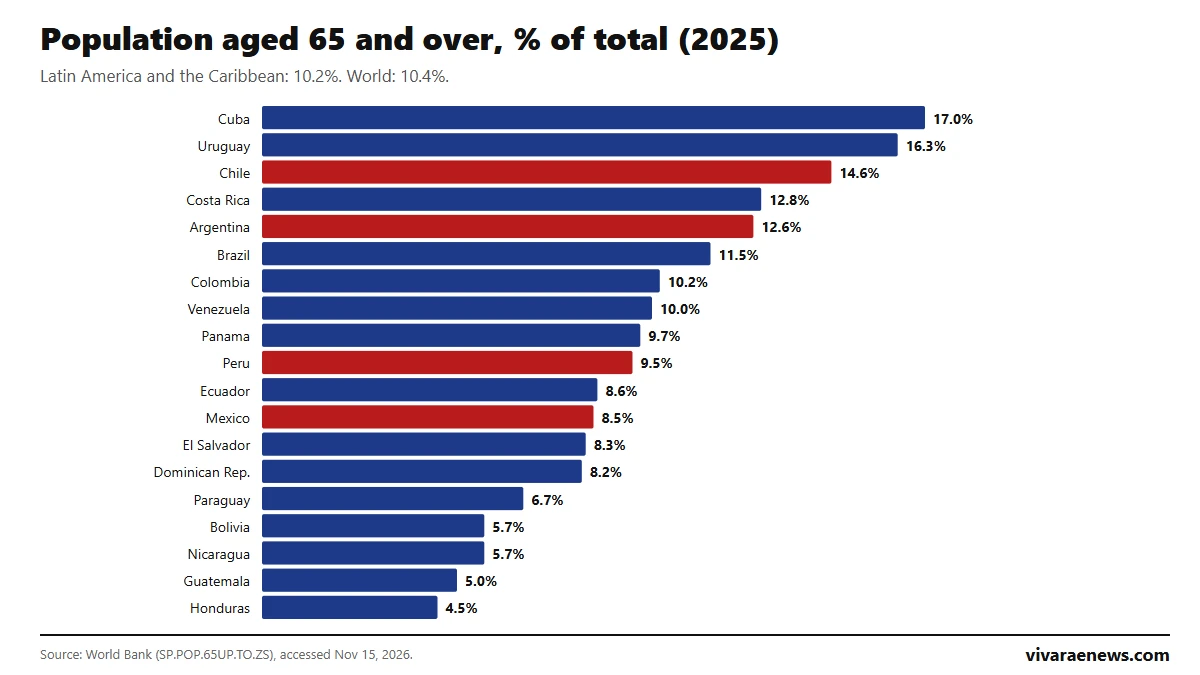
The US Federal Aviation Administration (FAA) ordered a halt to all departures in the country on Friday, November 13, 2026, due to a telecommunications failure that affected its air traffic control centers, the third nationwide ground stop this century, after the September 11, 2001 attacks and the NOTAM system outage in January 2023, according to Infobae/EFE. The measure lasted about five hours, from 3:36 p.m. to around 8:20 p.m. Eastern time (5:36 to 10:20 p.m. in Chile), and left about 9,159 flights canceled and 7,190 delayed that day, according to FlightAware data cited by CBS News.
The government blames the failure on a router installed by an L3Harris contractor at a remote FAA facility in southern Arkansas, during the switch from copper wiring to fiber optics. Authorities ruled out a cyberattack, but FAA Administrator Bryan Bedford said that explanation does not fully clarify the root cause, which is still under investigation. This is what is known about the US flight stoppage and how it compares with the previous ones.
View the data as a table
| Flights canceled on Friday | 9,159 |
| Flights delayed on Friday | 7,190 |
| Planes airborne when the stop was ordered | 3,500 |
| FAA facilities affected | 17 |
What caused the US flight stoppage
According to the preliminary investigation described by Transportation Secretary Sean Duffy and reported by CBS News, the contractor was replacing a router while switching a facility from copper to fiber. The new equipment began flooding the network's other routers with about 1,000 connection attempts every four to five seconds. The instability lasted about 45 minutes and spread to 17 facilities. Sources cited by the network linked the problem to Cisco 600 series routers made between 2001 and 2006. Reuters reported that the network, operated by L3Harris, is about 70% through the switch to fiber; Duffy said about 30% remains, according to The Register.
Bedford said there is "zero evidence of anything nefarious or anything AI-related" and that the FAA is still determining whether it was human error or faulty equipment. Homeland Security Secretary Markwayne Mullin spoke of "a telecommunications disruption" rather than an attack. Democratic lawmakers called for congressional hearings and questioned the use of funds already approved to modernize air traffic control.
| Item | Detail | Source |
|---|---|---|
| Origin | Router installed by an L3Harris contractor in the copper-to-fiber switch | CBS News, Reuters |
| Location | Remote FAA facility in southern Arkansas | Reuters |
| Effect | About 1,000 connection attempts every 4-5 seconds; 45 minutes of instability | CBS News |
| Scope | 17 control facilities | CBS News |
| Cyberattack | Ruled out by the FAA and Homeland Security | CBS News, Infobae/EFE |
| Root cause | Under investigation | Reuters |
Timeline of the FAA ground stop
- Fri 13, 3:36 p.m. ET (5:36 p.m. Chile)FAA halts departures nationwideAbout 3,500 airborne planes continue to their destinations and land safely.
- Fri 13, afternoonMexico asks to keep US-bound flights on the groundAFAC asks airlines to do so; Aeroméxico suspends operations to and from the US and Volaris warns of delays.
- Fri 13, ~8:20 p.m. ET (10:20 p.m. Chile)The stop is lifted9,159 flights were canceled that day.
- Sat 14More than 2,500 cancellations as airlines recoverDuffy blames the router; Bedford says it does not explain the full cause.
- Sun 15Normal operations expected by nightMore than 1,400 cancellations were still expected on Sunday.
Cancellation figures vary by source and cut-off time: CBS News reported 9,159 flights canceled on Friday using FlightAware data, while other early reports put it at about 8,000. AP reported more than 2,500 cancellations on Saturday. The start and end times of the stop also differ slightly between outlets.
How it affected Mexico, Latin America and Europe
Mexico's Federal Civil Aviation Agency (AFAC) asked that all aircraft with flights scheduled to the United States "remain on the ground" until US authorities authorized operations to resume, according to Infobae/EFE. Aeroméxico suspended its operations to and from the United States until further notice and Volaris warned of possible delays and cancellations. Flights that only cross US airspace, such as those linking Canada with Mexico, the Caribbean and Central America, were also affected. In Europe, at the FAA's request, Eurocontrol suspended departures to the United States for several hours and the British authority warned that disruption could continue, according to the UK Civil Aviation Authority.
| Country or region | What happened |
|---|---|
| Mexico | AFAC asked to keep US-bound flights on the ground; Aeroméxico suspended US operations and Volaris warned of delays |
| Canada | Its systems did not fail, but flights to the US or crossing its airspace were disrupted |
| Caribbean and Central America | Flights transiting US airspace were affected |
| Europe | Eurocontrol suspended US-bound departures for hours; cancellations at Heathrow and Gatwick |
The other times flights were halted across the United States
A nationwide ground stop is an exceptional measure. The first was on September 11, 2001, when after the attacks the FAA closed the airspace and ordered all airborne planes to land. The second came on January 11, 2023, when the NOTAM system, which sends safety notices to pilots, failed: the FAA halted departures for about an hour and a half, with more than 800 cancellations and nearly 5,000 delays, according to AIN. Experts cited by NPR noted at the time that there had been no nationwide stop since 2001. The 2026 stop is the longest since the attacks.
- Sep 11, 2001September 11 attacksThe FAA closes the airspace and orders all planes to land.
- Jan 11, 2023NOTAM system outageDepartures halted about 1.5 hours; more than 800 cancellations.
- Nov 13, 2026FAA telecommunications failureAbout five hours without departures; 9,159 cancellations on Friday.
| Date | Cause | Length of stop | Cancellations |
|---|---|---|---|
| Sep 11, 2001 | Terrorist attacks | Airspace closed for days | All flights |
| Jan 11, 2023 | NOTAM system failure | About 1.5 hours | More than 800 |
| Nov 13, 2026 | Router in copper-to-fiber switch | About 5 hours | 9,159 on Friday |
What comes next: money for air traffic control and what to do if your flight was canceled
Congress has already approved US$12.5 billion to modernize the air traffic control system. According to CBS News, the administration raised its total request to US$30 billion, and according to The Hill, Duffy and Mullin asked for an additional US$50 billion after the failure; the figures differ between outlets. Democratic leaders say only US$1 billion of the approved funds has been used. Delta and Southwest offered rebooking without penalty. If your flight was canceled, check your airline's app before going to the airport. This failure adds to other tech outages in November, such as the Microsoft 365 outage.
| Air traffic control funding | Amount | Source |
|---|---|---|
| Approved by Congress | US$12.5 billion | CBS News |
| Used so far, according to Democrats | US$1 billion | CBS News |
| Administration's total request | US$30 billion | CBS News |
| Additional request after the failure | US$50 billion | The Hill |
Frequently asked questions
Why were flights halted in the United States?
Because of a telecommunications failure at FAA control centers. The government blames a router installed by an L3Harris contractor during the copper-to-fiber switch; the root cause is still under investigation.
Was it a cyberattack?
No. The FAA and the Department of Homeland Security ruled it out.
How many flights were canceled?
About 9,159 on Friday the 13th, according to FlightAware, more than 2,500 on Saturday and more than 1,400 expected on Sunday.
How many times have flights been halted across the US?
Three this century: September 11, 2001, January 11, 2023 and November 13, 2026.
Did it affect flights from Mexico?
Yes. AFAC asked that US-bound flights stay on the ground until the stop was lifted.