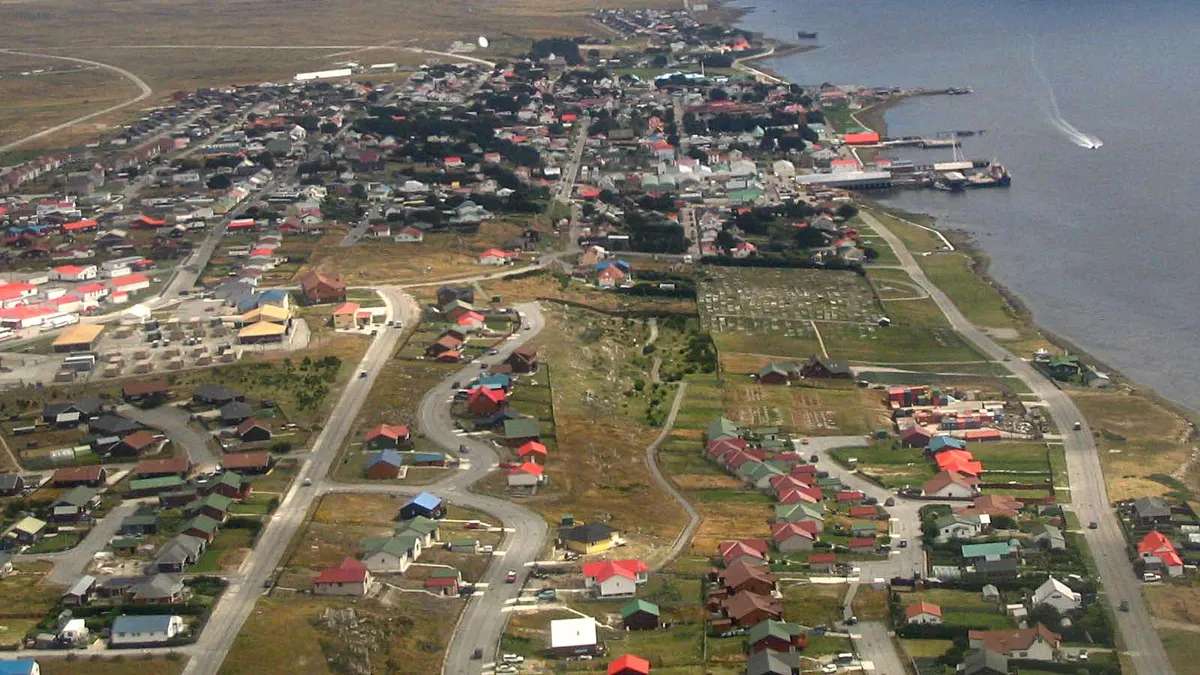
The International Tribunal for the Law of the Sea (ITLOS), based in Hamburg, on Saturday, November 28, 2026 rejected by 18 votes to 3 Argentina's request for provisional measures against the United Kingdom to halt the Sea Lion oil project north of the Falkland Islands (Malvinas). According to the official press release, the tribunal concluded that Argentina's claims first require deciding who has sovereignty over the islands, which falls outside the United Nations Convention on the Law of the Sea (UNCLOS).
The ruling does not close the case: the arbitration Argentina began on September 28 continues and the arbitral tribunal has yet to be constituted. ITLOS placed on record the assurances London gave at the hearings: drilling will not start before March 21, 2027, extraction will not begin before March 2028, and no new licenses will be granted because the licensing regime is suspended. Argentina's foreign minister, Pablo Quirno, called the decision "a historic step", according to Página|12.
View the data as a table
| Votes to reject | 18 |
| Votes against | 3 |
| Navitas stake | 65% |
| Claims examined | 4 |
Why the Law of the Sea tribunal rejected Argentina's request
To order provisional measures while the arbitral tribunal is being formed, ITLOS must find that the arbitral tribunal would have jurisdiction "prima facie", that is, at first sight. Argentina made four claims and the tribunal dismissed them one by one: in the first three it found that the coastal State with sovereignty over the islands would first have to be identified, and in the fourth, that the provisions invoked are not enough on their own. Since that condition was not met, it did not examine urgency or the risk of irreparable harm.
| Argentina's claim | Articles invoked | What the tribunal said |
|---|---|---|
| 1. Respect for its sovereignty and rights over the maritime areas | 2, 56, 77 | Requires deciding sovereignty over the islands; outside UNCLOS |
| 2. No exploitation of resources in disputed areas during decolonization | 74.3 and 83.3, with Resolution III | Those articles deal with pending boundaries and do not apply; it also requires deciding sovereignty |
| 3. Protection of the marine environment | 192 and 194 (and 199, 204-206) | It would first have to decide which party has jurisdiction in those waters |
| 4. Not aggravating the dispute and acting in good faith | 279, 300 | They cannot serve on their own as a basis for jurisdiction |
Source: International Tribunal for the Law of the Sea, press release 406 of November 28, 2026. The tribunal also stressed that UNCLOS "is applicable in the maritime areas in dispute" and that it expects the parties to act accordingly, and encouraged them to keep cooperating to set up the arbitral tribunal swiftly.
How each Law of the Sea tribunal judge voted
Twenty-one judges voted: 19 members and 2 judges ad hoc, one chosen by each party (Raúl Vinuesa by Argentina and Vaughan Lowe by the United Kingdom, according to press release 404). Chilean judge María Teresa Infante Caffi and Brazilian judge George Rodrigo Bandeira Galindo voted with the majority, and both appended separate opinions. Voting against were Japanese judge Hidehisa Horinouchi, India's Bimal N. Patel and Vinuesa; Horinouchi and Vinuesa signed a joint dissenting opinion. Argentine judge Frida María Armas Pfirter and Iceland's Tomas Heidar, members of the tribunal according to its official list, do not appear in the vote.
View the data as a table
| seats | |
|---|---|
| Reject the request | 18 |
| Against | 3 |
| Total | 21 |
| Maurice K. Kamga (president) | Cameroon | For rejecting |
| David Joseph Attard | Malta | For rejecting |
| Markiyan Z. Kulyk | Ukraine | For rejecting |
| Roman Kolodkin | Russia | For rejecting |
| Liesbeth Lijnzaad | Netherlands | For rejecting |
| María Teresa Infante Caffi | Chile | For rejecting |
| Jielong Duan | China | For rejecting |
| Kathy-Ann Brown | Jamaica | For rejecting |
| Ida Caracciolo | Italy | For rejecting |
| Thembile Elphus Joyini | South Africa | For rejecting |
| Zha Hyoung Rhee | South Korea | For rejecting |
| Osman Keh Kamara | Sierra Leone | For rejecting |
| Konrad Jan Marciniak | Poland | For rejecting |
| Slim Laghmani | Tunisia | For rejecting |
| Sylvia Ama Adusu | Ghana | For rejecting |
| Lan-Anh Thi Nguyen | Viet Nam | For rejecting |
| George Rodrigo Bandeira Galindo | Brazil | For rejecting |
| Vaughan Lowe | Judge ad hoc chosen by the United Kingdom | For rejecting |
| Hidehisa Horinouchi | Japan | Against |
| Bimal N. Patel | India | Against |
| Raúl Vinuesa | Judge ad hoc chosen by Argentina | Against |
What Sea Lion, the oil project off the Falklands, is
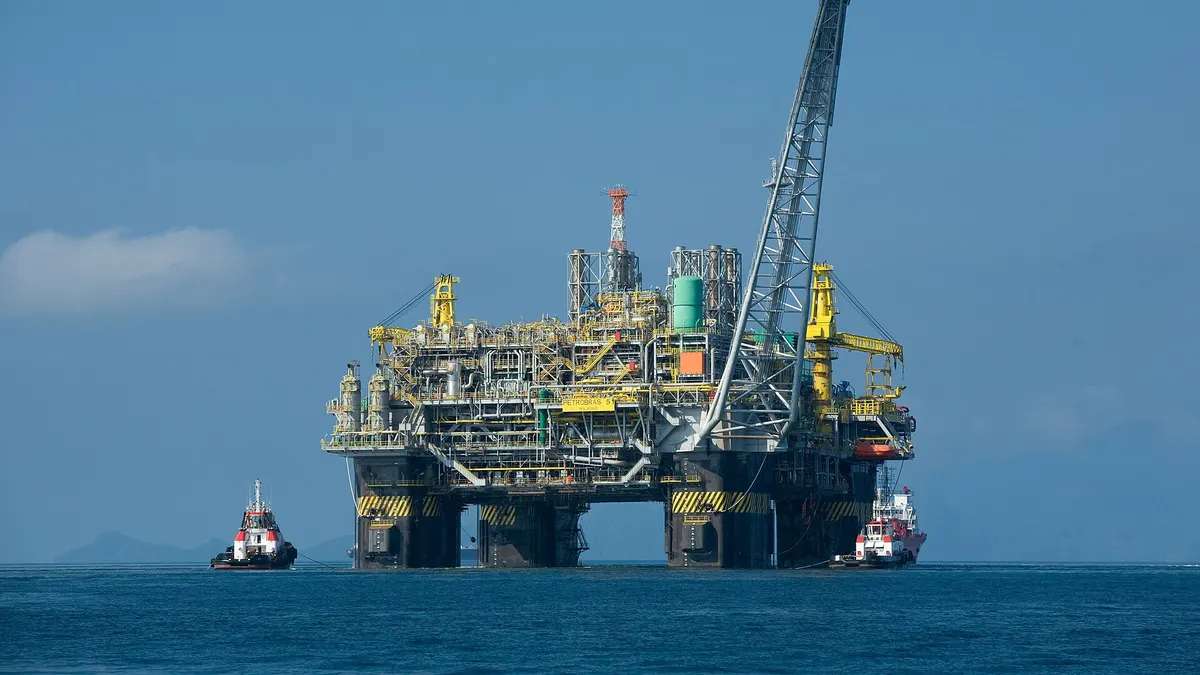
Sea Lion is a hydrocarbon project in the field of the same name, within 200 nautical miles north of the islands. It is operated by Navitas Petroleum, with 65%, and its partner Rockhopper Exploration holds the remaining 35%. The companies took the final investment decision on December 10, 2025, and in August 2026 said they were preparing infrastructure to begin drilling in early 2027, with phase 1 first oil expected in the first quarter of 2028, according to the ITLOS summary.
| Measure Argentina sought | Outcome |
|---|---|
| No new drilling or installation of Sea Lion production infrastructure in the North Malvinas Basin | Rejected |
| That the UK not use exploration data to Argentina's detriment | Rejected |
| That the UK stop preventing Argentina from protecting the area's marine environment | Rejected |
| No measures aggravating the dispute, such as new exploitation authorizations | Rejected; the UK said it will not grant new licenses |
Timeline of the Sea Lion case before the Law of the Sea tribunal
- Dec 10, 2025Final investment decisionNavitas and Rockhopper approve Sea Lion.
- Sep 28, 2026Argentina starts arbitrationUnder Annex VII of UNCLOS.
- Oct 13, 2026Requests provisional measuresBefore ITLOS, while the arbitral tribunal is formed.
- Nov 10-11, 2026Hearings in Hamburg
- Nov 28, 2026Rejected 18 to 3
- Mar 21, 2027Drilling, not beforeUK assurance to the tribunal.
- Mar 2028Extraction, not beforeUK assurance to the tribunal.
What Argentina said and what comes next after the ruling
Quirno said ITLOS "recognized before the world the sovereignty dispute that the United Kingdom tries to deny" and that the decision "does not legitimize the plundering of our resources nor end our claim". The government will push for the arbitral tribunal to be set up and, according to the minister, will move "on all fronts" with sanctions and legal, diplomatic and economic actions. He also urged Congress to pass the National Sovereignty Defense Law, whose urgent passage President Javier Milei requested, according to Página|12. For political context, see our profile of Javier Milei and his government.
- Arbitral tribunal: it must be constituted under Annex VII of UNCLOS and will decide the merits, including its own jurisdiction.
- UK assurances: no drilling before March 21, 2027, no extraction before March 2028 and no new licenses.
- Argentine Congress: the National Sovereignty Defense Law awaits debate.
Other recent decisions in Argentina's Congress: the Senate approved suspending the 2027 primaries.
Frequently asked questions
Did the tribunal side with the UK on the Falklands?
It did not rule on sovereignty. It rejected the provisional measures because, at first sight, the claims require settling sovereignty over the islands, which is not governed by UNCLOS.
How did the Chilean and Brazilian judges vote?
María Teresa Infante Caffi (Chile) and George Rodrigo Bandeira Galindo (Brazil) voted with the 18-member majority and appended separate opinions.
Can it be appealed?
The order only settles the provisional measures. The merits will go to the arbitral tribunal to be formed under Annex VII of UNCLOS.
When does Sea Lion start producing?
The companies target the first quarter of 2028; the UK assured the tribunal extraction will not begin before March 2028.