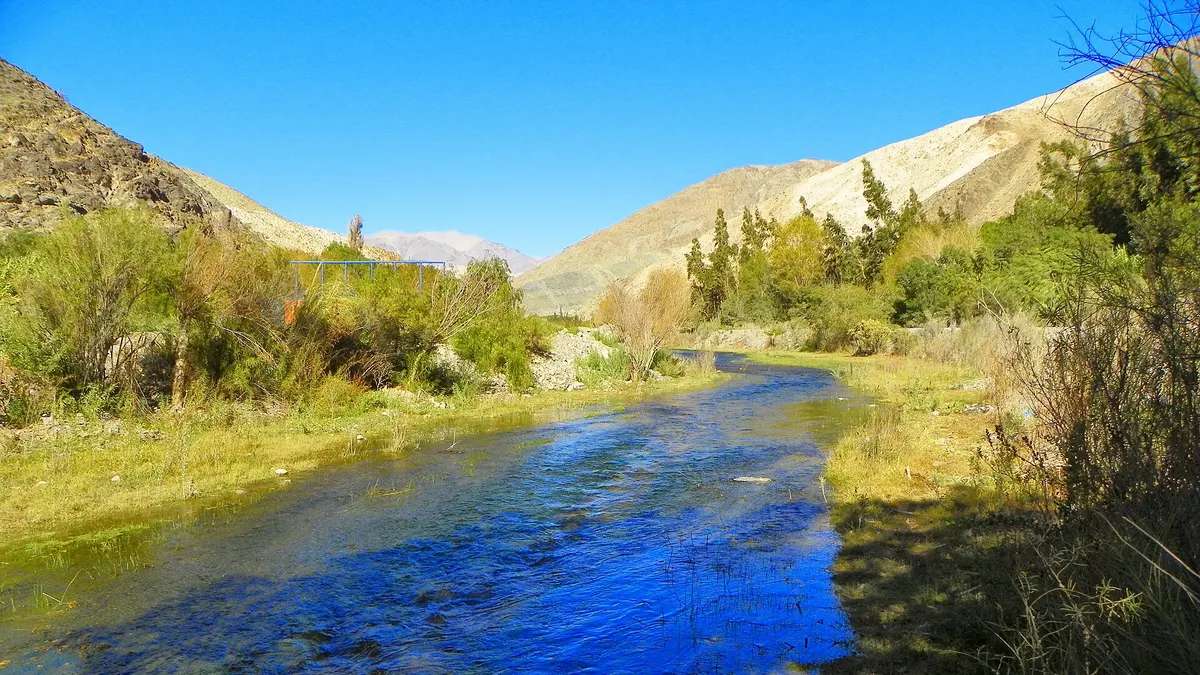
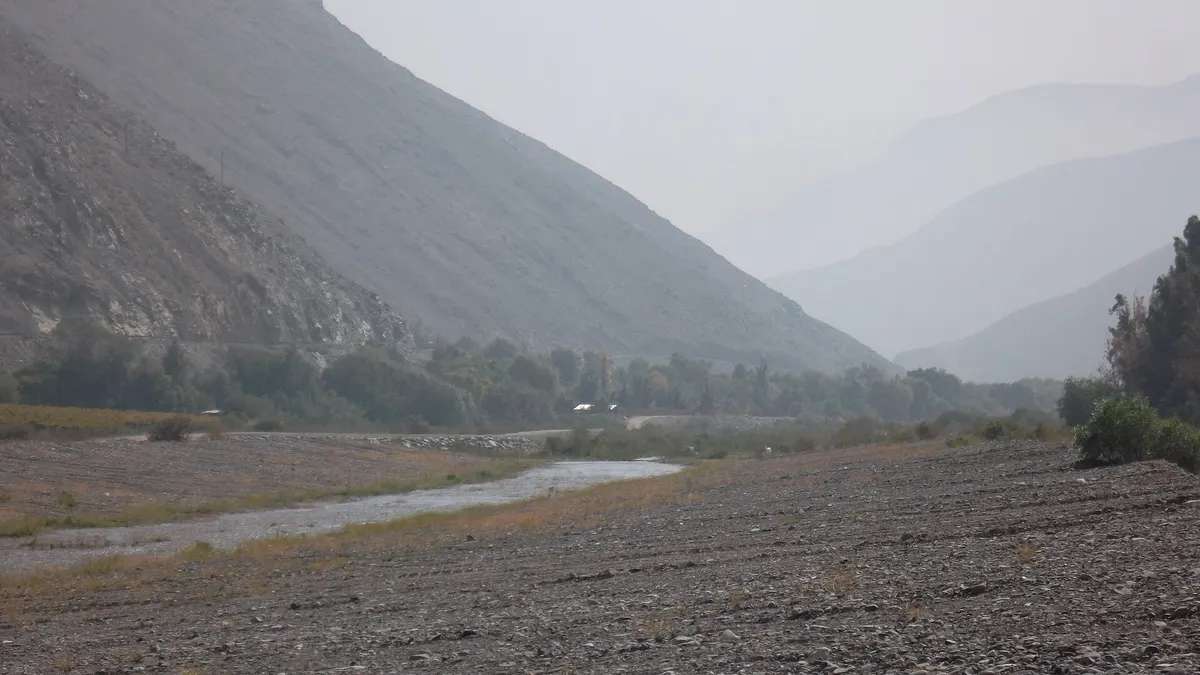
The municipality of Alto del Carmen, in Huasco province (Atacama Region, Chile), has been on red alert for flooding for 18 days: the National Disaster Prevention and Response Service (Senapred) declared it on November 10, 2026 because of Andean snowmelt, which activated ravines and caused the El Carmen and El Tránsito rivers to overflow. In the latest monitoring report, from November 27, 47 people remained isolated and 7 homes had minor damage, according to the Senapred Atacama report published by El Zorro Nortino.
The Huasco River flow at the El Maitén station fell to 34.98 cubic meters per second, within the green threshold and trending down, according to the General Water Directorate (DGA). But the emergency is not over: Senapred's November 20 data sheet projects an average flow of up to 60 m³/s in December, according to Duplos. In addition, on Saturday, November 28, a Preventive Early Warning for thunderstorms was issued for five Atacama municipalities, including Alto del Carmen.
View the data as a table
| People isolated | 47 |
| Homes with minor damage | 7 |
| Huasco River flow | 34.98 m³/s |
| Projected December flow | up to 60 m³/s |
Why Alto del Carmen is on red alert
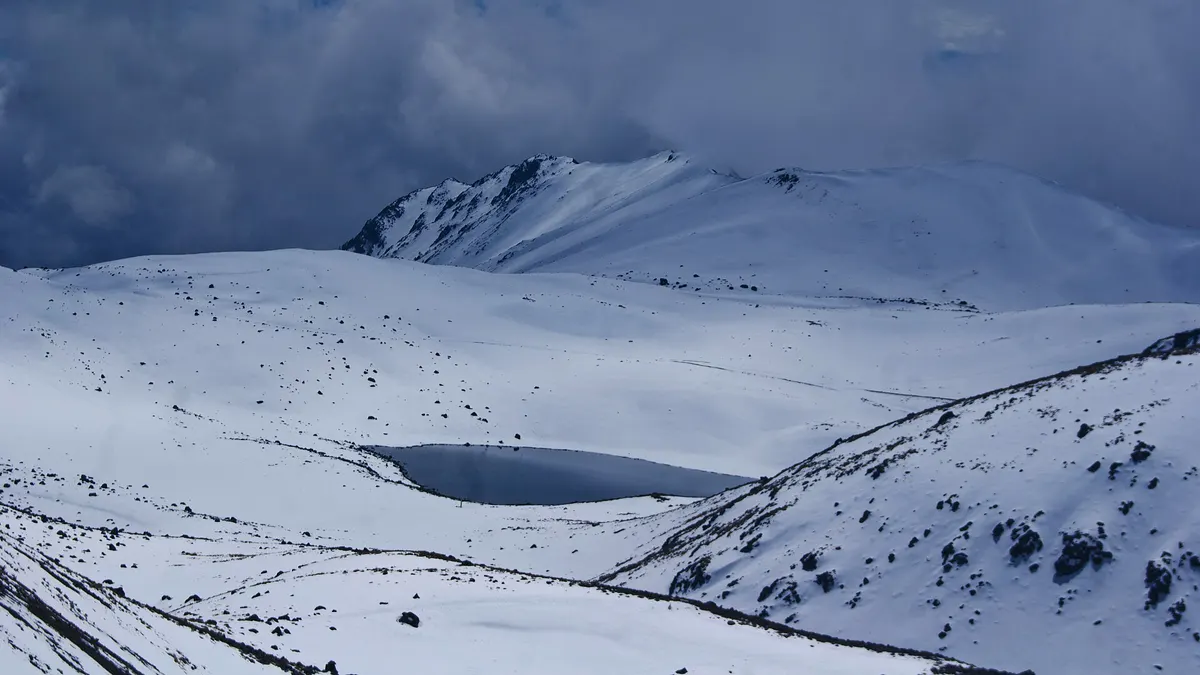
The red alert was declared on Tuesday, November 10, when rising temperatures accelerated snowmelt in the Andes. That day, the swollen rivers and ravines affected 211 people (58 along Route C-489 and 153 in Juntas de Valeriano) and cut access to La Mesilla and El Retamo, according to Radio Agricultura. Senapred warned at the time that the freezing level could reach 4,200 meters, raising the risk of further flooding, and placed the rest of Huasco province under a Preventive Early Warning for rising flows.
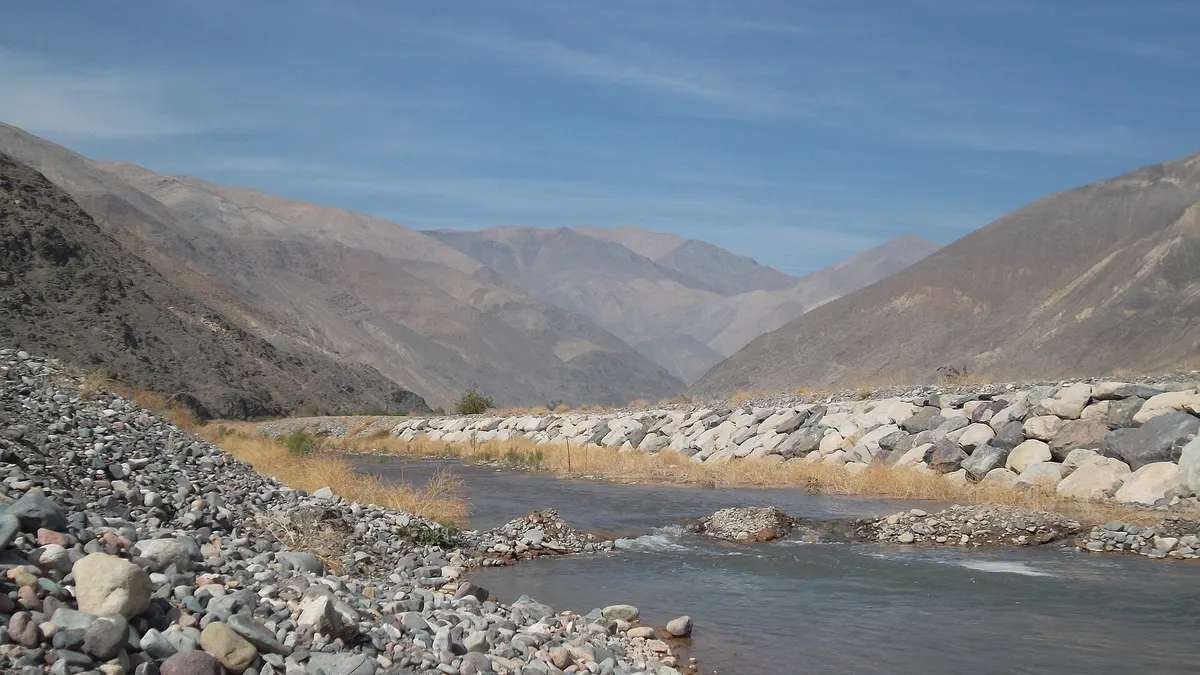
The worst point came in mid-month. In the November 16 monitoring report, 819 people were isolated in five towns of the El Carmen and El Tránsito valleys, 9 homes had minor damage and 9 rural drinking-water systems had problems, according to Vallenar Digital:
How the Alto del Carmen emergency has evolved
As the flow fell, most towns regained access. This is the comparison between the three snapshots reported by Senapred:
| Indicator | November 10 | November 16 | November 27 |
|---|---|---|---|
| People affected | 211 | No data | No data |
| People isolated | No data | 819 | 47 |
| Homes with minor damage | 4 | 9 | 7 |
| Huasco flow at El Maitén | No data | 41.29 m³/s (blue threshold) | 34.98 m³/s (green threshold) |
Sources: Radio Agricultura (Nov 10), Vallenar Digital (Nov 16) and El Zorro Nortino (Nov 27), with data from Senapred Atacama and the DGA. Figures refer to the date of each report and are not cumulative.
Cut roads and isolated towns in Alto del Carmen
As of November 27, 47 people remained isolated in La Vega (40), La Mesilla (5) and Pastalito (2). The Ministry of Public Works (MOP) is working with machinery on the damaged fords and bridges. This is the state of the road network reported by Senapred:
| C-489, La Vega ford | Cut by higher flow |
| C-489, La Mesilla ford | Blocked by vegetation and a sinkhole; MOP working |
| C-489, Crucecita ford | Cut by higher flow |
| C-489, El Berraco ford | Cut by road surface damage |
| C-489, Mesilla - Cerro Blanco | Cut by overflow; machinery working |
| San Félix interior bridge | Structural damage; a parapet is being built |
| C-495, La Fragua ford | Major damage; interior road affected |
| C-495, El Sombrío bridge | Structural damage |
| El Corral, main road (Medialuna) | Cut |
On drinking water, only the Crucecita rural sanitation system still had problems and was partly working, according to the Hydraulic Works Directorate. The Los Grillitos kindergarten and nursery, run by Fundación Integra, removed its furniture and suspended classes as a precaution because of the flooding and loss of access.
The town-by-town detail of the November 27 report shows that home damage is spread across both valleys, with one house affected in each area:
| Town | People isolated | Homes with minor damage |
|---|---|---|
| La Vega | 40 | 0 |
| La Mesilla | 5 | 0 |
| Pastalito | 2 | 0 |
| Alto del Carmen | 0 | 1 |
| Cerro Blanco | 0 | 1 |
| Chollay | 0 | 1 |
| Chigüinto | 0 | 1 |
| El Berraco | 0 | 1 |
| Juntas de Valeriano | 0 | 1 |
| Los Canales | 0 | 1 |
| Total | 47 | 7 |
During the emergency, the Emergency Alert System (SAE) sent messages to phones in the municipality on November 10, to avoid the banks of the El Carmen and El Tránsito rivers, and twice on November 14, to stay away from the El Carmen riverbank. Source: Senapred Atacama, November 27, 2026 monitoring report, via El Zorro Nortino.
Thunderstorm alert in Atacama
On Saturday, November 28, Senapred issued a Preventive Early Warning for thunderstorms in Diego de Almagro, Copiapó, Tierra Amarilla, Vallenar and Alto del Carmen, after the Chilean Weather Service forecast "likely thunderstorms in mountain areas, with isolated showers", according to Radio Agricultura. The alert remains in force while the risk persists. Official advice:
- Avoid contact with or proximity to metal objects such as fences, gates and wire.
- Stay away from power and phone lines.
- Do not use radios, GPS devices or landline or mobile phones during the storm.
- Do not cross flooded fords or ravines, and respect road closures.
Chile faces other natural emergencies this week: see what is happening with the explosions at Nevados de Chillán and our story on the heat warning from Coquimbo to Biobío.
Frequently asked questions
Is the red alert in Alto del Carmen still in force?
Yes. As of November 28, 2026, Senapred Atacama keeps the red alert for flooding declared on November 10, and the latest monitoring update is from November 27.
Why are rivers overflowing without rain?
Because of snowmelt: rising temperatures melt the snow accumulated in the Andes and increase the flow of the El Carmen and El Tránsito rivers and the ravines.
How many people are isolated?
47 as of November 27 (40 in La Vega, 5 in La Mesilla and 2 in Pastalito). On November 16 there were 819.
Could it get worse in December?
Senapred projects an average Huasco River flow of up to 60 m³/s in December, above the 34.98 m³/s measured on November 27, which is why monitoring continues.