Peru's president, Keiko Fujimori, said on October 30 that two mega-prisons inspired by El Salvador's Terrorism Confinement Center (CECOT) could be built in Peru in about seven months, the same time it took to build the Salvadoran prison. "It will depend a lot on political will and on the budgets, which are already programmed for next year," she said in San Salvador, according to RPP, citing the EFE news agency.
The announcement closed a three-day official visit to El Salvador (October 29 to 31), in which Fujimori toured CECOT, met President Nayib Bukele and signed cooperation agreements on security, justice, health and tourism. The trip's agenda had been announced days earlier, as we reported in our story on Keiko Fujimori's trip to El Salvador.
What Keiko Fujimori announced about the mega-prisons
After meeting Bukele, the president outlined the prison plan in a statement released by Peru's Presidency: "Peru has several prisons to finish and we will start two more. One for high-risk inmates, where we will build something similar. Then we will build a prison for less dangerous inmates, where we will have to implement productive workshops and the Zero Idleness plan."
| Point of the announcement | What was said | Source |
|---|---|---|
| New prisons | Two: a high-risk one "similar" to CECOT and another for lower-risk inmates | Peru's Presidency |
| Timeline | About seven months, "at this same speed" as CECOT | RPP / EFE |
| Funding | Budget "programmed for next year"; no amount given | RPP / EFE |
| Works under way | Finish six prisons that are in progress | Peru's Presidency |
| Internal regime | Zero Idleness plan, productive workshops and blocking of communications | Peru's Presidency |
| Location and capacity | Not disclosed | — |
As of November 1, the government had not published the cost, location or capacity of the two mega-prisons, nor a decree ordering them. The Presidency did say the delegation gathered "several ideas" on the tour and that the government will use the legislative powers granted by Congress to declare criminal gangs "hostile" or "terrorist" groups (Peru's Presidency). Those delegated powers were approved in October after the Senate vote on legislative powers.
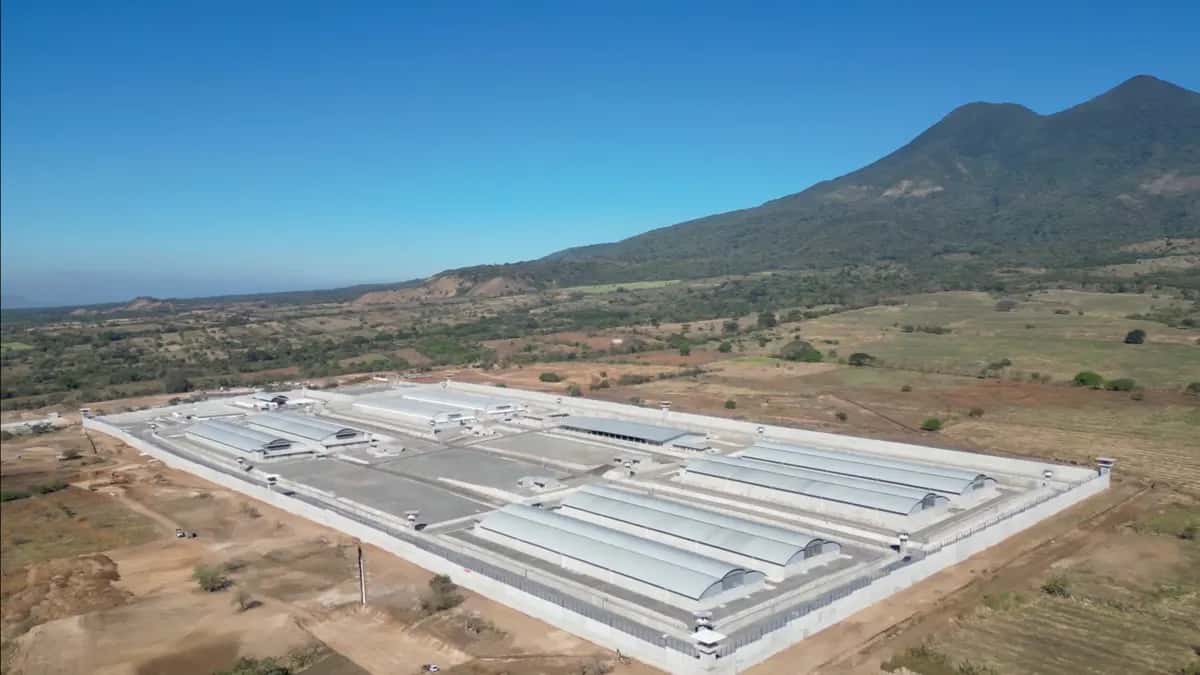
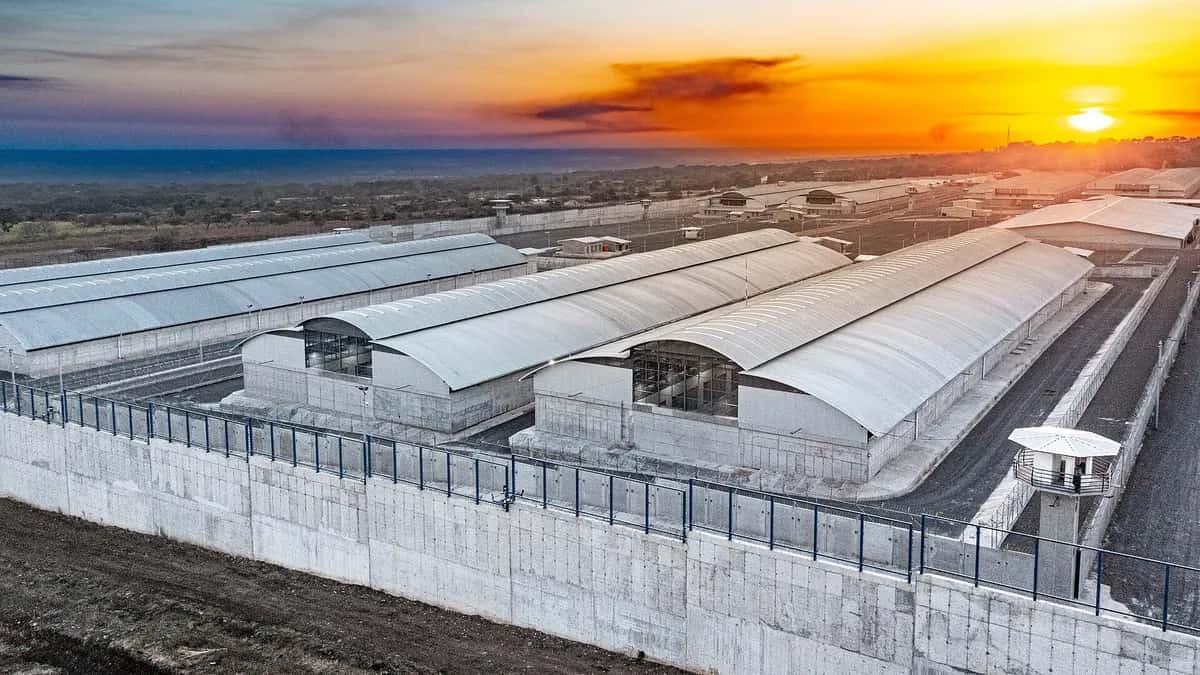
What the CECOT that Keiko Fujimori wants to replicate is like
CECOT is a maximum-security prison built in 2023 in Tecoluca, in central El Salvador, with capacity for 40,000 inmates, according to the figure cited by RPP. It is the emblem of Bukele's state of exception against gangs, in force since March 2022. During the visit, Salvadoran Defense Minister René Merino said that when Bukele took office in 2019 gangs controlled 83% of the territory, a Salvadoran government figure with no independent measurement.
| Item | CECOT (El Salvador) | Peru's prison system |
|---|---|---|
| Capacity | 40,000 inmates (a single prison) | 41,764 places in 69 prisons (calculated with INPE data) |
| Population | Not officially reported | 105,156 inmates in prisons as of March 2026 |
| Overcrowding | — | 63,392 people without a place (152% above capacity) |
| Construction time | About seven months (2022-2023) | Government goal: seven months per new prison |
Source: RPP for CECOT; INPE data as of March 2026 cited by La República. Peru's capacity is our own calculation: inmate population minus the reported excess. With those figures, a single CECOT-sized prison would almost double the places the entire Peruvian system has today.
The agreements signed by Keiko Fujimori and Nayib Bukele
On October 29, at the Presidential House in San Salvador, both presidents signed a joint declaration to "deepen the bilateral relationship with a results-oriented agenda", according to Peru's Presidency. Cooperation agreements on health, security, justice and tourism were also signed, and a Bilateral Partnership was established. Fujimori invited Bukele to visit Peru and proposed negotiating a free trade agreement.
- Security and justice: exchange of experience in prison management and the fight against transnational organized crime.
- Health: the delegation visited Doctor SV, El Salvador's telemedicine program; on returning, the government announced it will promote telemedicine to cut waiting times.
- Education: visits to schools and El Salvador's school infrastructure program.
- Trade: a Peruvian proposal for a bilateral FTA, with no formal negotiation announced.
The full texts of the agreements had not been published at the time of writing.
| Date | Official visit activity | Source |
|---|---|---|
| October 29 | Tour of CECOT with the interior and justice ministers; meeting with Bukele and signing of agreements at the Presidential House | Peru's Presidency |
| October 30 | Meeting with Salvadoran business leaders, visits to education and health programs, and announcement of the two mega-prisons | RPP / EFE |
| October 31 | Return to Lima and meetings with ambassadors at the Government Palace | Peru's Presidency |
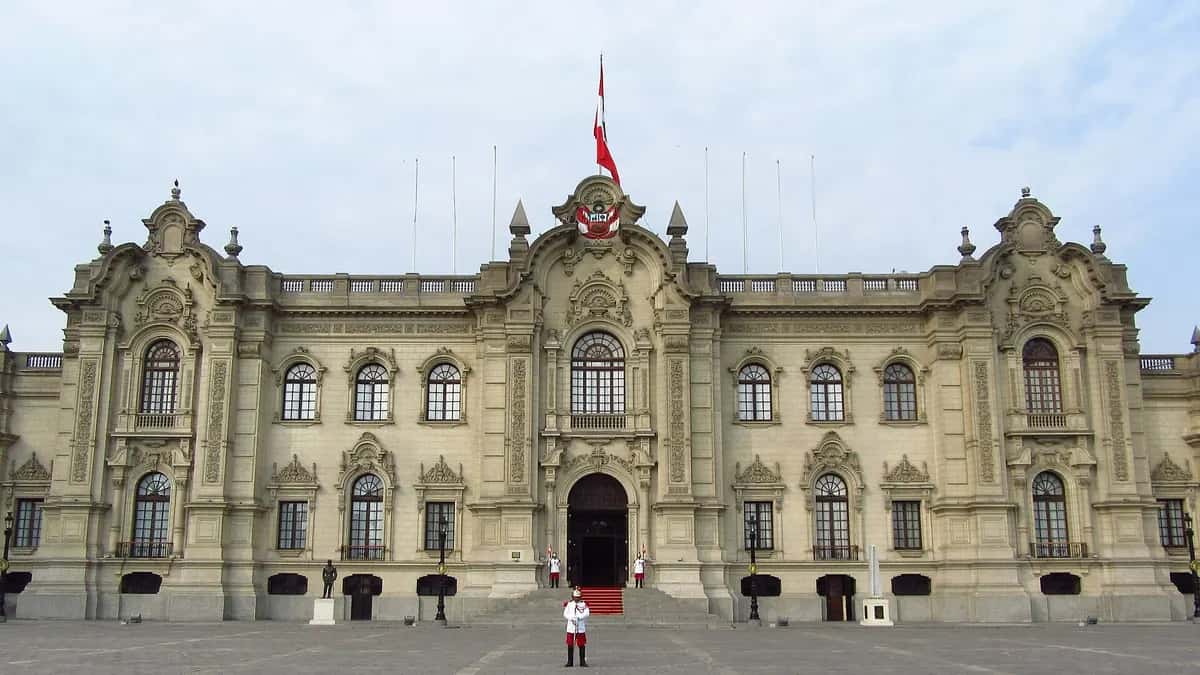
What Bukele said about copying his model in Peru
At the joint press conference, Bukele distanced himself from an exact replica: "Copying it identically would make no sense, because all countries are different," he said, according to RPP. He added that "the idiosyncrasy of crime in Peru is different" and that Peru's problem is not comparable to what El Salvador went through: "The medicine does not have to be so strong for a disease that is smaller."
Fujimori answered along the same lines: "Successful experiences must be analyzed, studied and adapted, because we are different countries" (Peru's Presidency). The Salvadoran model has been criticized by human rights organizations for mass detentions and lack of due process under the state of exception; the Peruvian government has not detailed which elements of that regime it would adopt.
The Peruvian government's prison plan before the trip
The mega-prisons are part of a strategy the government was already applying. On October 26, Fujimori led an operation to dismantle eight stations and 43 illegal antennas that provided signal to the Ancón I, Piedras Gordas II, Sarita Colonia and Andahuaylas prisons, under the slogan "control of the prisons will be regained" (Peru's Presidency). The Unified Command, which brings together the Armed Forces and the Police, also took over perimeter control of the prisons.
Security is the issue that weighs most in the government's rating, which reaches its first 100 days in early November with 40% approval according to Ipsos. To see how much those who carry out that policy on the streets earn, see how much a police officer earns in Peru.
Frequently asked questions
How many mega-prisons will Peru build?
Keiko Fujimori announced two: one for high-risk inmates, similar to CECOT, and another for lower-risk inmates with productive workshops.
How long would they take?
The president said they could be built in about seven months, like CECOT, depending on political will and the 2027 budget.
How much will the mega-prisons cost?
The government has not disclosed an amount, a location or a capacity. It only said the funds are programmed for next year.
What is CECOT's capacity?
40,000 inmates, according to the figure cited by RPP and EFE. Peru's entire prison system has about 41,764 places for 105,156 inmates.
What agreements did Peru sign with El Salvador?
A joint declaration, cooperation agreements on health, security, justice and tourism, and a Bilateral Partnership. Peru also proposed negotiating an FTA.