The 25 reservoirs monitored by Chile's Directorate General of Water (DGA) held 8,053 million cubic meters as of November 16, 2026, 28.6% more than at the end of November 2025, according to the agency's latest hydrometeorological bulletin, cited by La Tercera, citing the DGA bulletin as of November 16. The jump is due to the rain of a year shaped by El Niño, which doubled or tripled historical averages in the semi-arid north. The most striking figure is in the irrigation reservoirs: nine of the 16 are full and together they are at 91.8% of capacity.
The DGA, part of the Ministry of Public Works (MOP), tracks 25 reservoirs in nine regions, from Antofagasta to Biobío: 64% are used for irrigation, 16% for power generation, 12% for drinking water and 8% are mixed. In this article we use the full table from the Directorate General of Water (DGA), hydrometeorological bulletin of November 9, 2026, the latest posted on the DGA website, and the November 16 figures reported by La Tercera.
View the data as a table
| Water stored | 8,053 M m³ |
| Versus Nov 2025 | +28.6% |
| Irrigation reservoirs | 91.8% |
| Full | 9 of 16 |
Chile's reservoirs, one by one
According to the DGA, the nine irrigation reservoirs that were full on November 16 are Santa Juana (Atacama); Recoleta, Cogotí, Culimo, El Bato and Corrales (Coquimbo); Bullileo and Digua (Maule); and Coihueco (Ñuble). Convento Viejo, in O'Higgins, is at 98%, and La Paloma, Coquimbo's largest, at 91%. The chart shows each reservoir's level as of November 9, the latest bulletin with the full table:
| Reservoir | Region | Capacity (Mm³) | Nov 9, 2026 (Mm³) | % of capacity | Nov 2025 (Mm³) | Use |
|---|---|---|---|---|---|---|
| Conchi | Antofagasta | 22 | 18.4 | 84% | 19.7 | Irrigation |
| Lautaro | Atacama | 23 | 15.4 | 67% | 2.7 | Irrigation |
| Santa Juana | Atacama | 166 | 166.0 | 100% | 113.5 | Irrigation |
| La Laguna | Coquimbo | 38 | 18.1 | 48% | 17.0 | Irrigation |
| Puclaro | Coquimbo | 209 | 121.4 | 58% | 42.1 | Irrigation |
| Recoleta | Coquimbo | 100 | 100.0 | 100% | 20.5 | Irrigation |
| La Paloma | Coquimbo | 750 | 652.1 | 87% | 81.9 | Irrigation |
| Cogotí | Coquimbo | 137 | 136.7 | 100% | 36.4 | Irrigation |
| Culimo | Coquimbo | 9 | 9.2 | 100% | 5.2 | Irrigation |
| El Bato | Coquimbo | 26 | 25.5 | 98% | 25.0 | Irrigation |
| Corrales | Coquimbo | 50 | 50.0 | 100% | 49.2 | Irrigation |
| Los Aromos | Valparaíso | 35 | 35.0 | 100% | 32.7 | Drinking water |
| Peñuelas | Valparaíso | 95 | 16.0 | 17% | 9.1 | Drinking water |
| El Yeso | Santiago Metropolitan | 220 | 152.4 | 69% | 187.2 | Drinking water |
| Convento Viejo | O'Higgins | 237 | 229.0 | 97% | 199.1 | Irrigation |
| Rapel | O'Higgins | 471 | 416.6 | 88% | 599.3 | Power |
| Colbún | Maule | 1,544 | 1,529.1 | 99% | 1,258.8 | Power |
| Laguna del Maule | Maule | 1,359 | 740.0 | 54% | 827.7 | Power and irrigation |
| Bullileo | Maule | 60 | 60.0 | 100% | 59.7 | Irrigation |
| Digua | Maule | 225 | 223.9 | 100% | 178.3 | Irrigation |
| Tutuvén | Maule | 22 | 16.9 | 77% | 7.5 | Irrigation |
| Coihueco | Ñuble | 29.3 | 28.2 | 96% | 28.5 | Irrigation |
| Lago Laja | Biobío | 5,582 | 1,900.8 | 34% | 1,616.7 | Power and irrigation |
| Ralco | Biobío | 1,174 | 1,153.5 | 98% | 766.5 | Power |
| Pangue | Biobío | 83 | 82.3 | 99% | 78.1 | Power |
Source: Directorate General of Water (DGA), hydrometeorological bulletin of November 9, 2026. Mm³: million cubic meters. The DGA compares with the volume at the end of November 2025. The "use" column is the main use reported in the bulletin.
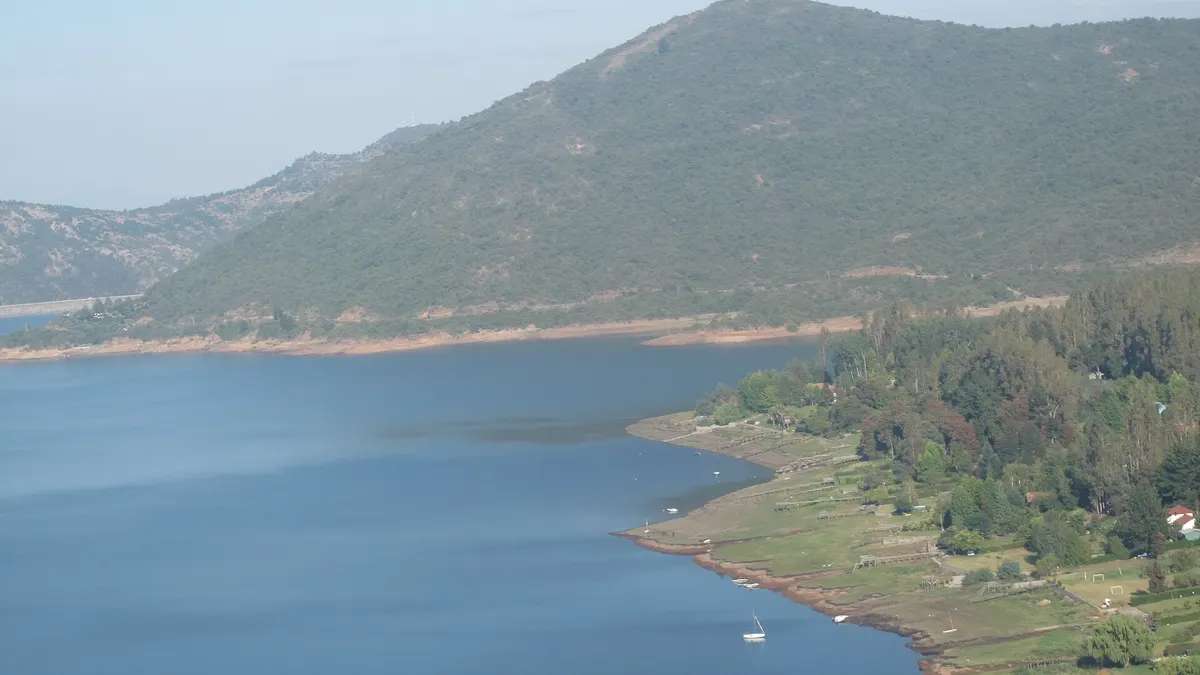
Coquimbo, the region where reservoirs changed the most
The biggest change is in Coquimbo, where six of its eight reservoirs were spilling, that is, releasing surplus water because they cannot hold any more. La Paloma, with 750 million cubic meters of capacity, held 682.7 million on November 16, versus 81.9 million a year earlier; in November 2025 it was at 11%. Recoleta went from 20.5 to 100 million, its full capacity; Cogotí from 36.4 to 136.7 million, and Puclaro from 42.1 to 137.9 million. In Monte Patria, the reopening of La Paloma's floodgates on November 5, after 28 years shut, was celebrated like a party, according to La Tercera.
The map adds up, region by region, the water in the reservoirs the DGA monitors and compares it with their capacity as of November 9. Regions without color have no reservoirs in the agency's monitoring:
View the data as a table
| Atacama | 96% · 2 reservoirs; 181.4 of 189 Mm³ |
| Ñuble | 96% · 1 reservoirs; 28.2 of 29 Mm³ |
| O'Higgins | 91% · 2 reservoirs; 645.6 of 708 Mm³ |
| Antofagasta | 84% · 1 reservoirs; 18.4 of 22 Mm³ |
| Coquimbo | 84% · 8 reservoirs; 1,113.0 of 1,319 Mm³ |
| Maule | 80% · 5 reservoirs; 2,569.9 of 3,210 Mm³ |
| Metropolitana | 69% · 1 reservoirs; 152.4 of 220 Mm³ |
| Biobío | 46% · 3 reservoirs; 3,136.6 of 6,839 Mm³ |
| Valparaíso | 39% · 2 reservoirs; 51.0 of 130 Mm³ |
| Region | Reservoirs | Capacity (Mm³) | Nov 9, 2026 (Mm³) | % of capacity | Nov 2025 (Mm³) |
|---|---|---|---|---|---|
| Antofagasta | 1 | 22 | 18.4 | 84% | 19.7 |
| Atacama | 2 | 189 | 181.4 | 96% | 116.2 |
| Coquimbo | 8 | 1,319 | 1,113.0 | 84% | 277.3 |
| Valparaíso | 2 | 130 | 51.0 | 39% | 41.8 |
| Santiago Metropolitan | 1 | 220 | 152.4 | 69% | 187.2 |
| O'Higgins | 2 | 708 | 645.6 | 91% | 798.4 |
| Maule | 5 | 3,210 | 2,569.9 | 80% | 2,332.0 |
| Ñuble | 1 | 29 | 28.2 | 96% | 28.5 |
| Biobío | 3 | 6,839 | 3,136.6 | 46% | 2,461.3 |
Source: Directorate General of Water (DGA), hydrometeorological bulletin of November 9, 2026; sums and percentages calculated by Vivarae News. Biobío shows a low level because it includes Lake Laja, the country's largest reservoir (5,582 million m³), which was at 34%.
Chile's reservoirs that are still low
- Peñuelas (Valparaíso): the only one below 20% of capacity, with 16 of 95 million m³, although it almost doubles the 9.1 million of a year earlier.
- Lake Laja (Biobío) and Laguna del Maule (Maule): the two mixed power-and-irrigation reservoirs were at 35% and 55% on November 16. Laja, with 1,900 million m³ on the 9th, is still below its historical average for the month (2,091 million).
- La Laguna and Puclaro (Elqui): the lowest irrigation reservoirs, at 58% and 66% on November 16, both below their average for the month.
- El Yeso (Santiago Metropolitan Region): Santiago's main drinking-water reserve held 152.4 million m³ on November 9 (69%), less than the 187.2 million of November 2025.
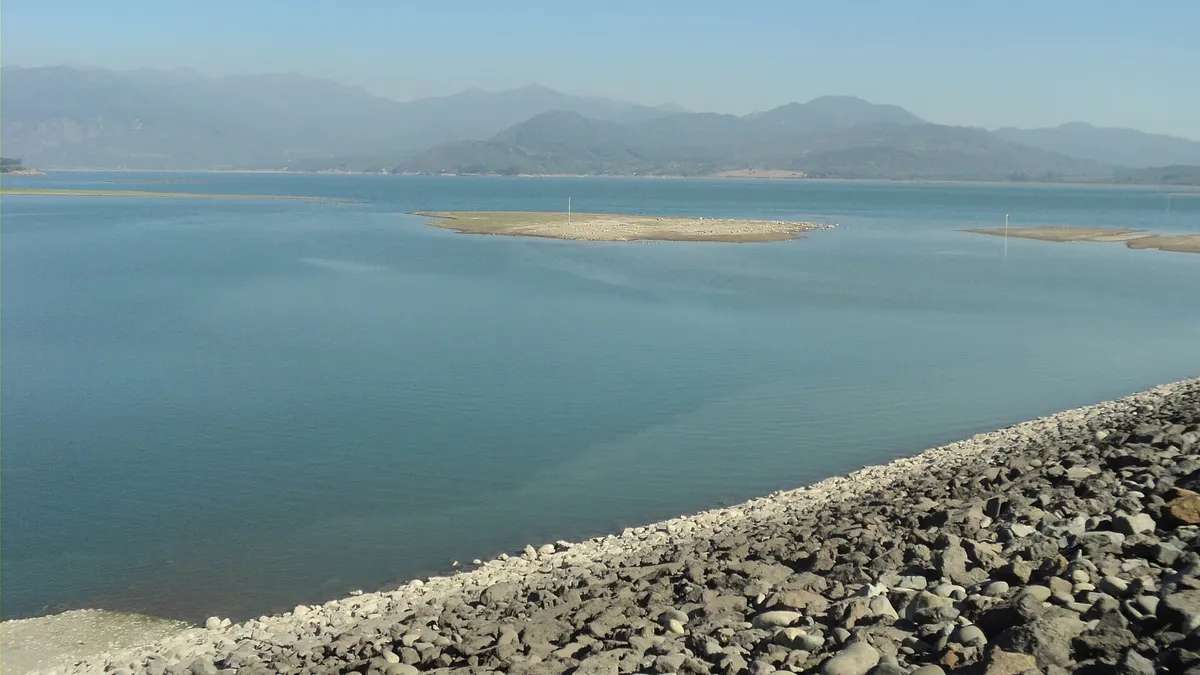
Rain and snow: why Chile's reservoirs rose
Of the 79 rain gauges the DGA tracks, 60 show a surplus against the 1991-2020 average, and in the northern macrozone, from Arica to Coquimbo, all 23 are above normal. The largest differences are in the Huasco and Elqui valleys, as the table shows:
| Station | 2026 rain to date (mm) | Average to date (mm) | Same date 2025 (mm) |
|---|---|---|---|
| San Félix (Alto del Carmen, Atacama) | 326.1 | 56.2 | 65.1 |
| Vallenar (Atacama) | 200.3 | 40.1 | n/a |
| La Laguna reservoir (Vicuña, Coquimbo) | 341.2 | 135.7 | n/a |
Source: La Tercera, citing the DGA bulletin as of November 16. Snow helped too: at the Cerro Olivares and Quebrada Larga snow courses, between the Elqui and Limarí valleys, snowpack depth is 207% and 125% above the historical average, when there was no snow on the same date in 2025. Even so, the national balance shows a 29% deficit in snowpack depth and 18% in its water equivalent, and from Maule southward there is no accumulation left. In October the DGA published its 2026-2027 snowmelt forecast for the irrigation season.
The water also brought damage. This year's rain caused mudslides, road closures and collapsed bridges, and on November 17 the governor of Atacama, Miguel Vargas, again called for a state of emergency in the region over rivers swollen by snowmelt, according to La Tercera. For context on the phenomenon, see what ENFEN says about the coastal El Niño in Peru and gasoline prices by region.
Frequently asked questions
How much water do Chile's reservoirs hold?
As of November 16, 2026, the 25 reservoirs monitored by the DGA held 8,053 million cubic meters, 28.6% more than at the end of November 2025.
Which reservoirs are full?
Among irrigation reservoirs: Santa Juana, Recoleta, Cogotí, Culimo, El Bato, Corrales, Bullileo, Digua and Coihueco, according to the DGA as of November 16.
What is Chile's largest reservoir?
Lake Laja, in Biobío, with capacity for 5,582 million cubic meters. In November 2026 it was at just over a third.
Is Chile's drought over?
The reservoirs of the semi-arid north have recovered, but the DGA still records a national snow deficit and some reservoirs, such as Peñuelas and Lake Laja, remain low. One wet year does not by itself replenish aquifers.