Argentina's economy grew 1.1% in September 2026 from August but fell 1.2% from September 2025, according to the INDEC technical report on the monthly economic activity estimator (EMAE), published on November 24. The rebound was not enough to save the quarter: using INDEC's seasonally adjusted series, the July-September average was 1.8% below April-June, which in turn had fallen 1.0% from the first quarter. That makes two straight quarters of decline, what is usually called a technical recession.
Formal confirmation will come with the advance GDP report for the third quarter, which INDEC publishes in December. In the first nine months of the year, activity is still up 1.0% from the same period of 2025, thanks to a strong first half. These are the EMAE figures and the sectors that are growing and shrinking.
View the data as a table
| Versus August | +1.1% |
| Year on year | -1.2% |
| Q3 vs. Q2 | -1.8% |
| January-September | +1.0% |
September EMAE: activity month by month in 2026
| Month of 2026 | Versus previous month (seasonally adjusted) | Year on year |
|---|---|---|
| January | +0.1% | +2.0% |
| February | -2.0% | -1.5% |
| March | +2.5% | +6.4% |
| April | -1.6% | +2.1% |
| May | -0.7% | +0.7% |
| June | +0.5% | +3.1% |
| July | -2.5% | -1.5% |
| August | +0.4% | -1.6% |
| September | +1.1% | -1.2% |
Source: INDEC technical report, table 1. The year shows a sawtooth pattern: months of strong growth (March, +2.5%) followed by declines (July, -2.5%, the worst of the year). The trend-cycle component, which smooths those jumps, has not grown since February. For industrial detail, see September's industry and construction data.
View the data as a table
| Seasonally adjusted | Trend-cycle | |
|---|---|---|
| Jan 25 | 151.6 | 150.6 |
| Feb 25 | 153.6 | 151.1 |
| Mar 25 | 149.3 | 151.5 |
| Apr 25 | 152.0 | 151.9 |
| May 25 | 151.9 | 152.1 |
| Jun 25 | 150.7 | 152.4 |
| Jul 25 | 151.8 | 152.7 |
| Aug 25 | 153.2 | 152.9 |
| Sep 25 | 153.6 | 153.2 |
| Oct 25 | 153.3 | 153.4 |
| Nov 25 | 152.9 | 153.6 |
| Dec 25 | 155.9 | 153.7 |
| Jan 26 | 156.0 | 153.8 |
| Feb 26 | 152.9 | 153.9 |
| Mar 26 | 156.6 | 153.8 |
| Apr 26 | 154.1 | 153.8 |
| May 26 | 153.0 | 153.7 |
| Jun 26 | 153.8 | 153.6 |
| Jul 26 | 149.9 | 153.6 |
| Aug 26 | 150.6 | 153.5 |
| Sep 26 | 152.2 | 153.5 |
Why there is talk of a technical recession in Argentina
A technical recession is usually defined as two consecutive quarters of falling output, measured without seasonal effects. Quarterly GDP has not yet been published, but the EMAE anticipates it: INDEC notes that, in the last month of each quarter, it reconciles the seasonally adjusted series with a quarterly figure built from the monthly data. Using that series' averages, this is the result:
| Quarter | Average seasonally adjusted EMAE | Change from previous quarter |
|---|---|---|
| Q4 2025 | 154.0 | - |
| Q1 2026 | 155.2 | +0.7% |
| Q2 2026 | 153.6 | -1.0% |
| Q3 2026 | 150.9 | -1.8% |
Vivarae News calculation based on table 2 of the INDEC technical report. It is an approximation: official GDP data may differ due to revisions and quarterly reconciliation. The next EMAE, with October, will be published on Monday, December 21, 2026, according to the report itself. Outlets such as Diario Río Negro have already reported that the country entered a technical recession.
EMAE sectors: mining up, finance and fishing down
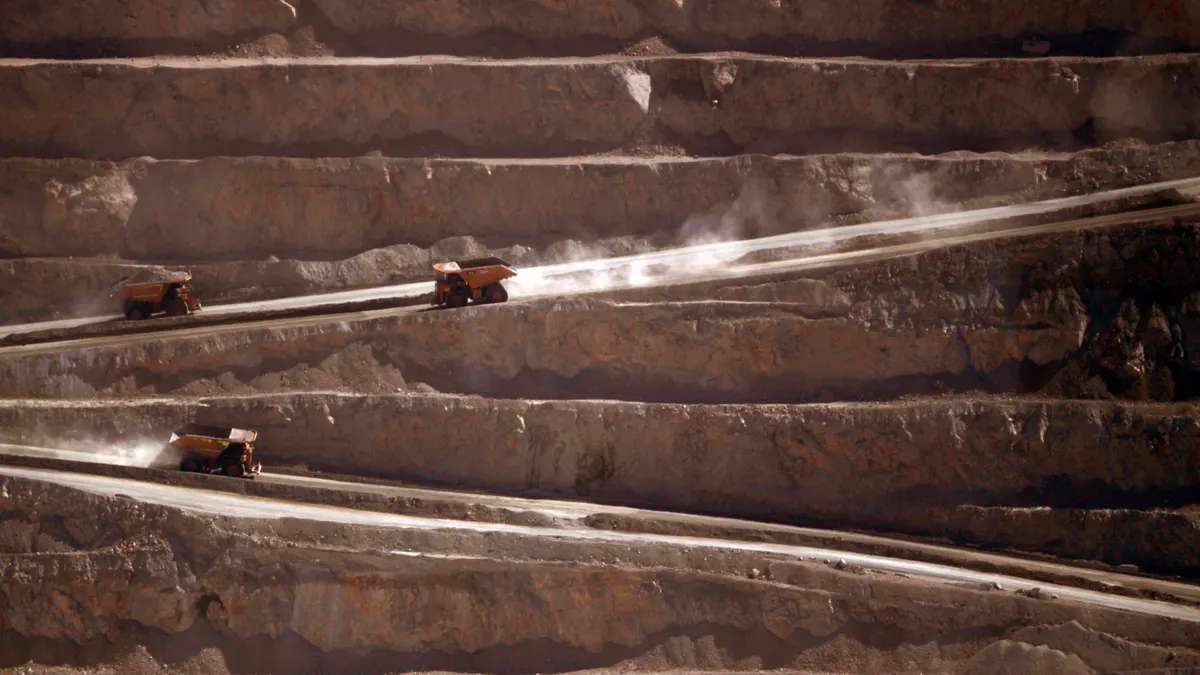
Five of the 15 sectors grew in September compared with a year earlier. Mining and quarrying, which includes oil and gas from Vaca Muerta, led with 11.1%, followed by electricity, gas and water (4.0%) and construction (3.5%); according to INDEC, those three sectors added 0.6 points to the EMAE's change. At the other end, fishing (-48.6%), financial intermediation (-11.5%) and manufacturing (-1.8%) subtracted 1.1 points.
| Mining and quarrying | 11.1% |
| Electricity, gas and water | 4.0% |
| Construction | 3.5% |
| Hotels and restaurants | 3.4% |
| Social and health services | 0.7% |
| Real estate and business activities | -0.3% |
| Education | -0.5% |
| Transport and communications | -0.7% |
| Taxes net of subsidies | -1.3% |
| Public administration and defense | -1.7% |
| Manufacturing | -1.8% |
| Agriculture and livestock | -2.0% |
| Trade | -2.2% |
| Other community services | -2.2% |
| Financial intermediation | -11.5% |
| Fishing | -48.6% |
Argentina's economy in 2026: farming and mining hold up the year
Despite the third-quarter decline, activity from January to September is still 1.0% above the same period of 2025. Adding up each sector's indices for the nine months shows who is holding up the year: mining and quarrying is up 13.0% and farming 8.5%, thanks to the first-half harvest. By contrast, manufacturing is down 2.4%, public administration 1.5% and trade 1.1%.
| Sector | January-September 2026 vs. 2025 | September year on year |
|---|---|---|
| Mining and quarrying | +13.0% | +11.1% |
| Agriculture and livestock | +8.5% | -2.0% |
| Hotels and restaurants | +2.6% | +3.4% |
| Electricity, gas and water | +2.5% | +4.0% |
| Financial intermediation | +1.5% | -11.5% |
| Construction | +0.6% | +3.5% |
| Trade | -1.1% | -2.2% |
| Public administration and defense | -1.5% | -1.7% |
| Manufacturing | -2.4% | -1.8% |
Vivarae News calculation using INDEC's EMAE series by sector (original indices, base 2004=100). Fishing shows extreme swings (+24.5% year to date and -48.6% in September) due to seasonal catches, so we left it out of the table. The sharpest shift is September's in financial intermediation, which went from growing over the year to falling 11.5%.
What the EMAE measures and how it differs from GDP
The EMAE is a provisional indicator that INDEC calculates every month with production, sales and employment data from different sectors to anticipate GDP, which is published every three months. INDEC publishes three versions: the original series, for comparing with the same month a year earlier; the seasonally adjusted series, which removes calendar and seasonal effects to compare a month with the previous one; and the trend-cycle series, which shows the underlying direction. That is why the same month can show a rise (September versus August) and a fall (September versus a year earlier). Figures are revised with each new release.
What the technical recession means for Argentina
- A two-speed economy. Energy, mining and construction grow; manufacturing, trade and finance, which employ many people, shrink.
- Jobs under pressure. INDEC has already recorded 134,500 fewer registered private jobs in a year.
- Prices and markets. Inflation rose again to 2.2% in October, as we reported in October's inflation, and country risk remains among the highest in the region.
- What comes next. October's EMAE (December 21) and third-quarter GDP will show whether September was the start of a recovery or an isolated rebound.
Frequently asked questions
What is the EMAE?
INDEC's monthly economic activity estimator: an indicator that anticipates GDP month by month.
How much did Argentina's economy grow in September 2026?
It rose 1.1% from August in the seasonally adjusted series but fell 1.2% from September 2025.
Is Argentina in a technical recession?
Based on the seasonally adjusted EMAE, the second and third quarters of 2026 fell 1.0% and 1.8%. Official confirmation comes with INDEC's quarterly GDP in December.
When is the next EMAE released?
On Monday, December 21, 2026, with October data.