Luiz Inácio Lula da Silva won Brazil's presidential runoff on Sunday, October 25, 2026, with 64,256,232 votes, 51.79% of valid votes, against 59,826,041 votes (48.21%) for Senator Flávio Bolsonaro, according to the count of 100% of polling stations by the [Superior Electoral Court](https://resultados.tse.jus.br/oficial/app/index.html) (TSE). The margin was 4,430,191 votes. Lula, 81, has now won his fourth presidential election, after 2002, 2006 and 2022.
The result reversed the October 4 first round, which Flávio Bolsonaro had won. The Liberal Party (PL) candidate said it is "impossible to recognize the result" and announced he will ask the Supreme Federal Court (STF) to annul the election, according to BBC News Brasil. These are the official numbers, the state-by-state map and what may happen next.
Brazil runoff result
| Indicator | Lula da Silva (PT) | Flávio Bolsonaro (PL) |
|---|---|---|
| Votes | 64,256,232 | 59,826,041 |
| Share of valid votes | 51.79% | 48.21% |
| Running mate | Geraldo Alckmin (PSB) | Alfredo Gaspar (PL) |
| First-round votes (October 4) | 53,879,538 (45.16%) | 56,104,503 (47.03%) |
| Votes gained between rounds | +10,376,694 | +3,721,538 |
| States won (of 27, including the Federal District) | 13 | 14 |
Source: TSE, official data with 100% of sections counted, updated at 23:27 on October 25 (Brasília time). 128,236,074 voters cast a ballot out of 158,745,502 registered; abstention was 19.22%, down from 21.08% in the first round. There were 1,430,496 blank votes (1.12%) and 2,723,305 null votes (2.12%). The differences between rounds are our own calculation with TSE data.
How Lula turned the Brazil election around
In the first round, Flávio Bolsonaro got 2.2 million more votes than Lula. In the runoff, Lula added 10.4 million votes and Flávio 3.7 million. Part of the swing comes from the eliminated candidates, who together won more than 9 million votes in the first round, and from lower abstention, which fell by almost 3 million people.
| Candidate eliminated in the first round | Votes | Share |
|---|---|---|
| Augusto Cury | 3,448,569 | 2.89% |
| Renan Santos | 2,675,887 | 2.24% |
| Ronaldo Caiado | 2,605,148 | 2.18% |
| Romeu Zema | 326,488 | 0.27% |
| Six other candidates | 260,655 | 0.21% |
Source: TSE, first-round results of October 4, 2026. The TSE does not report how each eliminated candidate's voters voted in the runoff; vote transfers are an inference, not data. See the profiles of both candidates: who Lula da Silva is and who Flávio Bolsonaro is.
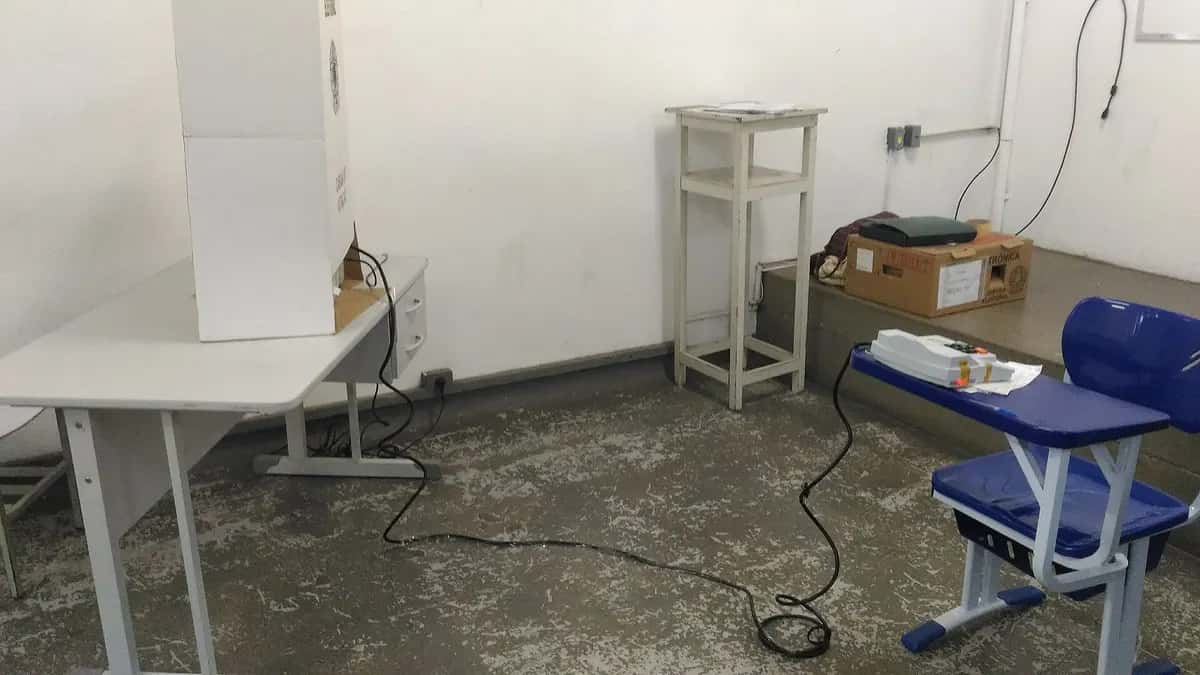
Brazil runoff results by state
The map repeats the split of recent elections: Lula swept the Northeast and Flávio Bolsonaro won the South, the Center-West, São Paulo and Rio de Janeiro. The key was Minas Gerais, the country's second-largest electorate, where Lula won by just 109,313 votes.
| State | Lula | Flávio Bolsonaro | Winner |
|---|---|---|---|
| São Paulo | 46.15% | 53.85% | Flávio |
| Minas Gerais | 50.43% | 49.57% | Lula |
| Rio de Janeiro | 46.90% | 53.10% | Flávio |
| Bahia | 71.31% | 28.69% | Lula |
| Paraná | 37.42% | 62.58% | Flávio |
| Rio Grande do Sul | 42.16% | 57.84% | Flávio |
| Pernambuco | 69.20% | 30.80% | Lula |
| Ceará | 68.93% | 31.07% | Lula |
| Pará | 55.02% | 44.98% | Lula |
| Santa Catarina | 30.58% | 69.42% | Flávio |
| Goiás | 40.34% | 59.66% | Flávio |
| Piauí | 75.88% | 24.12% | Lula |
| Federal District | 45.72% | 54.28% | Flávio |
| Roraima | 27.54% | 72.46% | Flávio |
| Votes abroad | 53.86% | 46.14% | Lula |
Source: TSE, results by federative unit. The table shows the largest states and the extremes. Lula also won Alagoas, Amazonas, Amapá, Maranhão, Paraíba, Rio Grande do Norte and Sergipe; Flávio won Acre, Espírito Santo, Mato Grosso, Mato Grosso do Sul, Rondônia and Tocantins. His best result was Roraima (72.46%) and Lula's was Piauí (75.88%).
The annulment request and the extended voting hours
The dispute centers on a decision by Justice Cristiano Zanin of the STF, who ordered voting to be extended by two hours on Sunday afternoon after reports that local governments in Bahia and São Paulo had restricted public transport, according to BBC News Brasil. Both coalitions asked for longer hours: the PT because of buses in inland Bahia and the PL because of rain in São Paulo.
| Actor | What they said or did |
|---|---|
| Flávio Bolsonaro | Said it is "impossible to recognize the result", which he said was decided by a stroke of Zanin's pen, and announced he will ask the STF to annul it |
| Kássio Nunes Marques, TSE president | Acknowledged Lula's victory and said: "We have absolute confidence in the whole electoral process", although he criticized Zanin's order |
| Fernando Neisser, election lawyer (Iasp) | "From a legal point of view, it is difficult" |
| Alberto Rollo, election lawyer | The Constitution requires the election to be held on the set date and does not allow it to be repeated weeks later |
Sources: BBC News Brasil and BioBioChile. Quotes translated from Portuguese. The experts consulted by the BBC see annulment as remote: the margin is wide and abstention fell from the first round. A challenge would rely on articles 220 and 224 of the Electoral Code; the latter requires a new election only if the irregularities affect more than half of the country's votes. That has never happened since Brazil's return to democracy.
What comes after Brazil's runoff
- Challenges: the PL must file its request with the electoral courts or the STF. By Monday morning, October 26, its text had not been made public.
- Certification: the electoral court must certify the winning ticket before the inauguration.
- Inauguration: the new term begins on January 5, 2027, under Constitutional Amendment 111 of 2021, which moved the date from January 1.
- Region: several governments congratulated Lula. Chile's president, José Antonio Kast, called him and said that "Chile and Brazil have a lot of future in common" (La Tercera, BioBioChile).
The background to the vote is in our article on Brazil's runoff. We look at the impact on Argentina's main trading partner in Argentina and Brazil after Lula's re-election.
Frequently asked questions
Who won Brazil's runoff?
Lula da Silva, with 51.79% of valid votes (64,256,232 votes), against 48.21% for Flávio Bolsonaro, according to the TSE with 100% counted.
By how many votes did Lula win?
By 4,430,191 votes.
How many states did each candidate win?
Lula won 13 states and the vote abroad; Flávio Bolsonaro won 13 states and the Federal District.
Did Flávio Bolsonaro concede?
No. He said it is impossible to recognize the result and announced he will ask the STF to annul the election.
When does Lula's fourth term begin?
On January 5, 2027, under Constitutional Amendment 111 of 2021.