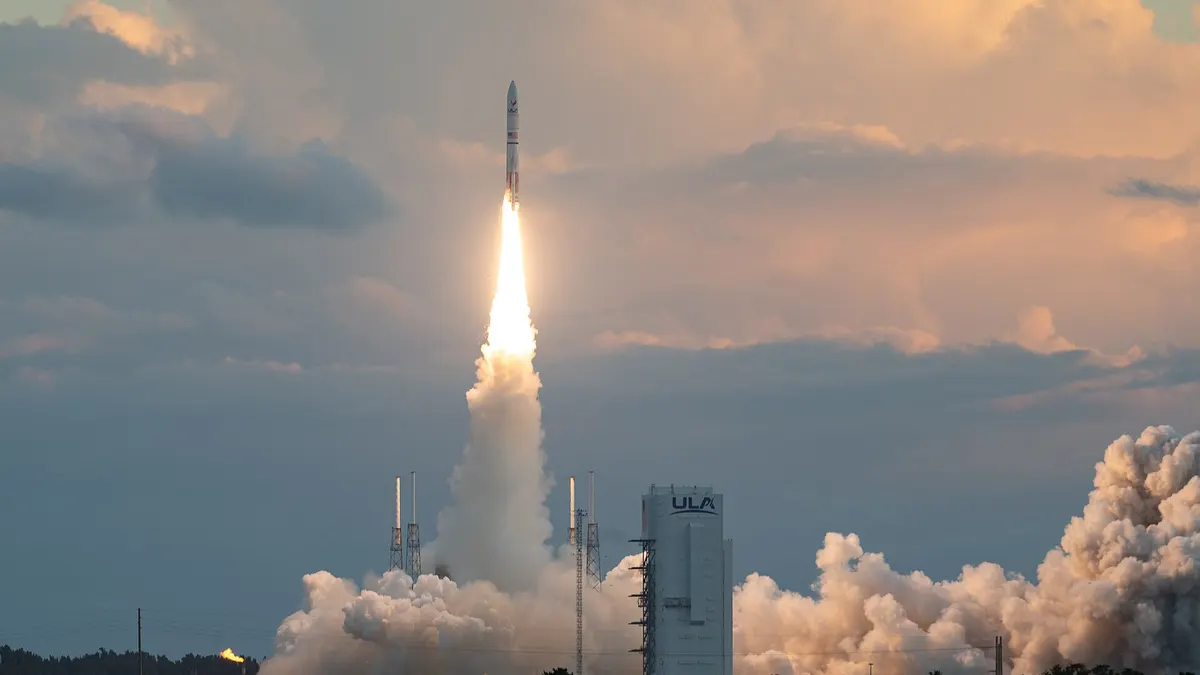
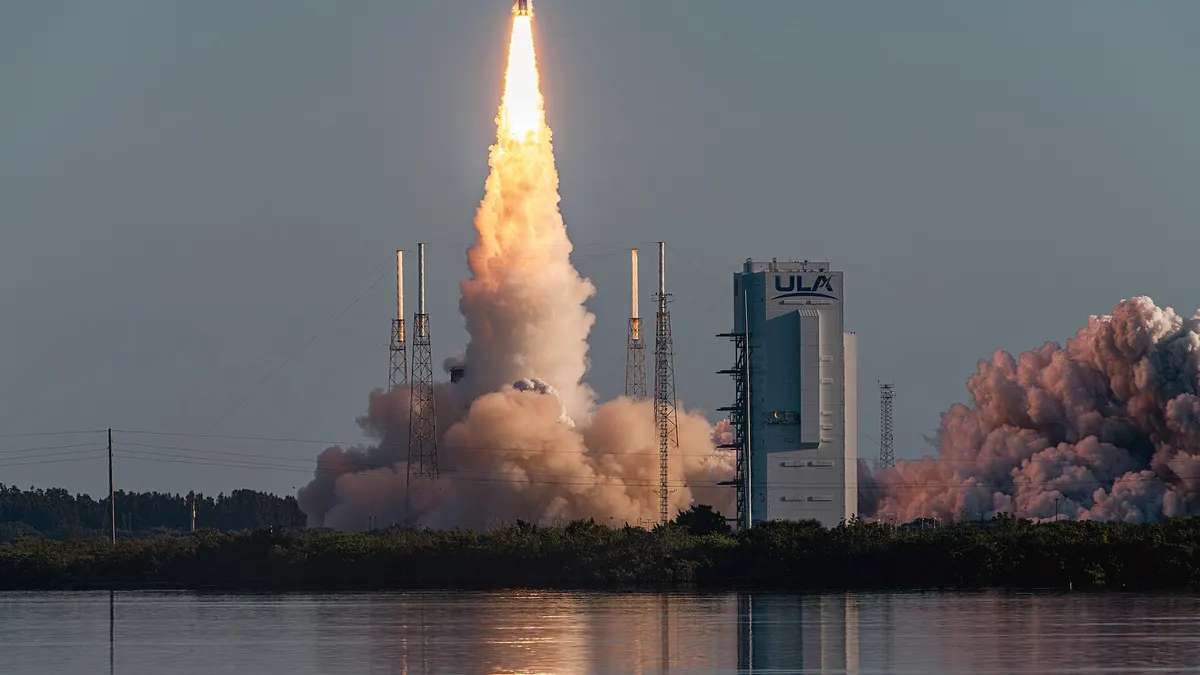
United Launch Alliance's (ULA) Vulcan rocket failed on Sunday, November 15, 2026, and the 40 Amazon Leo internet satellites it carried fell back to Earth minutes after liftoff from Cape Canaveral, Florida, Ars Technica reported. It is the first total mission failure in the 20-year history of ULA, the Boeing-Lockheed Martin joint venture. The launch, at 12:40 p.m. US Eastern time (2:40 p.m. in Chile), was the first of 38 Amazon booked on Vulcan to build its satellite network, Starlink's competitor.
The blow goes beyond the 40 lost satellites: Vulcan will be grounded indefinitely while the cause is investigated, and it is Amazon's main rocket and one of two the US Space Force uses for its most sensitive missions. This article explains what happened to the Vulcan rocket, what Amazon Leo is, how many satellites it has compared with Starlink and how its schedule changes.
View the data as a table
| Amazon Leo satellites lost | 40 |
| Launches Amazon still has booked on Vulcan | 37 |
| Amazon Leo satellites in orbit | 392 |
| Starlink satellites in orbit | 11,213 |
What happened to the Vulcan rocket
ULA said on X that, "based on data received by our Launch Director", Vulcan "suffered an anomaly 10 minutes into the flight and failed to deliver the Amazon mission to orbit", and said it did not yet have specific data to understand what happened, The Verge reported. Sources cited by Ars Technica placed the problem in the rocket's booster stage, not the Centaur V upper stage or the six solid rocket boosters, which performed well in the first two minutes.
According to Ars Technica, the booster stage's two BE-4 engines, made by Blue Origin, Jeff Bezos's space company, kept firing at least 30 seconds longer than planned, a possible sign of underperformance. The broadcast animation, driven by telemetry, showed the rocket starting to spin after engine shutdown; the Centaur stage ignited its engines in an apparent attempt to correct course. Before this flight, Vulcan had overcome solid rocket booster failures on two of its four previous missions and still reached orbit.
| Item | Detail |
|---|---|
| Mission | Amazon Leo LV-01 |
| Date and time | November 15, 2026, 12:40 p.m. ET (17:40 UTC) |
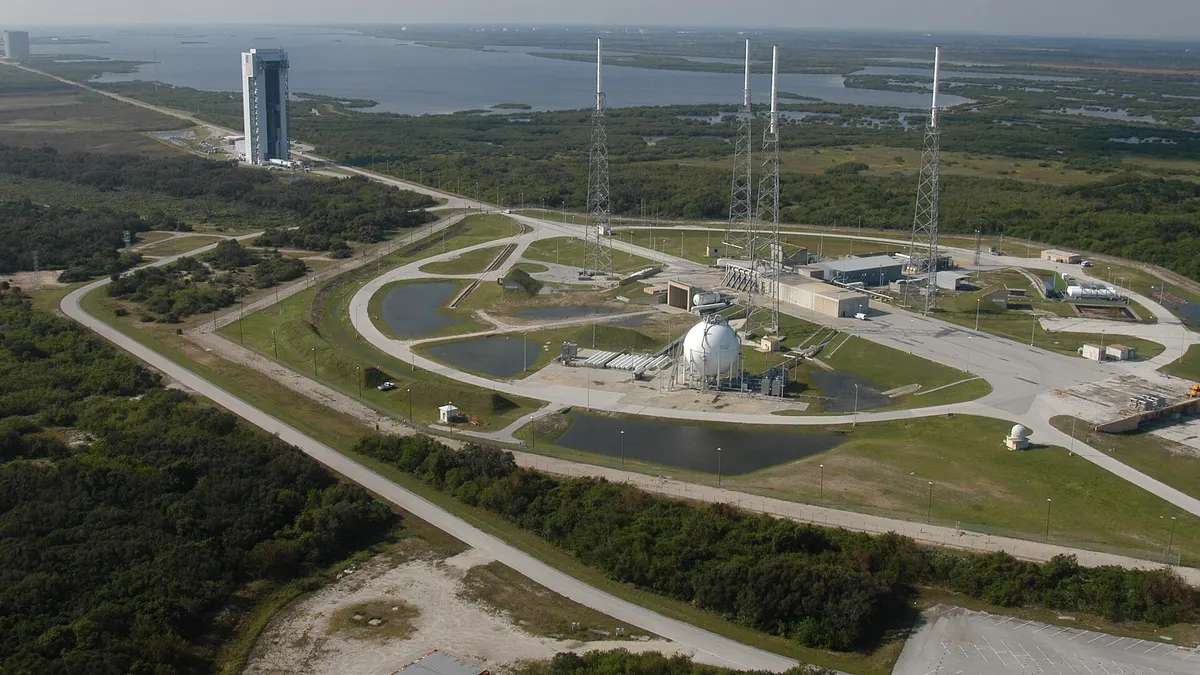
| Site | Space Launch Complex 41, Cape Canaveral, Florida |
| Payload | 40 Amazon Leo satellites |
| Failure | Booster-stage anomaly, per Ars Technica sources; cause under investigation |
| Record | ULA's first total failure since its creation in 2006 |
Sources: Ars Technica; The Verge.
What Amazon Leo is and how many satellites it has versus Starlink
Amazon Leo, formerly Project Kuiper, is the low-Earth-orbit satellite network with which Amazon wants to sell internet directly to homes and businesses, as SpaceX's Starlink does. According to Ars Technica, the constellation had 396 satellites before the failure, a fraction of the 3,292 in its first generation; Amazon has already built its 1,000th satellite, so more than half are in storage, and it said in October it had enough in orbit to start commercial service before year-end. Astronomer Jonathan McDowell, who tracks every satellite, counted 392 working on November 16.
The gap with Starlink is huge: SpaceX has launched 13,122 satellites for that network and 11,213 remain in orbit, according to Jonathan McDowell. Amazon is even smaller than OneWeb, Eutelsat's network that sells capacity to operators, and barely ahead of the two Chinese constellations being deployed, Guowang and Qianfan. In Chile, Starlink already sells its plans directly; see Starlink's price in Chile.
| Constellation | Launched | In orbit | Working |
|---|---|---|---|
| Starlink (SpaceX) | 13,122 | 11,213 | 11,199 |
| OneWeb (Eutelsat) | 660 | 654 | 651 |
| Amazon Leo | 438 | 392 | 392 |
| Qianfan (China) | 276 | 276 | 254 |
| Guowang (China) | 279 | 274 | 273 |
Source: Jonathan McDowell, constellation statistics updated November 16, 2026 (UTC). Amazon Leo's "launched" figure includes the 40 satellites lost on Vulcan and the 2 prototypes from 2023.
Amazon Leo's rockets: what it booked and what has flown
In April 2022 Amazon announced the biggest launch purchase in its history: 38 on ULA's Vulcan, 18 on Arianespace's Ariane 6 and 12 on Blue Origin's New Glenn, with options for 15 more, on top of 9 Atlas V booked earlier. It has since expanded the Arianespace contract to 24 launches and bought flights on rival SpaceX's Falcon 9, with 10 remaining, according to Ars Technica. Of the 438 satellites Amazon has launched, 226 flew on Atlas V, 100 on Ariane 6 and 72 on Falcon 9; the 40 on Vulcan were lost, according to Jonathan McDowell's records.
View the data as a table
| Reached orbit | Lost at launch | |
|---|---|---|
| Atlas V | 226 | 0 |
| Ariane 6 | 100 | 0 |
| Falcon 9 | 72 | 0 |
| Vulcan | 0 | 40 |
| Rocket | Company | Booked | Flown with Amazon satellites | Status |
|---|---|---|---|---|
| Atlas V | ULA | 9 | 9 | Contract complete |
| Vulcan | ULA | 38 | 1 (failed) | Grounded pending investigation |
| Ariane 6 | Arianespace | 24 | 3 | Fourth launch due late November |
| Falcon 9 | SpaceX | 13 (3 + 10 remaining) | 3 | Available |
| New Glenn | Blue Origin | 12 + 15 options | 0 | Pad out of service after a May explosion |
Sources: Amazon (2022 contracts); Ars Technica (expansions and status); Jonathan McDowell (flights). The Falcon 9 total adds the 3 flights flown and the 10 Ars Technica says remain booked.
How Amazon Leo's schedule changes after the Vulcan failure
With Vulcan grounded and New Glenn without a pad until at least year-end, after a May explosion during a ground test traced to a valve on a BE-4 engine, Amazon will rely in the coming months on Ariane 6 and its 10 remaining Falcon 9 launches, Ars Technica estimates. If the investigation points to the BE-4, used by both rockets, New Glenn's return could also slip. Amazon backed its supplier: "There is risk with any launch, and that's especially true for inaugural missions like LV-01," the company said, according to The Verge.
The regulatory deadline also matters. The Federal Communications Commission (FCC) required Amazon to have half the constellation in orbit by July 30, 2026; in June it granted a waiver moving that target to July 2028 and keeping July 2029 for the full network, though it stripped Amazon's spectrum priority until it reaches the halfway mark, according to DatacenterDynamics. Other outlets cite different dates for the final deadline. The setback also affects the Space Force, which already moved six Vulcan missions to SpaceX over earlier delays, and NASA, which chose ULA's Centaur stage for future flights of its SLS moon rocket.
- Apr 2022Amazon books up to 83 launchesVulcan, Ariane 6 and New Glenn.
- 20232 prototypes launchOn an Atlas V.
- 2025First production launchesAtlas V and Falcon 9.
- 2026Ariane 6 debuts with Amazon satellites3 launches and 100 satellites.
- May 2026A New Glenn explodes in a test
- Jun 2026FCC relaxes the deadlineHalf the network, by July 2028.
- Nov 15, 2026Vulcan fails with 40 satellites
- Jul 2029Deadline for the full constellation
Amazon already has a strong presence in the region through its cloud business: this month Amazon Web Services opened its region in Chile.
Frequently asked questions
What happened to the Vulcan rocket?
It suffered an anomaly about 10 minutes after its November 15 liftoff and failed to put the 40 Amazon Leo satellites into orbit. The cause is under investigation; Ars Technica sources point to the booster stage.
How many satellites does Amazon Leo have?
About 392 working as of November 16, according to Jonathan McDowell (Ars Technica reports 396), versus more than 11,000 for Starlink.
Will Amazon Leo come to Chile?
Amazon has not announced a date for Chile. The company said it would start commercial service in late 2026 with the satellites already in orbit.
What is ULA?
United Launch Alliance, the Boeing-Lockheed Martin joint venture created in 2006 that builds the Atlas V and Vulcan rockets.