The Chile Despega plan, with which President José Antonio Kast's government promises to create more than 100,000 jobs, mobilizes 1.3 trillion Chilean pesos in public works, hiring subsidies and financial support for companies, according to the Ministry of Labor. A month after its launch on September 28, economists consulted by BioBioChile welcome its direction but warn that many of those jobs could be temporary.
The plan arrives amid a weak labor market: unemployment rose to 9.8% in the July-September quarter and the number of unemployed exceeded one million, according to the INE (details in our story on the 9.8% unemployment rate). When the plan was presented, unemployment had been above 8% for 44 consecutive months and above 9% for five rolling quarters, the Ministry of Labor noted.
What the Chile Despega plan is and what it costs
CLP 1.3 trillion
Resources mobilized
about US$1.336 billion, according to the ministers
100,000
Projected jobs
over 100,000, on top of 50,000 from Modo Empleo
CLP 91 billion
Hiring subsidies
91 billion pesos in 2026 and 2027
CLP 300 billion
Fogape capitalization
up to 300 billion pesos; would back 4.05 trillion in guarantees
Source: Ministry of Labor and Pauta.
View the data as a table
| Resources mobilized | CLP 1.3 trillion · about US$1.336 billion, according to the ministers |
| Projected jobs | 100,000 · over 100,000, on top of 50,000 from Modo Empleo |
| Hiring subsidies | CLP 91 billion · 91 billion pesos in 2026 and 2027 |
| Fogape capitalization | CLP 300 billion · up to 300 billion pesos; would back 4.05 trillion in guarantees |
Chile Despega is the second stage of the government's jobs policy. The first, Modo Empleo, has been in place since June and, according to Economy and Mining Minister Daniel Mas, generated 50,000 additional jobs through October, CNN Chile reported. The new plan has four pillars:
| Pillar | What it includes | Resources |
|---|---|---|
| 1. Public investment and fast-track works | Public Works (MOP) and Housing (Minvu) to execute their full 2026 budgets, plus extra funds for fast-track works | 1.4 trillion pesos (MOP) and 290 billion (Minvu) between September and December; 800 billion pesos extra (155 billion in 2026 and 635 billion in 2027) |
| 2. Hiring and direct employment | Hiring subsidies combined with Modo Empleo slots, with a somewhat higher amount for women | 91 billion pesos in 2026 and 2027 |
| 3. Liquidity for companies and suppliers | Paying health-system debts to suppliers and capitalizing Fogape | 130 billion pesos (health) and up to 300 billion pesos (Fogape) |
| 4. Local execution and monitoring | Municipal and reconstruction projects prioritized by unemployment, damage and hiring speed | 939 Subdere projects in 251 municipalities; 157 MOP projects |
Sources: Ministry of Labor, Pauta and CNN Chile. The dollar figures given by the ministers (US$92.5 million for subsidies and another US$92.5 million for Subdere, US$308.3 million for Fogape) do not always match the peso figures one-to-one because they are grouped differently.
When the 100,000 jobs would arrive
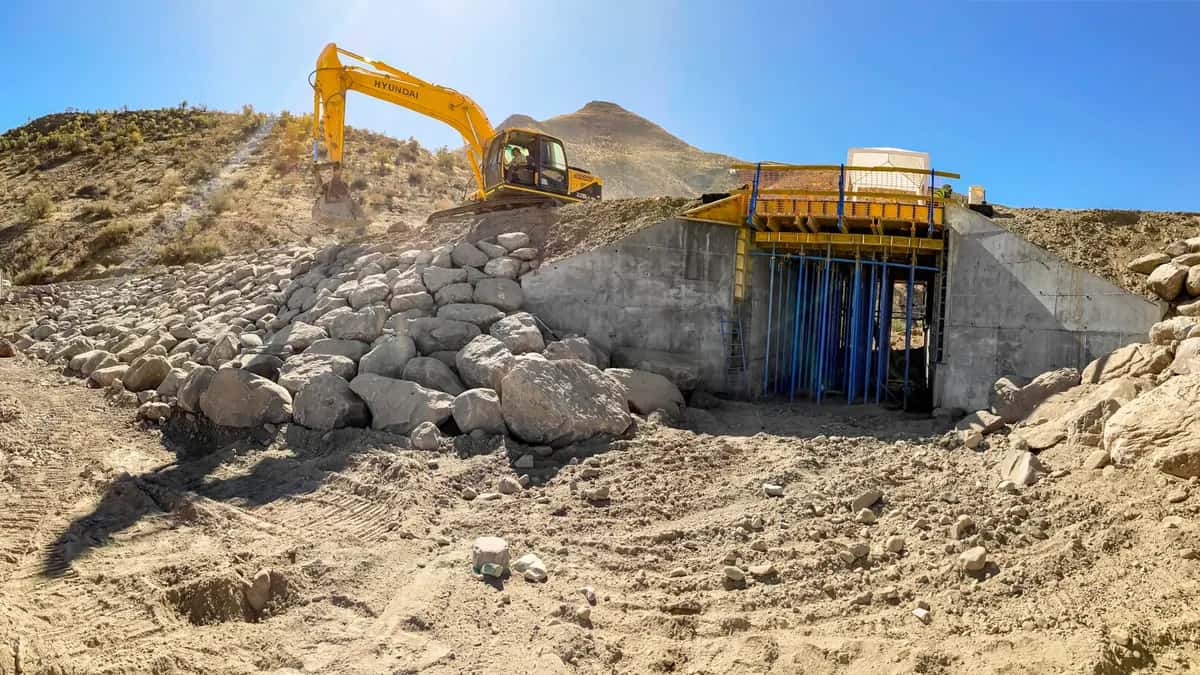
Minister Mas estimated that half of the jobs would be filled by December and the other half by March 2027, and that "100,000 additional jobs between now and March is practically one point of difference" in the unemployment rate, according to CNN Chile. Public Works and Transport Minister Louis de Grange said his ministry aims to execute 100% of its budget in the last quarter, with more than 240 projects and 23,000 associated jobs, although most of the new works would start in January 2027.
| Milestone | Estimated date | Source |
|---|---|---|
| Chile Despega plan announced | September 28, 2026 | Ministry of Labor |
| Modo Empleo jobs (first stage) | 50,000 through October 2026 | CNN Chile |
| First half of the 100,000 jobs | December 2026 (projection) | CNN Chile |
| Second half | March 2027 (projection) | CNN Chile |
| Start of most new MOP works | January 2027 | CNN Chile |
What experts say about the 100,000 jobs plan
Felipe Cerda, an academic at Universidad Mayor, told BioBioChile that fast-tracking works and subsidizing hiring are "shock policies that seek to boost employment in the short term," but that they "do not correct the underlying problems of a weakened labor market." A public work creates hundreds of jobs while it lasts; when it ends, those workers must find another job.
Jorge Rodríguez, of Universidad de los Andes, warned that "greater public spending does not mechanically translate into more employment at the aggregate level": some vacancies may be filled by people who already have jobs, and loans do not guarantee hiring. In his view, "it will be difficult to approach an unemployment rate of 8% as long as the economy fails to grow steadily above 2%."
Former Finance Minister Ignacio Briones was harsher on the subsidies: "US$100 million is less than an aspirin," he said in an interview quoted by El Dínamo, warning that a company could fire one worker and hire another with the subsidy without creating net jobs. The business confederation CPC, by contrast, welcomed the plan but called for aiming at "much more" than 100,000 jobs, according to La Tercera.
| Voice | Position | Source |
|---|---|---|
| Daniel Mas, Economy and Mining Minister | 100,000 jobs would mean almost one point less unemployment | CNN Chile |
| Felipe Cerda, Universidad Mayor | Short-term shock measures that do not fix underlying problems | BioBioChile |
| Jorge Rodríguez, Universidad de los Andes | Without growth above 2%, hard to bring unemployment down to 8% | BioBioChile |
| Ignacio Briones, former Finance Minister | Subsidies insufficient and with little effect on net jobs | El Dínamo |
| CPC | Welcomes the plan but asks for a bigger target | La Tercera |
What is still needed to measure the Chile Despega plan
The government said results will be measured "in works actually executed and new jobs," according to Pauta. The INE's next official figure, for the August-October quarter, comes out at the end of November and will be the first to capture part of the effect of the fast-tracked works. Experts agree that the decisive factor will be whether the economy grows again: without more demand, they say, companies will have no reason to keep workers once the works and subsidies end.
Frequently asked questions
What is the Chile Despega plan?
It is the jobs plan of José Antonio Kast's government, presented on September 28, 2026: it mobilizes 1.3 trillion pesos to create more than 100,000 jobs through public works, hiring subsidies and financial support for companies.
How much money does the plan have for hiring subsidies?
91 billion pesos between 2026 and 2027, according to the Ministry of Labor. Former minister Ignacio Briones called it insufficient.
When would the 100,000 jobs be created?
Minister Daniel Mas estimated half by December 2026 and the other half by March 2027. It is a government projection.
What is Chile's unemployment rate today?
9.8% in the July-September 2026 quarter, with more than one million unemployed, according to the INE.